
YouTube Music Goes First: “Made with AI” Labels Appear on Playback Pages
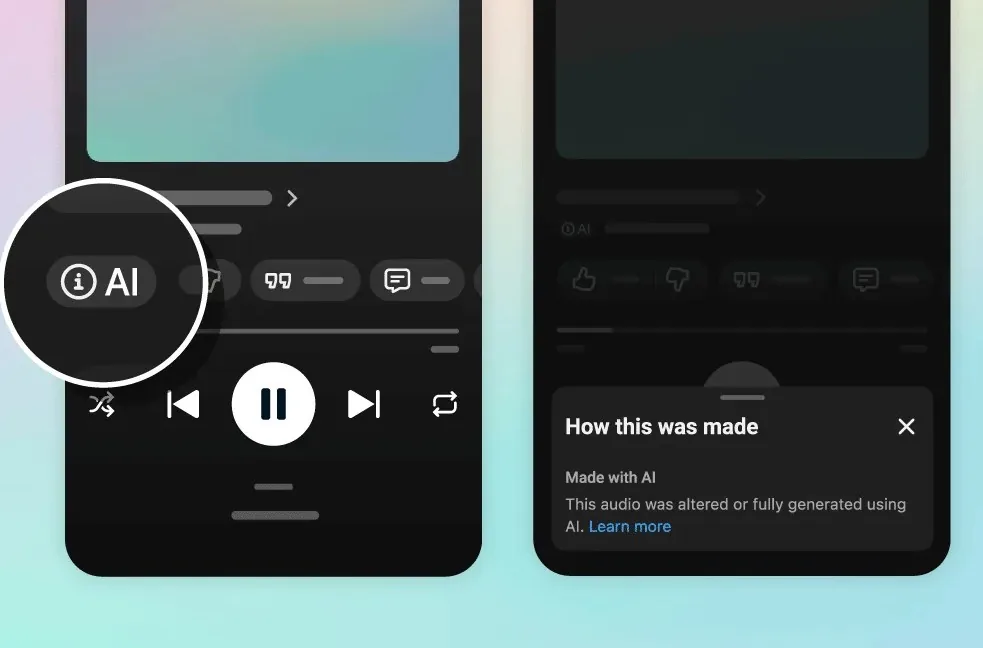
YouTube is adding a “Made with AI” label to tracks that are “modified by AI or entirely AI-generated,” following the same AI-labeling logic it has used on videos for a long time. The label rolls out in the YouTube Music app starting today, with the main YouTube app to follow later.
Key points:
- Scope: It’s not “slap a label on anything that used AI.” The official example is cases such as “using generative models to create composition and vocals.”
- Rollout timing: Launches today in the YouTube Music app first, then expands to the main YouTube app.
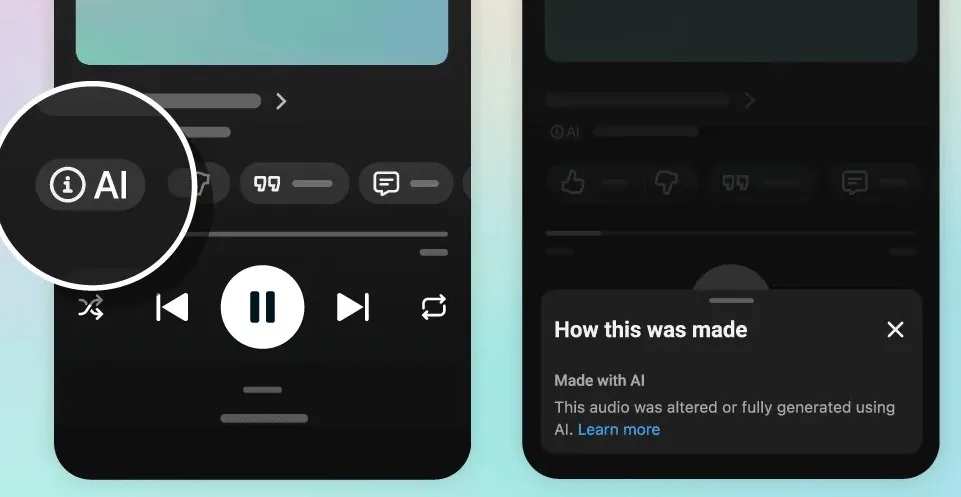
- Presentation: The label appears directly on the playback page; tapping it opens a simple menu with more information.
- Disclosure requirements: Music partners have clear generative AI disclosure rules; if there’s no disclosure, YouTube says it may use “other signals” to determine whether a track is AI-generated.
- Determination method: Working with music partners while also using the platform’s own detection tools.
A quick terminology note: generative models are a class of AI systems that can directly produce melodies, vocals, and other content from prompts.
The Line Is Drawn at the “Core Creative Process,” with a Fallback Channel Left Open

YouTube’s wording is quite restrained—this labeling system won’t cover every use of AI tools in music production. By its account, only cases like “using generative models for composition and vocals” fall within scope. In other words, using AI in peripheral parts of the process will most likely not be labeled.
More intriguing is the question, “What happens if there’s no disclosure?” YouTube has established disclosure rules for music partners while saying that, when disclosure is missing, it may rely on “other signals” to make a determination. That effectively leaves the labeling system a fallback channel: proactive disclosure is the main entry point, and platform-side inference is the supplement.
The contrast also shows up in comparison. Among several major music platforms, YouTube is hardly the strictest: Spotify launched voluntary AI labels earlier this year and said it won’t recommend songs from “AI personas”; Apple Music is reportedly preparing AI labels as well. Deezer, meanwhile, added a switch to filter AI tracks outright, and Bandcamp went even further by banning AI music entirely earlier this year. YouTube has chosen labeling plus disclosure—not filtering, and not banning.
Labeling and Filtering Solve Two Different Needs
The assumption behind labeling is that AI music can exist, but listeners have the right to know what they’re hearing. The assumption behind filtering is that a substantial share of listeners don’t want to hear AI music, and platforms should give them a one-click way to exclude it. YouTube lands on the former this time, and it puts the entry point on the playback page—so the information appears right as you’re listening.
Another layer of labeling is that it gives the platform itself room to explain: once a track is labeled, the platform gains another basis it can cite publicly. That said, YouTube’s announcement this time focuses on labeling and disclosure themselves, and doesn’t elaborate on whether labels will affect recommendations, ranking, or revenue sharing.
Who It’s For, and Who Should Wait
- Music partners and creators: Get your disclosure process in order now. The rules are already spelled out; not disclosing doesn’t mean you won’t be identified—it may instead hand the power of explanation to the platform’s “other signals.”
- Listeners who care about provenance: Update YouTube Music to the latest version first. The label is right on the playback page; tap it to see the explanation. The main app will have to wait.
- People who want to block AI tracks entirely: YouTube doesn’t offer that capability for now. If it’s a hard requirement, consider platforms that already have a filter switch.
Final Thoughts
The point of labeling is not to block AI music, but to make “how this song came to be” checkable information. The disagreement among platforms is not a technical one, but a difference in judgment about listener preferences. Whether this labeling system holds up ultimately depends on disclosure rates and detection accuracy.