
Xiaomi 18 Fold Launches, Initial Sales Data Reported
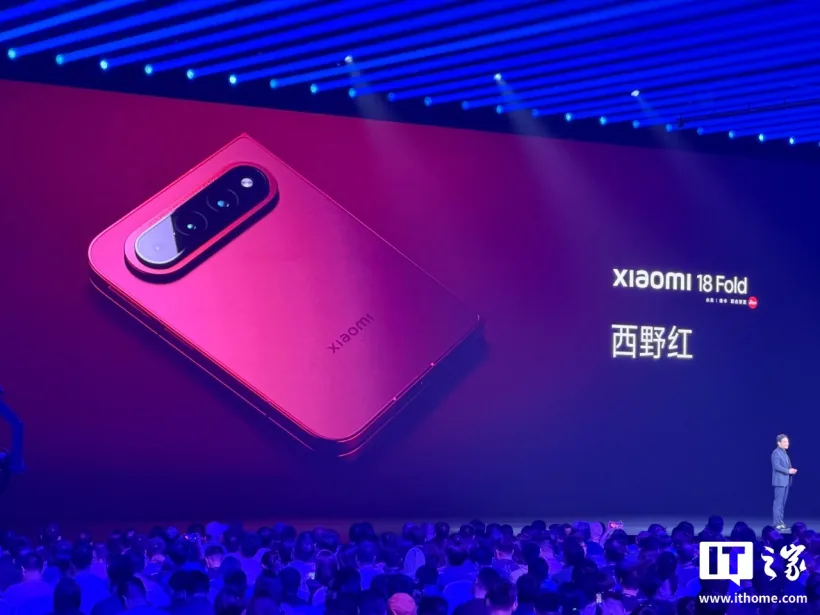
Xiaomi’s 18 Fold middle-fold smartphone was officially launched on September 7, 2024, and opened for sale at 10:00 on September 10. According to data reported by digital influencer @RDObservation, first-week sales (Sept 7–13) reached approximately 39,700 units. This marks the first market validation for Xiaomi’s premium-tier foldable offering.
Key specifications at a glance:
- Launch date: September 7, 2024
- On-sale date: September 10, 2024 at 10:00
- Starting price: 10,999 CNY
- Flagship color: Xiyehong (West Wild Red)
- Initial sales week: ~39,700 units
- Ceramic Special Edition variant limit: 1,500 units
Fed by Middle-Fold Architecture: One-Hand Use Considerations
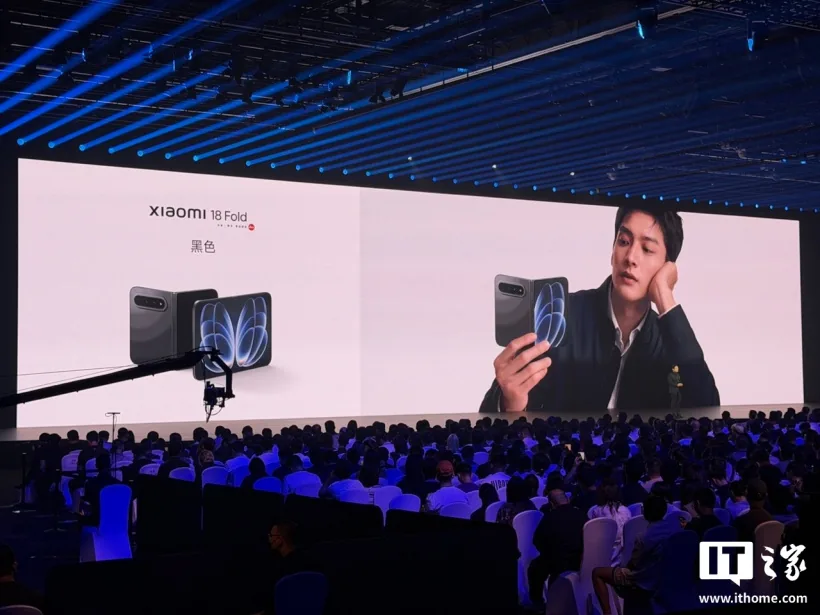
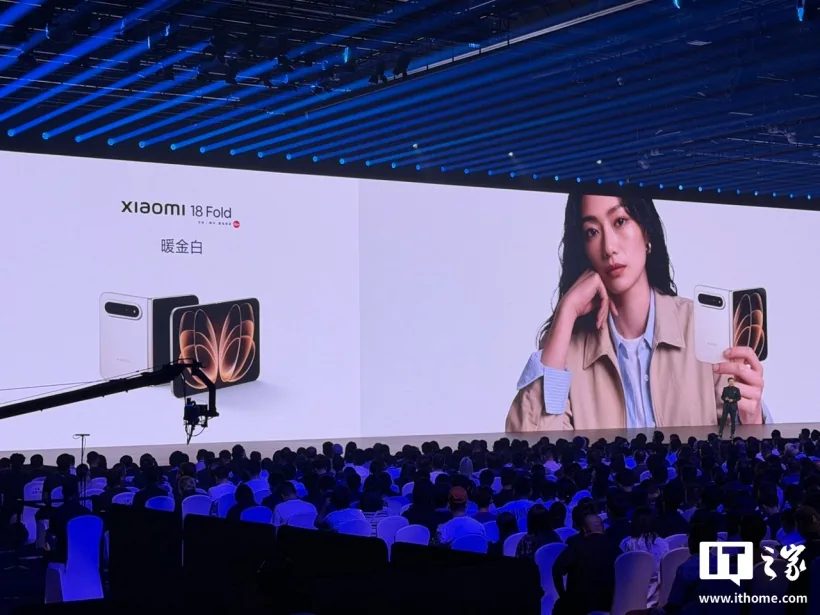
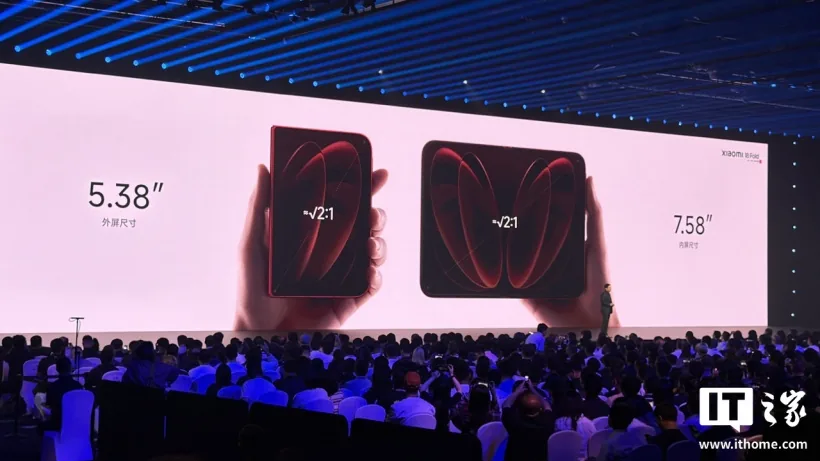
The Xiaomi 18 Fold adopts a new “middle-fold” form factor—folded to a rectangular shape for comfortable grip, unfolding to near-phablet dimensions. Exact specs: unfolded height 117.8mm, width 163.8mm, thickness 5.02mm; folded thickness 10.68mm; weight 219g. This design mirrors the standard A4 paper ratio (√2:1), with display sizes of 5.38 inches external and 7.58 inches internal.
Notably, the physical keyboard width exceeds that of a 6.9-inch flat phone by 8%, offering tangible advantages for touch input. The external screen supports full-area one-handed operation, displays more characters per line, and aligns with natural horizontal reading behavior. Structural features include extra-elliptical large-radius corners, a flat-surrounded mid-frame, and a跑道-shaped (racetrack-shaped) DECO housing. Xiaomi Dragon Crystal Glass 3.0 and 7-series aluminum alloy frame collectively provide claimed 1.2-meter drop resistance comparable to flagship straight-body phones.
Performance & Battery: Xuanjie O3 SoC Debut + 6000mAh Capacity
The Xiaomi 18 Fold debuts the Xuanjie O3 Xiaomi AI flagship SoC, claimed as the first domestic chip to surpass 5 million AnTuTu benchmark points. Its CPU implements a 10-core all-big-core architecture, delivering 60% higher multi-core performance and 25% lower mid-to-low-load power consumption. The GPU comprises 16 cores, achieving 85% performance gain with 64% power reduction. NPU Tensor capability reaches 200 TOPS, while Vector compute hits 3.13 TFLOPS.
Going head-to-head with flagship SoCs from competitors, the Xuanjie O3 achieves standout gains in GPU performance and power efficiency, establishing solid foundations for multitasking and AI workloads. Paired with joint-developed domestically produced LPDDR6 memory from ChangXin Memory Technologies, the device demonstrates localized supply chain maturity.
Battery-wise, it houses a 6000mAh Jinshajiang battery utilizing stacked-cell technology, 20% high-silicon-content silicon-carbon anodes, and 920Wh/L energy density. Supports 67W wired and 50W wireless fast charging.
Model Pricing and Imaging System: Full-Focal-Length Leica Triplet
| Configuration | Price | Notes |
|---|---|---|
| 12GB+256GB | 10,999 CNY | Standard model |
| 12GB+512GB | 11,999 CNY | Expanded storage |
| 16GB+512GB | 12,999 CNY | Performance-focused |
| 16GB+1TB LPDDR6 | 14,999 CNY | Ultra-large storage |
| 16GB+1TB LPDDR6 Ceramic Special | 15,999 CNY | Limited to 1,500 units; lightweight high-hardness silicon nitride ceramic |
Camera system features a full-focal-length Leica triplet: 200-megapixel main sensor, 50MP telephoto with 3.5x optical zoom, and 50MP ultra-wide. Combined with the middle-fold form, it supports up to six split-screen multitasking via the “Super XiaoAi Hotspot” interface, enabling complex operations via voice command.
Buying Recommendations and Target Audience
This device suits professional creators, business users, and experienced foldable enthusiasts. Rationale: at 219g, its weight remains competitive for a 7.6-inch internal screen; the six-split-screen mode and multitasking capabilities excel in productivity-driven scenarios; the 6000mAh battery significantly alleviates screen-size-related anxiety, while 67W+50W dual fast charging covers both wired and wireless use cases.
Buyers with tighter budgets or primarily casual usage needs may consider waiting for the next generation or mainstream flagships. The 12GB+256GB variant at 10,999 CNY offers the best value proposition, yet the ceramic special edition at 15,999 CNY leans more toward collector appeal than practical utility.
Final Note
Xiaomi’s middle-fold architecture provides a meaningful addition to the ecosystem beyond conventional outer-fold/inner-fold paradigms. Optimizations in screen proportion, one-handed ergonomics, and typing experience reflect deep user-scenario research. As domestic AI chip and memory technologies mature, premium foldables are increasingly shifting from pure specs competition toward functional expansion.