
On October 15, @Bao_小李, product manager in Xiaomi’s camera department, posted that the 小米 18 Fold foldable is being adapted for the 小米 18 Pro series’ “Legendary Moment” feature; at the same time, the 小米 17 Ultra 徕卡版’s “Leica Moment” is being adapted for the Leica M10R body effect, as well as camera-grade optical bokeh from the Summicron 35mm and Summilux 75mm lenses.
- Time: October 15, disclosed publicly by a product manager in Xiaomi’s camera department
- Devices involved: 小米 18 Fold, 小米 18 Pro series, 小米 17 Ultra 徕卡版
- Current status: both are “being adapted”; no rollout timing, version numbers, or device coverage have been announced
- Pricing: the source material does not mention any new pricing or fees
- Model weights: the source material does not mention whether the imaging model weights are open
One distinction needs to be made first: what was announced this time is “adaptation in progress,” not “now available.”
Two phones, two imaging philosophies
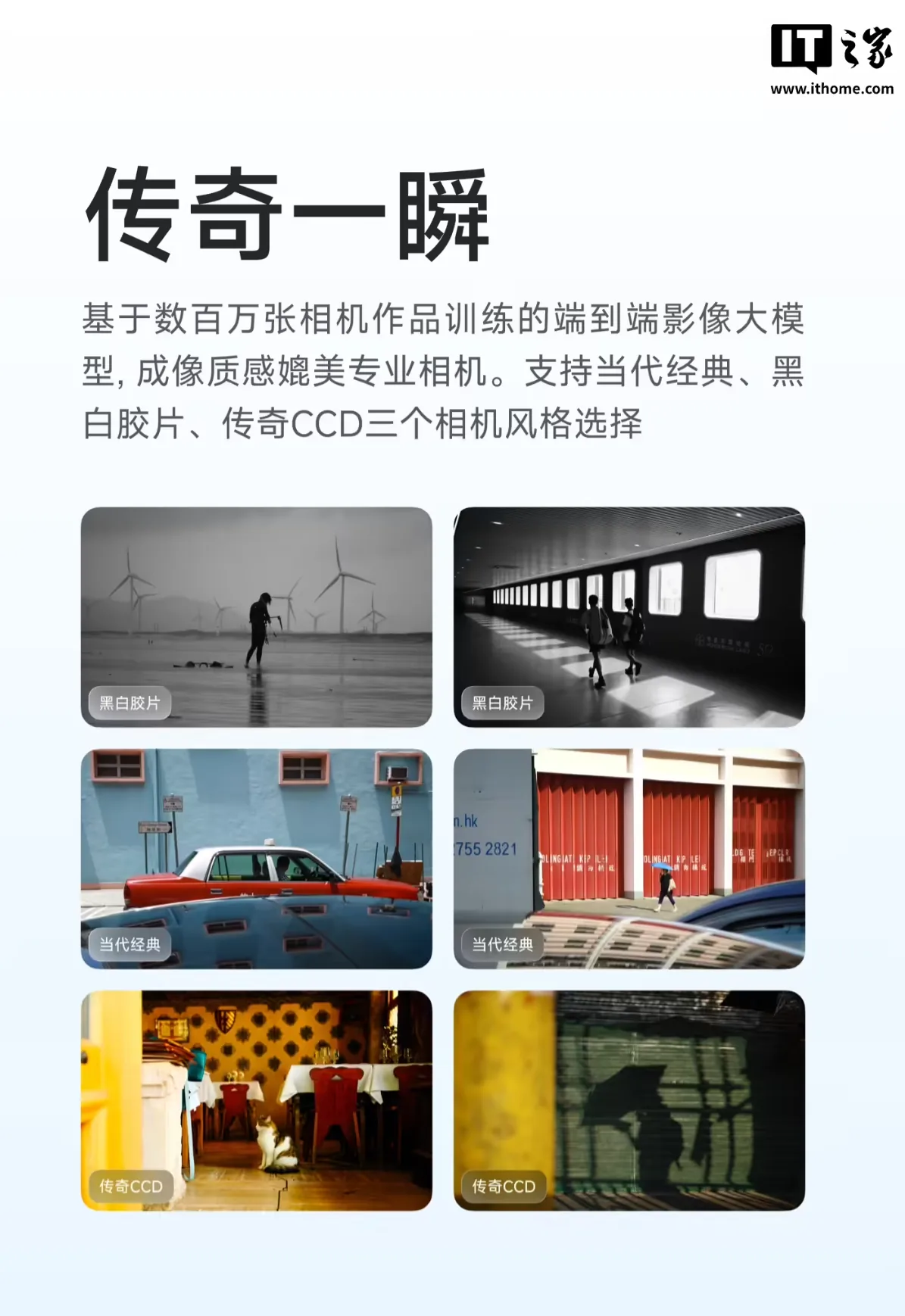
“Legendary Moment” is an imaging feature of the 小米 18 Pro series. According to the source material, it is built on an end-to-end imaging large model trained on millions of camera works—end-to-end here means directly producing the final image from the input scene without manual step-by-step tuning. The company says its image quality is “comparable to professional cameras” and supports camera-grade depth-of-field bokeh, using the large-model algorithm to restore genuine optical layering and achieve blur as close as possible to the laws of optics; original image data can be uploaded from the gallery to the cloud for lossless processing, and training on massive real-world data enables automatic optimization across all scenarios.
“Leica Moment” is an exclusive imaging mode on the 小米 17 Ultra 徕卡版, with two filters: LEICA M3 and LEICA M9. The former recreates the legendary CCD look with rich color; the latter corresponds to Leica M3 + MONOPAN 50 image quality and takes a black-and-white film-look approach. The newly added adaptation targets are more specific—the body effect of the Leica M10R camera, and camera-grade optical bokeh from the Summicron 35mm and Summilux 75mm lenses.
One surprise lies in the naming and formula: the filter named LEICA M9 is described in the source material as implementing “Leica M3 + MONOPAN 50 image quality,” landing on a black-and-white film look. Also, imaging capabilities usually debut on slab flagships first; this time the 18 Fold foldable is adapting in reverse, an unusual direction.
Comparison of the two features
| Feature | Device | Technical basis | Key effects |
|---|---|---|---|
| Legendary Moment | 小米 18 Pro series; 小米 18 Fold is being adapted | End-to-end imaging large model trained on millions of camera works | Camera-grade depth-of-field bokeh, restored true optical layering, lossless cloud processing, automatic optimization across all scenarios |
| Leica Moment | 小米 17 Ultra 徕卡版; being adapted for the M10R and two lenses | LEICA M3 and LEICA M9 filters | M3 recreates the CCD look with rich color; M9 delivers Leica M3 + MONOPAN 50 image quality and a black-and-white film look |
All table content comes from the source material; no pricing, sensor, or lens specs are available for comparison.
Who should wait—and who should wait longer
Who should keep an eye on it: users currently on the 小米 17 Ultra 徕卡版 who like CCD color or black-and-white film looks can wait for this round of “body effect + optical bokeh” adaptation to land; those planning to buy the 18 Fold and who care about imaging should also put follow-up news on their watchlist.
Who should wait longer: for now, officials have only said “adaptation in progress,” with no rollout timing or device range, so those eager to switch phones just to try it out need not rush into this wave; if you’re hoping for a hardware-level upgrade, keep the distinction in mind—what’s being announced is adaptation at the algorithm and filter level.
Final thoughts
Imaging features flowing back from slab flagships to foldables suggests Xiaomi wants to make “Legendary Moment” an imaging asset that spans form factors. For users, filters and bokeh are easier to perceive than specs, but the real dividing line remains rollout timing and device coverage. Without a timetable, this feels more like a roadmap update than an upgrade users can cash in on immediately.