
Laying the Foundation: The First WRC Opens China’s International Robotics Stage
From November 23 to 25, 2015, the first World Robot Conference (WRC) was successfully held at the China National Convention Center in Beijing. Co-hosted by the China Association for Science and Technology, the Ministry of Industry and Information Technology, and the Beijing Municipal People’s Government, and organized by the Chinese Institute of Electronics and other institutions, the conference adopted the theme “Collaborative Integration for Win-Win Results, Leading the Intelligent Society.” It marked China’s first comprehensive conference platform in the robotics field built with an international vision. The inaugural conference alone attracted more than 2,240 guests, over 4,000 journalists, 1,240 exhibiting companies, and more than 1.3 million on-site visitors, creating a high-intensity communications impact.
The World Robot Contest (WRC), the conference’s core competition, consists of a three-tier system: selection contests (WRCT), championships (WRCC), and finals (WRCF). Since its launch in 2015, the contest has been successfully held 11 times as of the information cutoff, attracting nearly 1 million contestants from more than 20 countries worldwide, and is widely recognized in the industry as the “Olympics” of robotics. Since 2019, it has received continuous guidance from the National Natural Science Foundation of China; since 2020, it has been continuously included in the Ministry of Education’s list of national competition activities for primary and secondary school students, and has achieved mutual international recognition of competition results in multiple events.
Competition Evolution: From Scale Expansion to System Building
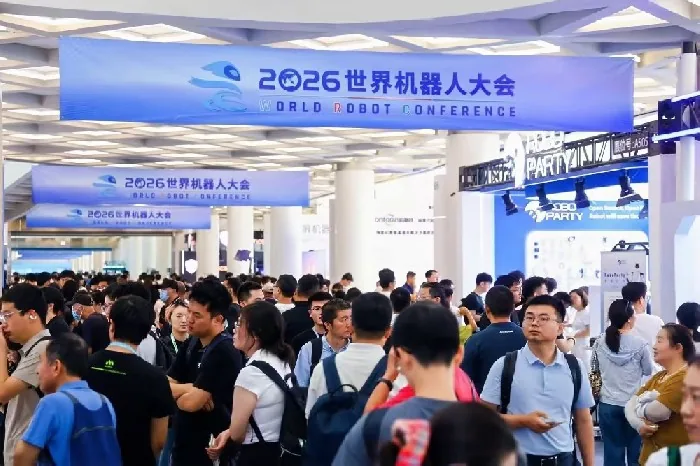
The rapid growth of the World Robot Contest reflects the world’s strong emphasis on cultivating robotics talent. Its three-stage structure ensures a rigorous selection process: WRCT engages broad regional participation, WRCC focuses on deep technical competition, and WRCF brings together top teams for the ultimate showdown. The striking data point is that although the contest has been held only 11 times, it has attracted nearly 1 million participants, with an expected compound annual growth rate of more than 15%—a pace far exceeding most traditional academic competitions, reflecting the rapid penetration of technology education in the intelligent era.
Continued guidance from the Ministry of Education and the National Natural Science Foundation of China means the contest enjoys both academic and policy endorsement. Inclusion in the national competition list provides primary and secondary school students with a formalized competition pathway, while international mutual recognition of results enhances the contest’s global recognition and lays a foundation for participants to pursue further study abroad or join international projects.
Core Value: Educational Advancement and Industry Collaboration
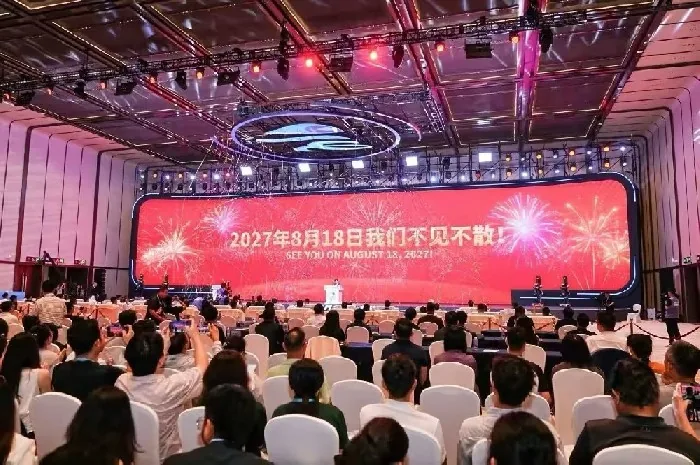
The deeper value of the WRC competition series lies in connecting the “education–talent–industry” loop. The report did not disclose specific event details or award-winning products, but noted that the contest has achieved international mutual recognition of competition items through years of accumulation, indicating that its technical standards and scoring system have been recognized by international peers. As an important part of the embodied intelligence ecosystem, the conference continues to supply the industry with young talent familiar with key technologies such as multimodal perception, autonomous decision-making, and human-robot collaboration.
Embodied Intelligence refers to an agent’s ability to achieve coordination between cognition and behavior through interaction between its body and the environment, and is a frontier direction in the current intersection of robotics and artificial intelligence. The design of WRC competitions often embodies this concept, requiring systems developed by contestants not only to possess algorithmic intelligence but also to achieve stable and reliable engineering implementation in the physical world.
Practical Recommendations and Participation Pathways

- Suitable for secondary school and university students within the education system: Especially for students in computer science, automation, mechatronic engineering, and related majors, WRC provides a national-level platform to test practical skills;
- Suitable for science and technology education institutions and competition organizers to reference in competition design: The three-tier progression model of WRCT/WRC/WRCF can provide a standardized template for regional competitions;
- Companies are advised to pay attention to participating teams’ performance: The reserve of nearly 1 million contestants forms a potential technical talent pool, and key competitions can serve as an entry point for school-enterprise cooperation;
- If the goal is international certification: Confirm whether the specific competition category has already obtained mutual recognition of results with the target country/institution, to avoid participating blindly.
Final Thoughts
In ten years, the World Robot Conference has made the leap from a newly established summit to an authoritative platform, and its core competition, the World Robot Contest, has validated the sustainable growth potential of the embodied intelligence ecosystem with “Olympics”-level influence. When the education system and industry needs connect efficiently through the competition platform, the next generation of breakthroughs in robotics may first be incubated in the hands of young contestants.