
White House Convenes Tech Giants to Sign AI Safety Pledge

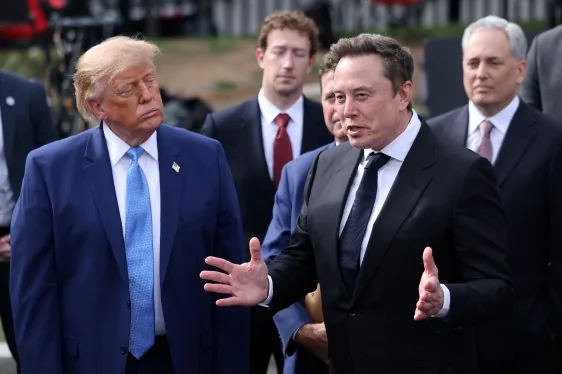
This week, the White House convened the CEOs of nearly every major tech company—including Mark Zuckerberg of Facebook parent Meta, Amazon founder Jeff Bezos, Tesla and SpaceX CEO Elon Musk, and Anthropic founder Dario Amodei—to sign an AI safety pledge together. President Donald Trump called the pledge itself “morally binding.” At the same time, Trump signed an executive order officially renaming “artificial intelligence” (AI) as “Super Intelligence.” The move is seen as part of the government’s strategy for regulating AI technology and communicating with the public.
Notably, only 2% of consumers say they are willing to pay for AI-related products or services, a figure that reveals actual consumer-market acceptance of AI is far lower than the tech world’s optimistic expectations. Meanwhile, the enterprise market remains the main source of AI investment, with large amounts of capital continuing to flow into B2B use cases.
The Contrast Between Copyright Disputes and Market Reality

Although leading tech companies are making high-profile AI safety commitments and presenting a united front at the government level, the path to commercializing the technology is facing a severe test. TechCrunch’s Equity podcast points out that the current AI economic model is quite “brutal”: Oura—a company known for its health-monitoring smart ring—has withdrawn its IPO filing; Anthropic’s S-1 was leaked, revealing a shift in its fundraising strategy; and OpenAI has returned to private financing. Together, these events reveal that public-market patience with AI startups has become extremely limited. Investors are becoming stricter with AI projects, focusing more on concrete paths to profitability than on technological vision.
TechCrunch Disrupt 2026 is expected to explore this trend further; the event will kick off with a live stream at 9:00 a.m. on Event Day on the Builders Stage. Attendees can use code Equity25 for 25% off tickets.
Capital Still Flows to Enterprise and Vertical Sectors
While consumer AI products are struggling to gain traction, enterprise and industry-specific AI applications are showing solid fundraising strength. Recent notable funding rounds include:
- Quartermaster raised $140 million to bring real-time sensor technology to the maritime logistics industry, which AI has rarely touched
- Atomic—a supply chain management startup founded by former Tesla engineers—already powers 90% of DoorDash’s procurement process, showing that it has built irreplaceable real-world influence in a vertical
- Charter Space, a Startup Battlefield finalist, raised $5 million and focuses on providing insurance services for satellites
Consumer AI Adoption Hurdles and the State of Enterprise Deployment

Consumer-facing AI products are generally hitting adoption bottlenecks. Meta and OpenAI are working to make AI experiences more “approachable” by improving product interfaces and interaction methods; however, industry consensus still holds that the real business value currently lies more in enterprise-grade solutions. For example, Atomic integrates supply-chain data and demand-forecasting models to significantly improve procurement efficiency for e-commerce platforms; this kind of quantifiable ROI (return on investment) is exactly the core metric investors value most today.
Enterprise customers are more willing to pay for verifiable efficiency gains and cost savings, whereas individual consumers are highly price-sensitive about AI products and struggle to perceive ongoing value from continued use. This explains why a 2% consumer payment rate is within industry expectations, yet far below early optimistic forecasts.
Actionable Advice for Readers
- Who should start using AI tools now: enterprise technology leaders and B2B decision-makers, especially practitioners in verticals such as supply chain management, logistics, and insurtech, whose business scenarios already clearly demonstrate AI’s efficiency gains
- Who should wait: ordinary consumers can hold off for now, unless they have a clear workflow integration need; most current consumer-grade AI products are still in the feature-testing stage
Final Thoughts
Government-led safety pledges and an industry name change reflect that AI development has entered a period of deeper regulation. A clear disconnect has emerged between the pace of technological evolution and market acceptance—as capital returns to rationality, only AI applications that truly solve real pain points will attract sustained investment. Over the next year, enterprise AI penetration will continue to outpace consumer AI, and this structural gap will become a fundamental reality for the industry.