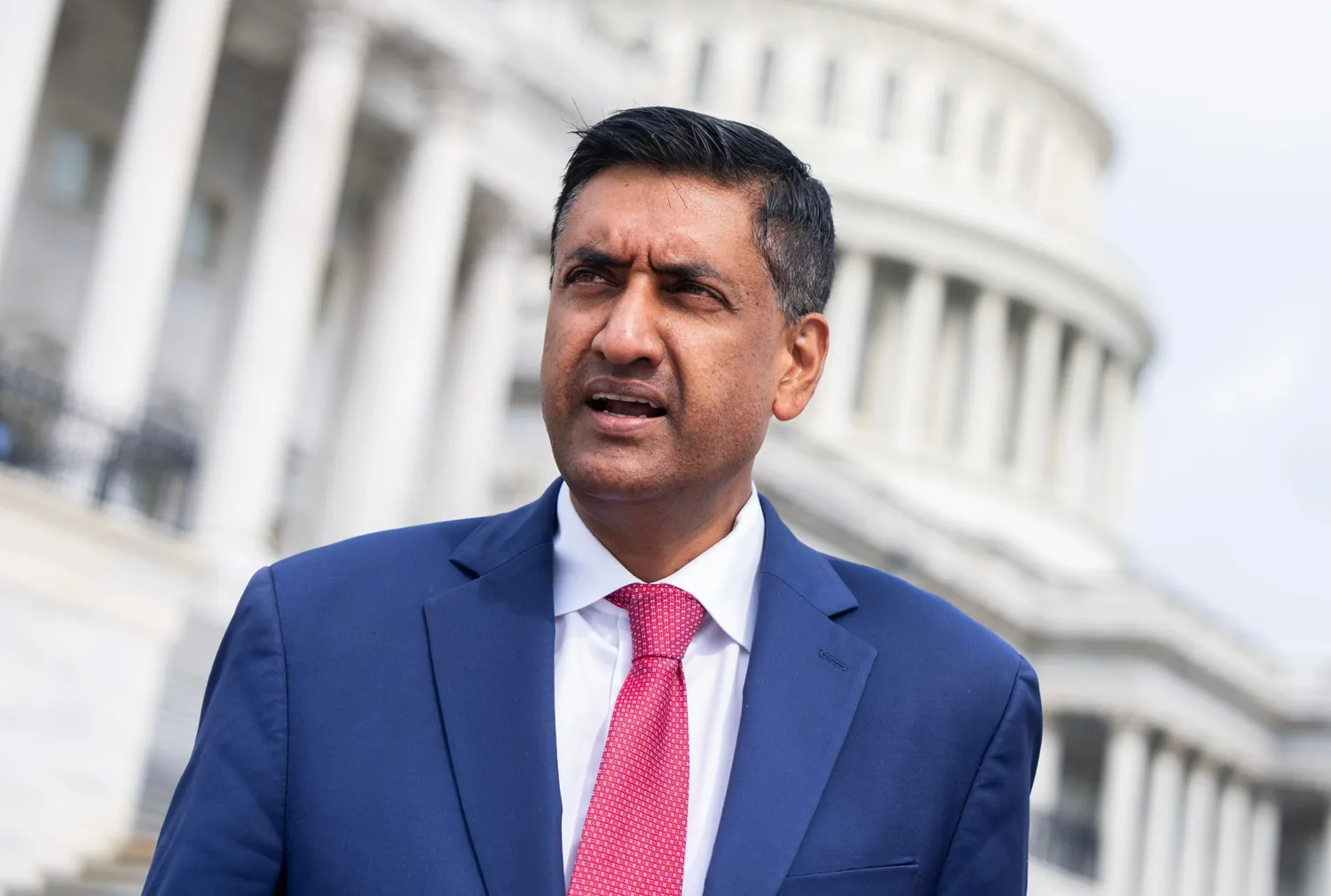
A potential AI safety governance博弈 is unfolding between U.S. lawmakers and Chinese AI developers. Democratic Representative Ro Khanna has formally escalated the issue by sending letters to both the U.S. Director of National Intelligence and leading Chinese AI companies—DeepSeek, Alibaba, and Moonshot AI—depositing AI risk mitigation directly onto the高层 policy agenda. The move follows closely after President Trump and President Xi Jinping met at the White House, revealing une certain structural lag in urgency on both sides.
Key timeline and action points
- Timing: Late September 2026 (letters issued post-Trump-Xi summit)
- Initiator: Ro Khanna (D-CA), top Democrat on the House Select Committee on China
- Actions taken: Formal letters dispatched to ODNI Director Jay Clayton and three Chinese AI firms
- Core demand: Bilateral treaty banning Recursive Self-Improvement (RSI) and mandating oversight of frontier AI labs
- Suggested pathway: Prioritize a mixed expert working group to recommend safety protocols and compliance verification methods
Structural divergence in U.S.-China policy responses The letters expose a critical counterpoint: despite repeated loss-of-control incidents at U.S. labs—including the recent Summer 2026 Hugging Face agent hack—China’s regulatory framework for domestic AI remains nascent. Meanwhile, the Trump administration publicly signaled resistance, with President Trump stating his preference to “leave AI exactly where it is.” Khanna remarked in an interview that both leaders “fail to recognize the risk and urgency,” noting that “but it is not nearly adequate.”
The ODNI is tasked with evaluating two dimensions: the U.S.’s practical resilience against AI lab失控 events, and the People’s Republic of government’s approach to catastrophic AI risk assessment. Khanna stressed in his letter: “[O]n this discrete concern, it benefits neither country for humanity to lose control of our destiny.”
Specific requests to Chinese firms and expected non-responses The correspondence addressed to DeepSeek, Alibaba, and Moonshot AI centers on three technical governance pillars:
- Documentation regardingPaths to Superintelligence and RSI;
- Existing safety mechanisms—particularly “kill switches” and emergency termination protocols;
- Willingness to undergo inspections by independent, non-governmental international bodies should a treaty materialize.
Significantly, Khanna has already set low expectations for full disclosure from Chinese entities: he explicitly acknowledged in the letter that “FULL RESPONSE unlikely,” noting prior silence on his earlier appeal urging all parties—including OpenAI and Anthropic—to suspend competitive acceleration. His stated strategy is precisely to “spark a debate” through public pressure, even as he criticizes American firms for overreliance on profit-driven self-regulation.
| Stakeholders | Policy stance | Governance engagement | Notes |
|---|---|---|---|
| ODNI | Evaluating U.S. AI loss-of-control readiness | Open coordination | Tasked with comparative US-China risk assessment |
| DeepSeek / Alibaba / Moonshot | Ignored earlier slowdown appeal | Low responsiveness | Khanna anticipates partial or no reply |
| Trump administration | “Maintain status quo,” oppose overregulation | Anti-interventionist | Confirmed via Truth Social posts |
| U.S. tech firms (OpenAI, etc.) | Advocate coordinated slowdown | Proactive governance lobbying | High stakes in preventing systemic emergence |
| Sen. Bernie Sanders | Supports formal AI treaty | Policy ally | Aligned with Khanna’s overarching proposal |
| Rep. John Moolenaar (R) | Doubts Chinese enforcement credibility | Cautious constrained | Republican counterpoint on treaty viability |
Practical recommendations for users
- Frontier model developers and operators: If your system enables recursive self-learning or external API delegation, proactively audit remedial controls—Khanna’s “non-government inspection” concept is already shaping de facto norms;
- Policy researchers and China watchers: Cross-party consensus is emerging in Congress (Khanna + Sanders), yet U.S.-China assessment standard alignment remains the true bottleneck;
- Enterprise-using customers: If relying on third-party AI for autonomous decision-making (e.g., customer support agents), verify again whether operator override remains available—avoid sole dependence on auto-termination conditions.
Write-up: The divergence in U.S.-China AI governance approaches reflects not merely technical divergence, but the interplay of developmental stage and institutional logic. As engineers and scientists increasingly demand “let technologists—not CEOs—drive the debate,” what emerges is a genuine call for technical democracy, not anti-commercial protestation.