An IP Core First, Silicon Later: RVA23-Compliant, Q1 2027
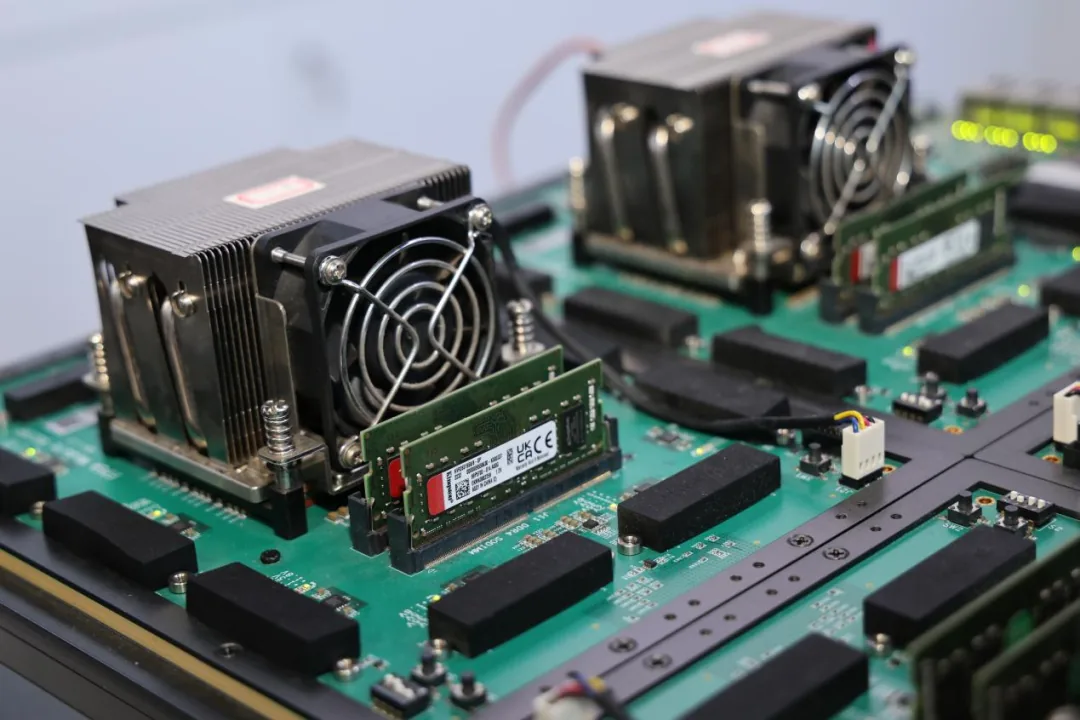
On October 20, UltraRISC introduced the UR-CP400, a high-performance RISC-V processor core, at the 6th RISC-V Summit China. One distinction matters up front: this is an IP core, not a chip. An IP core is a licensable processor design that chipmakers integrate into their own SoCs — what gets delivered is design collateral, not silicon you can power on.
- Delivery: planned for Q1 2027; only an FPGA prototype exists today
- Compliance: RVA23, with the RVV 1.0 vector extension
- Microarchitecture: out-of-order, 8-wide issue, 14-stage pipeline
- Performance claim: over 22 SPECint_base2006 per GHz in an FPGA configuration
- Targeted work: virtualization enhancements for multi-layer cloud, hardware tuning for agentic AI
- Pricing and licensing terms: undisclosed
RVA23 deserves a one-line explainer: it is an application-processor profile from RISC-V International that makes extensions such as vector and virtualization mandatory, so one OS and software stack runs across every compliant core.
What 22/GHz Does and Doesn’t Say
SPECint_base2006 is a long-standing integer benchmark; the “/GHz” suffix normalizes the score by clock speed and is commonly used as a rough proxy for IPC, the instructions completed per cycle. At over 22, the UR-CP400 is clearly past the era when RISC-V cores were judged on whether they ran at all.
Three qualifiers matter. FPGA configuration means these are not post-silicon numbers. The 2006 benchmark means they cannot be lined up directly against vendors still reporting SPECint2017. And frequency, power and area are all absent — the three figures that actually anchor an IP licensing negotiation. For a chipmaker writing checks, 22/GHz indicates whether the architecture points the right way, not whether to sign.
There is also a timing gap: announced in October 2026, delivered in Q1 2027, roughly half a year apart. After RTL handoff comes integration, verification, backend work and tape-out, so production silicon lands later still.
Virtualization and Agentic AI: The Pitch Has Shifted
Virtualization is the easier of the two optimizations to read. Multi-layer cloud covers clouds on clouds and containers inside virtual machines, workloads highly sensitive to address translation, interrupt injection and context-switch overhead. RVA23 already mandates virtualization support; UltraRISC says it went further, which matches what cloud customers complain about.
The agentic AI work, by contrast, is a single sentence in the announcement. No detail on added units or changes to prefetch and branch prediction was provided, so it should be recorded as limited information rather than filled in by guesswork.
What is notable is the shift in framing: a general-purpose high-performance core vendor now leads with cloud virtualization and AI workloads. RISC-V’s high-end narrative is moving from replacing low-end MCUs toward absorbing server and inference work.
Who Should Talk Now, Who Should Wait
Reach out now if you are scoping a data-center or cloud-side custom SoC with RVA23 compliance as a hard requirement. Evaluation, integration and tape-out alone take over a year, and a Q1 2027 delivery lands inside that window.
Wait if your decision gate requires real PPA figures. Without frequency, power, area, licensing cost or post-silicon measurements, any comparison claim is unsupported. Software maturity matters just as much: compiler, distro and AI framework backend support will decide the experience beyond benchmark slides.
Final Thoughts
A compliant core with respectable numbers and a Q1 2027 date is a bet placed a year ahead of the ecosystem. The real test is not 22/GHz but whether licensees can integrate, tape out and ship. RISC-V reaching the high-performance bracket is no longer news; delivering IP on schedule with working software is the dividing line.