
TUXEDO has updated its flagship “desktop replacement” laptop for Linux users: on October 13 local time, the German Linux PC maker launched the Stellaris 16 – Gen8 – INTEL, configurable with up to an NVIDIA RTX 5090 laptop GPU and an OLED screen.
- Release date: October 13 local time (ITHome reported on October 14)
- Core platform: Intel Core Ultra 9 290HX Plus
- Discrete GPU options: NVIDIA GeForce RTX 5070 Ti / 5080 / 5090 laptop GPUs
- Display options: standard LCD LED / Mini LED / OLED, all at WQXGA (2560×1600)
- Starting price: €2,350 (excluding tax, approx. CNY 17,615), for RTX 5070 Ti, standard LCD LED, 2×8GB memory, 500GB SSD
- Availability and pricing for other configurations: not disclosed in the source material
Full aluminum chassis runs at 240W, and leaves room for external liquid cooling
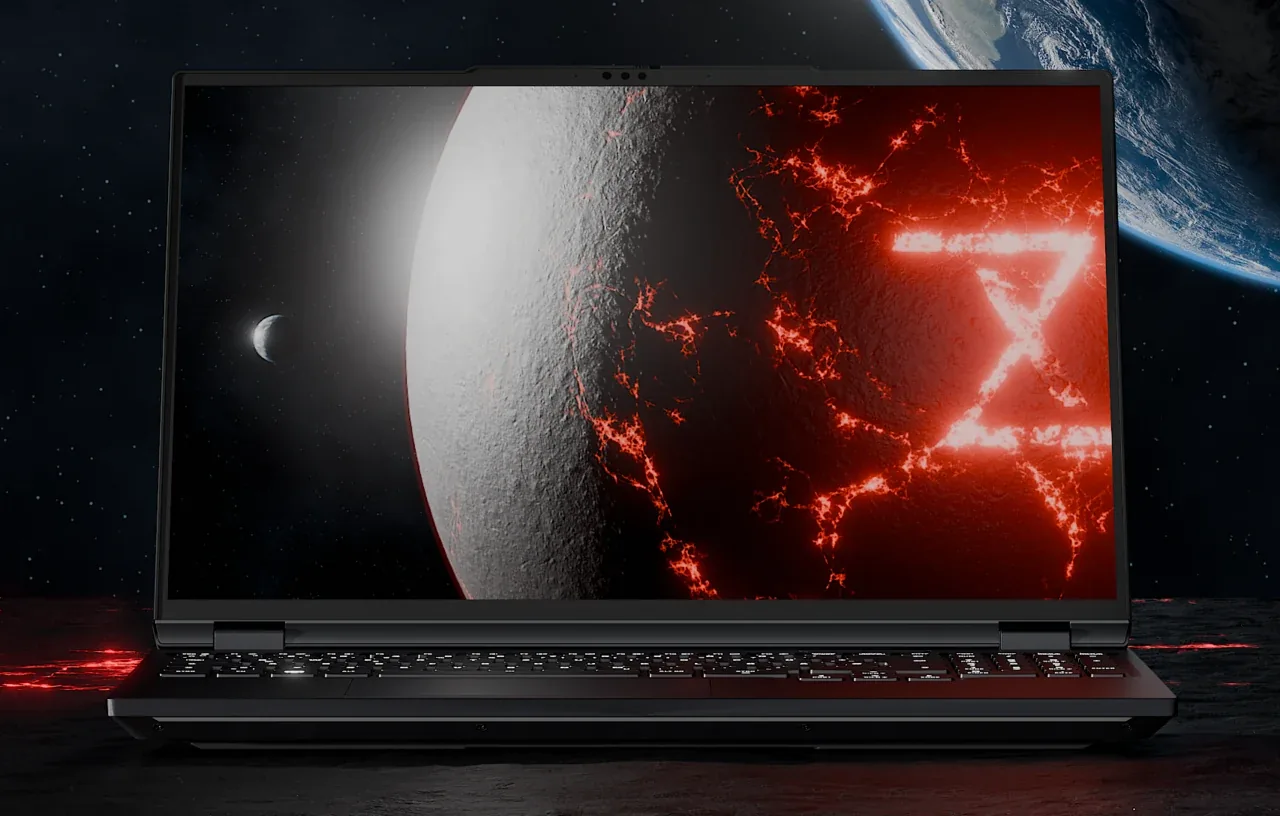
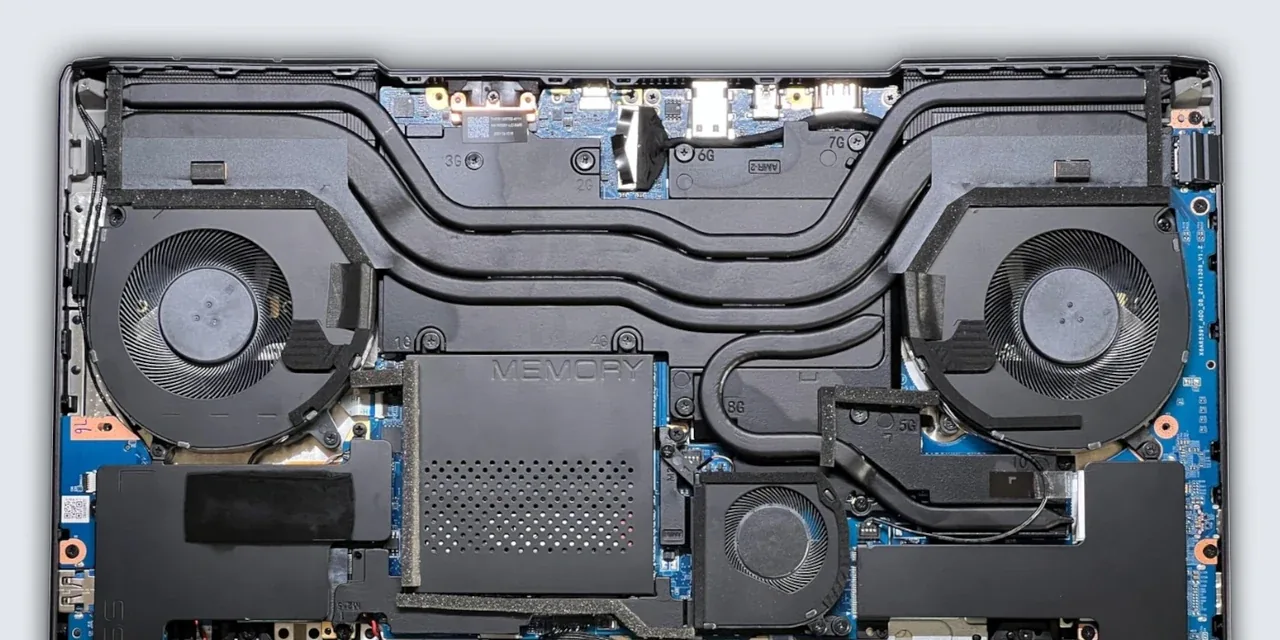
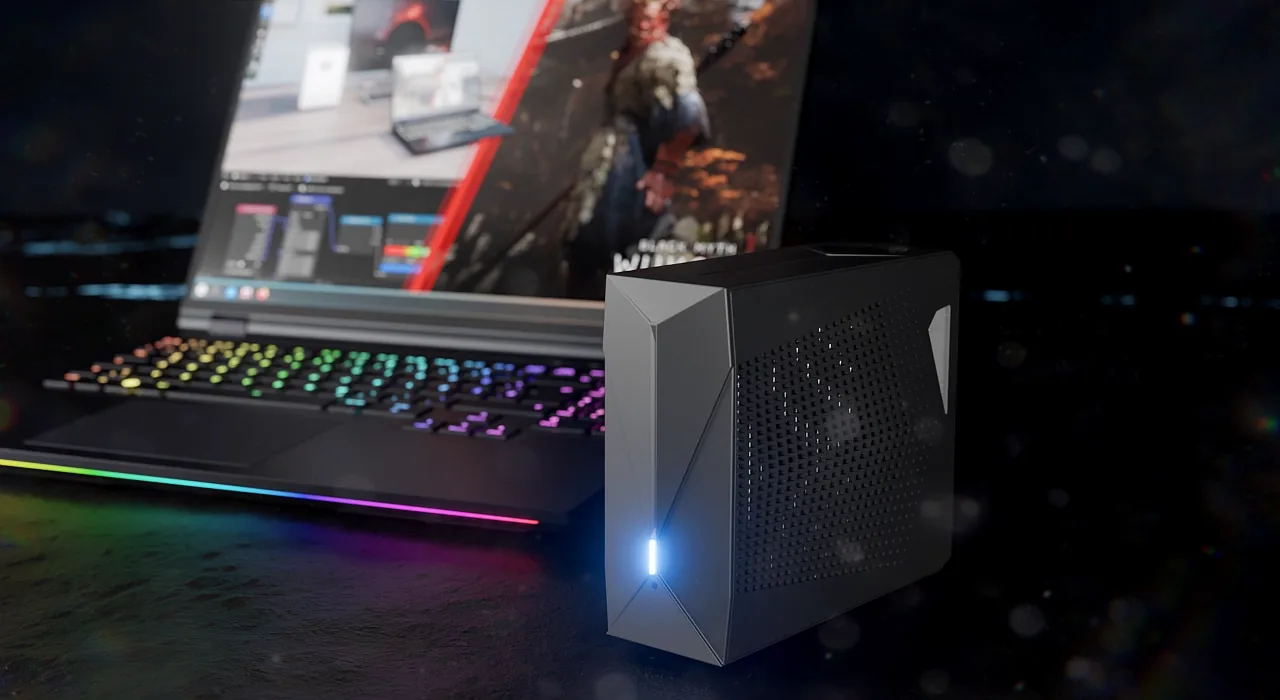
“Desktop replacement” means cramming desktop-class performance into a portable chassis. TUXEDO’s approach is a full-aluminum chassis plus three-fan cooling, supporting 240W sustained performance—“sustained” is the key word; many gaming laptops only hit peak briefly and throttle under prolonged full load. More unusual is its compatibility with Aquaris external liquid cooling, letting users attach a liquid-cooling module to push temperatures even lower. The battery is 99Whr, and the system weighs 2.6–2.8kg.
Expandability follows the approach typical of this class: 2 DDR5-6400 CSO-DIMM memory slots and 2 M.2 2280 PCIe SSD bays. CSO-DIMM is a JEDEC-defined memory module form factor with a clock driver (intended for high-frequency DDR5); for regular users, the takeaway is simply “swappable and upgradable.”
The port selection is fairly generous: Thunderbolt 4, Mini DisplayPort 2.1, an SD UHS-II card reader, a 2.5GbE wired Ethernet port, and a wireless card, plus an FHD webcam with face recognition, a microphone, and two 2W speakers. Having both Thunderbolt 4 and Mini DP 2.1 means connecting multiple external displays is not a high hurdle.
Three displays: OLED actually has the lowest refresh rate
All three displays have exactly the same resolution; the differences are concentrated in refresh rate, brightness, and surface finish.
| Display type | Refresh rate | Brightness | Surface |
|---|---|---|---|
| Standard LCD LED | 300Hz | 500nits | Matte |
| Mini LED | 300Hz | 1000nits HDR | Matte |
| OLED | 240Hz | 1000nits HDR | Glossy |
There is an easily overlooked contrast here: the highest-tier OLED display has the lowest refresh rate of the three, at 240Hz, while the standard LCD and Mini LED are both 300Hz. If you mainly play high-frame-rate competitive games, the 300Hz, 1000nits matte Mini LED may be a better fit than OLED; conversely, only users who want deep blacks and contrast and don’t mind glossy reflections are the ones worth paying for OLED.
Who it’s for, and who should wait
- Who should pay attention now: people who need discrete-GPU performance but insist on Linux, especially users who rely on CUDA for local inference, video rendering, or large-scale compilation; those who value being able to upgrade memory and storage themselves, and are even willing to use external liquid cooling for long periods of heavy load.
- Who should wait: the source material gives a price only for one base configuration; how much extra the 5080 and 5090 versions, as well as the Mini LED and OLED displays, will cost has not been officially announced, and availability has not been mentioned either. Budget-sensitive buyers may want to wait for the full price list and third-party reviews before deciding. Also, the 2.6–2.8kg system weight needs to be weighed for commuting scenarios.
Final thoughts
As the Windows camp makes high-end laptops increasingly integrated and less repairable, makers like TUXEDO offer a different trade-off: swappable memory, swappable storage, Linux preinstalled, and support for external liquid cooling. It isn’t cheap or light, but for people who treat a laptop as a mobile workstation, expandability is itself the value. Whether the €2,350 starting price is worth it will have to be answered by the full configuration price list.