
Key Event: Executive Order Mandates Replacing “AI” with “SI”
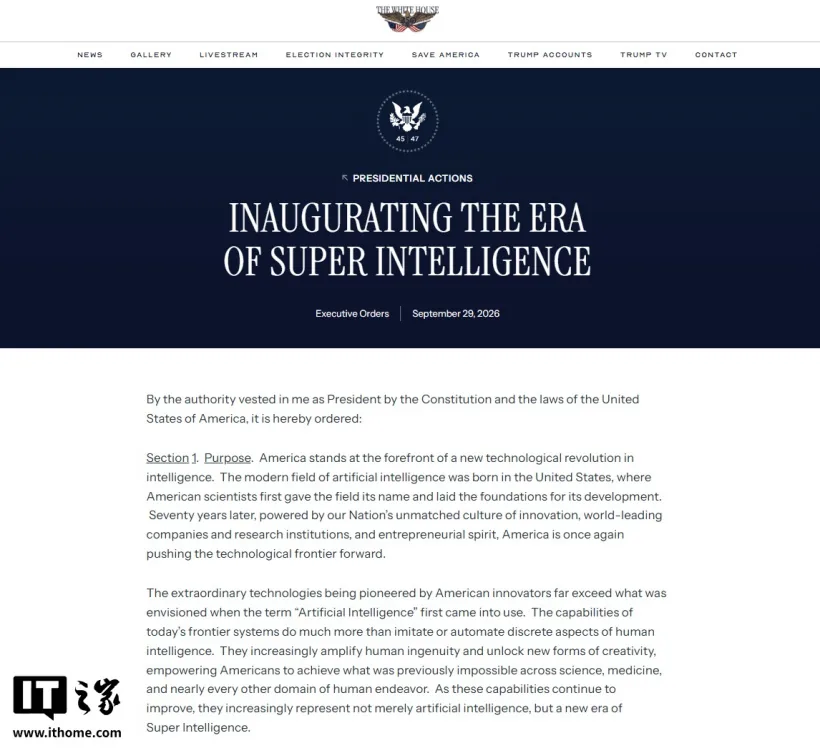
- Publication time: September 29, 2024, U.S. Eastern Time (formally signed)
- Applies to: All U.S. federal executive departments and agencies
- Mandated terminology: Replace “Artificial Intelligence” (AI) uniformly with “Super Intelligence” (SI)
- SpaceX nomenclature adjustment: SpaceX has officially confirmed it will adjust its naming system. xAI was renamed SpaceXA in July of this year, and may further change to SpaceXSI later.
- How the policy applies: It requires use of the new terminology to the maximum extent permitted by law and does not recognize the legitimate use of AI in applicable contexts.
Policy Background: Why Shift from “Artificial Intelligence” to “Super Intelligence”?
The executive order states that current frontier technology has far surpassed its original concept—no longer limited to imitating or automating partial functions of human intelligence, but continuously amplifying human creativity and unlocking entirely new forms of creation. Its capability boundaries are expanding into almost every field, including science and medicine, solving “impossible goals” of the past. The government believes that the term “Super Intelligence” more accurately reflects the technology’s transformative potential, ability to evolve rapidly, and unlocked opportunities.
It is worth noting the irony: the Trump administration directly intervening in technical terminology through an executive order is relatively rare in the history of science and technology policy. Typically, technical naming evolves naturally from academia or industry, whereas this administrative intervention carries a strong intention of political discourse reconstruction. The executive order also mentions the America.gov policy signed the same day, attempting to reshape the image of digital government through a dual-track strategy of “terminology unification + service integration.”
SpaceX and xAI’s Organizational Evolution Path
SpaceX completed the acquisition and integration of xAI in February of this year, bringing the Grok chatbot and the X social platform into the SpaceX system. In July, xAI officially announced its renaming to SpaceXA, marking its identity transition from an independent startup to the core AI entity of an aerospace group. When responding to a user’s question on X, Musk explicitly said, “Yes, we will make the change,” and called SpaceX a super intelligence company, further confirming that the terminology adjustment will proceed in parallel.
It should be pointed out that although the executive order has legal force, it has no binding force on external non-federal entities (such as companies and universities). SpaceX’s terminology adjustment is a strategic choice of its own, a responsive brand-management move to the government’s direction, rather than a legal compliance requirement.
Practical Impact and Applicable Boundaries of Terminology Replacement
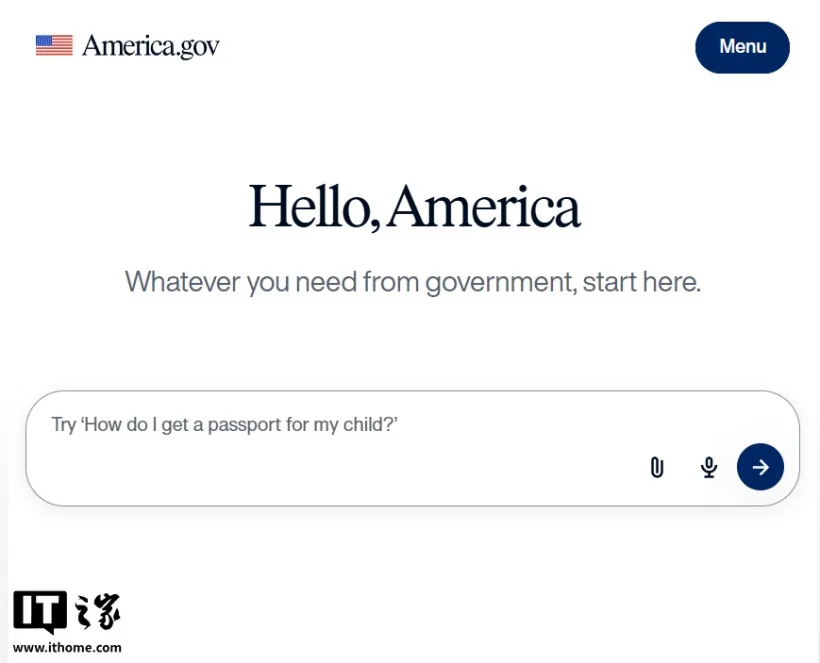
According to the original text of the executive order, the SI terminology replacement mainly covers the following scenarios:
- Federal documents, announcements, and official website content
- Regulatory and policy texts
- Public press conferences and officials’ remarks
- The wording system of the America.gov service portal
Allowances exist for special scenarios such as citations of legal provisions, archival historical documents, and citations in academic papers—the government permits retention of the original terminology in these cases, but day-to-day policy expression is fully SI-ized.
If SpaceXSI is ultimately implemented, it will be the first large aerospace company in the world to use SI as an official brand identifier. Its significance goes beyond symbolism: it elevates AI’s strategic positioning from the “tool layer” to a “company-level capability core,” reflecting that the aerospace industry is accelerating its embrace of advanced intelligent systems to drive critical missions such as launch vehicle design, autonomous landing, and Starlink network optimization.
Practical Recommendations for Readers
- For developers: If your project involves APIs or documentation that interface with the U.S. government, you need to adapt to SI terminology in advance; for now, observe the implementation details of each agency during the transition period.
- For investors: The implementation of SpaceXSI can be seen as a signal of the group’s deepened AI strategy. Pay attention to substantive progress in combining the Grok series models with aerospace engineering.
- For ordinary users: Current consumer products (such as Grok and X) have no mandatory renaming plans and will not affect normal user experience.
- Who it’s for: Public policy researchers and technology ethics observers following the U.S. government’s digital service transformation.
- Suggested to wait: Ordinary enterprise users can wait 3–6 months to assess whether other tech giants follow with similar terminology adjustments before deciding on their own pace.
Final Thoughts
At its core, this terminology migration is a politicized packaging of technical discourse. In the short term, it will hardly change the logic of industry technology evolution, but it may induce public funds to tilt toward SI-related projects. What truly deserves vigilance is not the vocabulary change, but the further concentration of policymaking power and the power to define technology.