Trump Posts White House Renovation Photos, One Flagged as AI-Generated
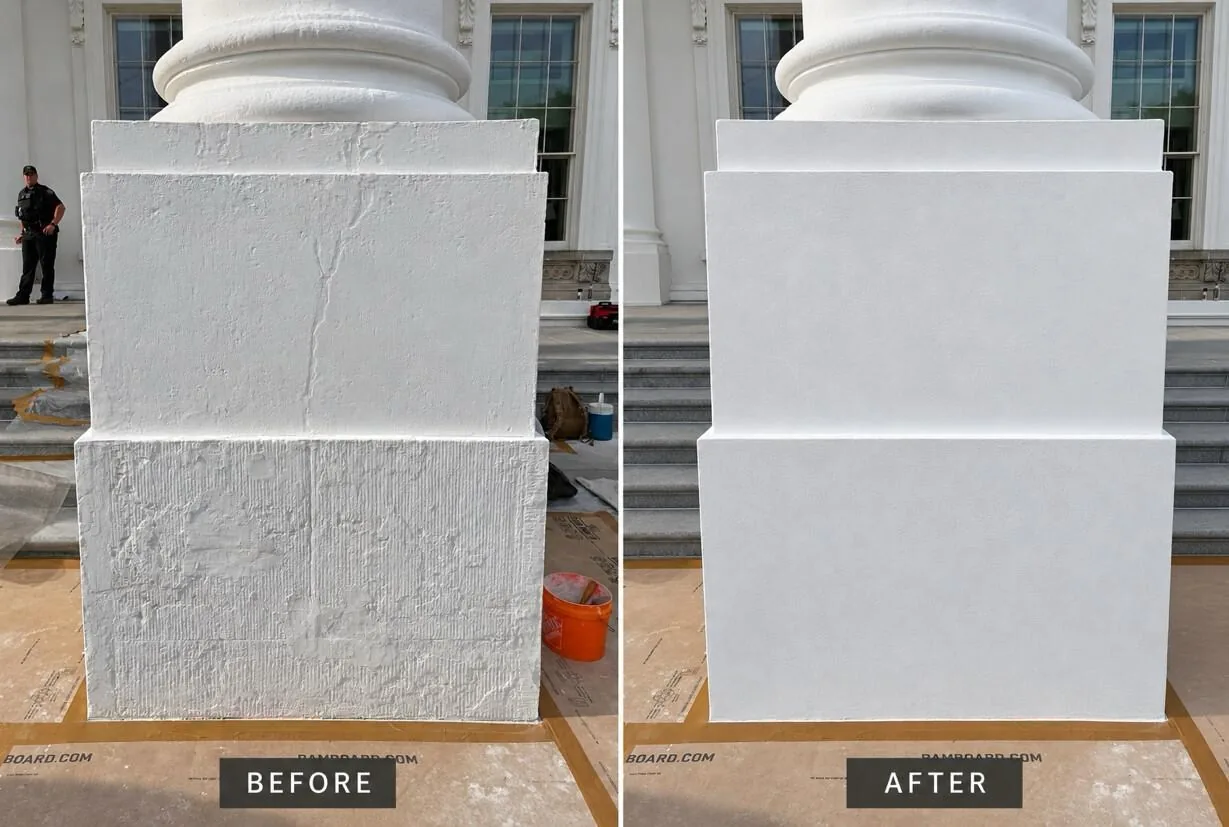
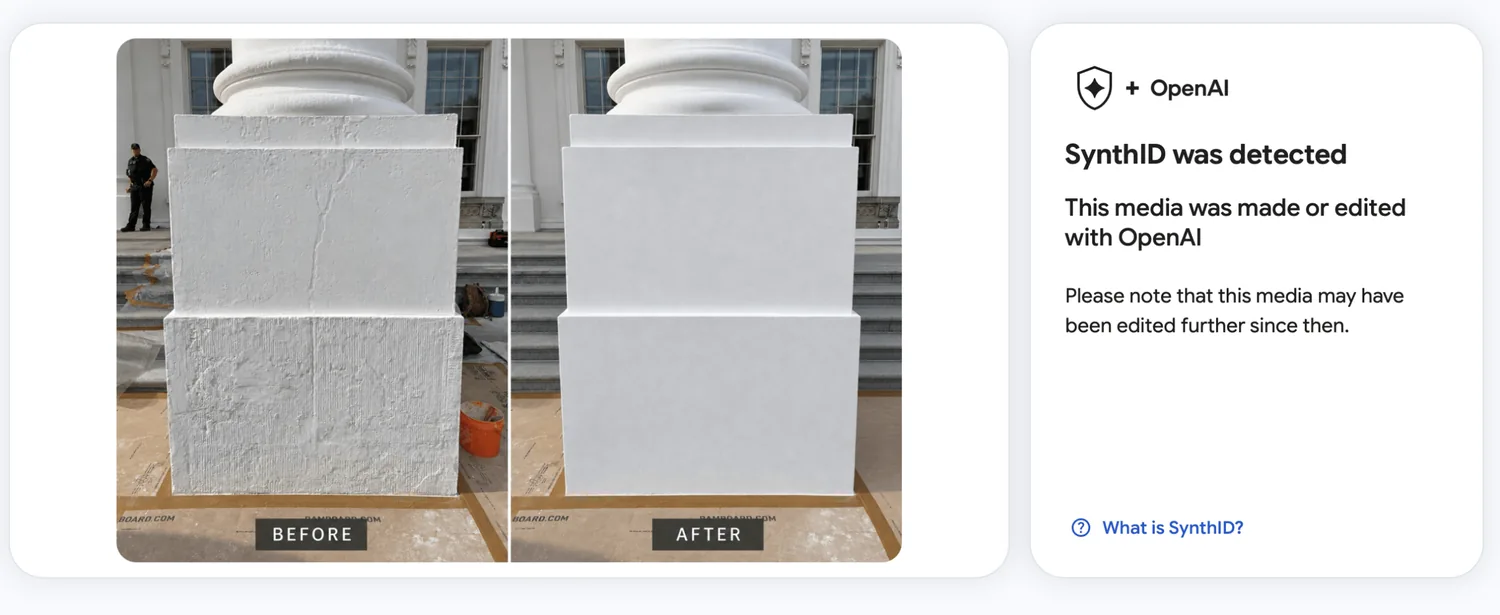
President Trump posted a set of White House renovation photos on Truth Social. One of them, a “before and after” comparison of the columns, was flagged by Google’s AI detection tool as “made or edited with OpenAI.”
Key takeaways:
- Platform: Truth Social, Trump’s own social platform
- Image in question: a “before / after” comparison of the White House columns
- Detection tool: Google SynthID Detector, which can scan images, video, and audio for invisible watermarks
- Finding: the image was flagged as “made or edited with OpenAI”
- Other photos in the same batch: Trump’s photos of the White House exterior and helicopter pad did not show the watermark
- Official response: the White House did not immediately respond to a request for comment
The Verge editors re-uploaded the image to Google’s SynthID Detector and got the same flag. To be clear, SynthID reads an invisible watermark embedded in an image—a digital marker invisible to the naked eye that generative models insert when producing an image. It offers a reproducible technical clue, not a complete reconstruction of the specific edits.
Stairs, Reflections, and Cardboard: Three Details That Don’t Add Up
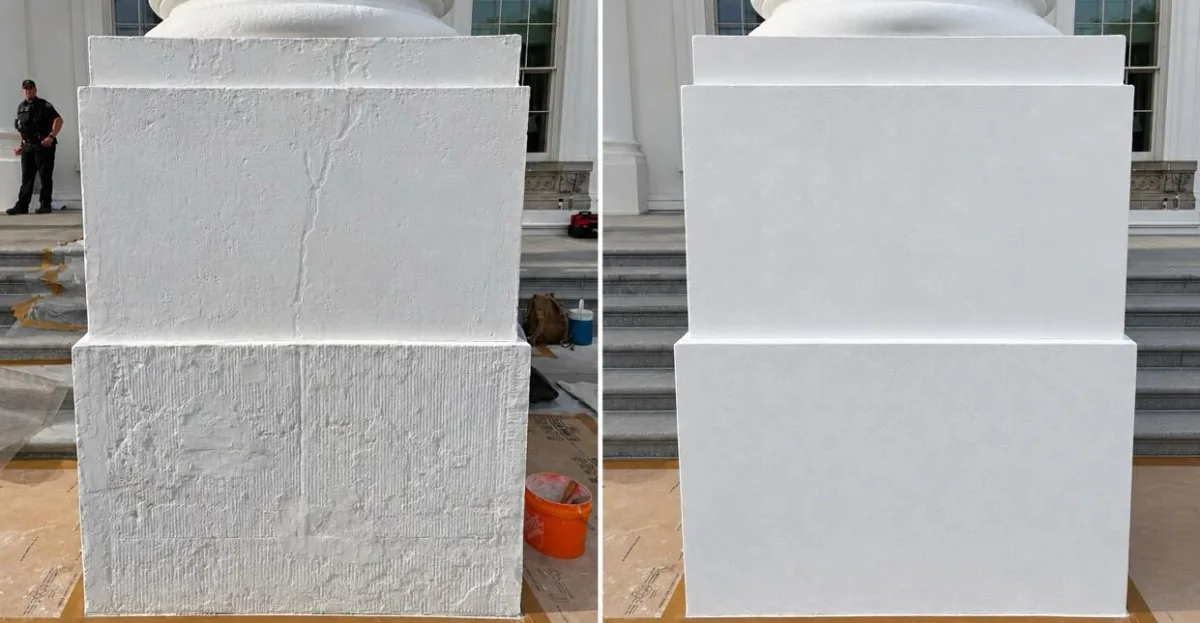
Reddit users were the first to notice the anomalies. They listed several problems with the “after” photo:
- The number of steps on the left and right sides of the columns doesn’t match.
- The step count also doesn’t match the “before” image.
- The two comparison images have nearly identical angles and details; the reflection in the window is almost the same, and the protective cardboard at the base of the columns is in the same spot.
- The supposedly “fresh paint” looks unusually smooth.
What makes the discrepancy most telling isn’t that the image is fake, but that it isn’t fake enough: the reflection, the cardboard, and other on-site traces that prove “painting happened” were preserved unchanged.
Someone Really Was Painting the White House in June, but the White House Hasn’t Responded
Real photos show that in June of this year, someone was painting the White House at the front entrance, so the columns may indeed have been repainted. The dispute isn’t over whether painting happened, but over the fact that the image used to show the results was altered. The Verge asked for comment, and the White House did not immediately respond.
SynthID is a watermarking and detection technology introduced by Google that covers images, video, and audio. Reading it requires Google’s own detection tool; it does not perform forensic reconstruction, and only answers whether “this content was created or edited with AI.”
Trump is no stranger to AI tools: he frequently posts AI cartoons starring himself, and the White House has also posted racially charged AI memes and at least one misleading photo that edited protesters to look anguished. What’s different this time is that the editing traces were caught directly by watermark detection.
How Ordinary People Can Use This Story
- If you want to verify an image: You can upload it to a tool like Google SynthID Detector to scan for an AI watermark. But remember—not detecting one doesn’t mean the image is real, and detecting one doesn’t mean the entire image is fake; a watermark only indicates that it was “created or edited with AI.”
- Content professionals: When dealing with images of public events posted by official accounts, it’s best to cross-check original materials or on-the-ground photos, rather than treating a single social media image as the facts themselves.
Final Thoughts
Watermark detection has turned “was this image altered by AI?” from a war of words into a reproducible technical judgment. That’s progress. But it is ultimately just one clue. The real question that should be asked is: why would someone use an altered image to prove a project that had actually taken place?