
Core Event and Key Facts
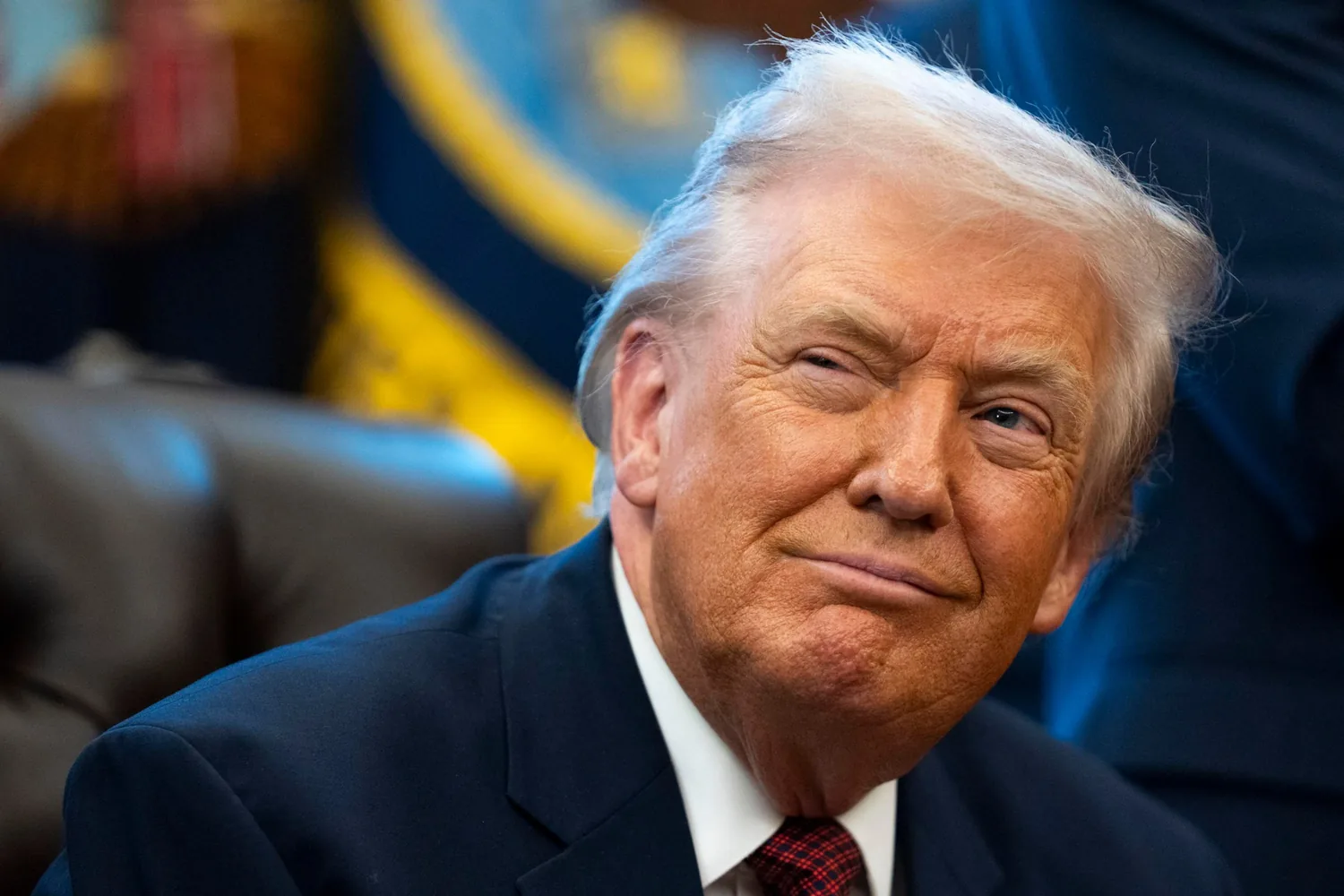
On September 30, 2026, U.S. President Donald Trump signed an executive order mandating that all federal government policy websites, official documents, and press releases use only ‘Super Intelligence’ and prohibit reference to ‘artificial intelligence’ or ‘AI’. The order takes effect immediately upon signing, applying only to future outputs.
- Effective date: Immediate upon signing
- Scope: All federal agency web portals, policy documents, official press releases
- Retroactive effect: None
- Weight openness: Not applicable (not a model update)
Policy Context and Official Statements
The order followed a White House luncheon hosted by Trump on September 29, attended by Nvidia CEO Jensen Huang, Tesla and SpaceX CEO Elon Musk, and industry executives alongside government officials.
Trump described the meeting as ‘very productive and extremely friendly’ during brief remarks afterward. He reiterated the term ‘Super Intelligence’ will be ‘mostly put to good use’ and that ‘we’ll stop the bad use.’
Key remarks preserved verbatim:
‘The word super is the best word of all, and it’s the simplest.’
— Remarks delivered at the launch event of America.gov
‘We don’t want to hear artificial. Because it’s not artificial. It’s very powerful, it’s very brilliant.’
— Explaining the aversion to ‘artificial,’ which he equates to ‘fake news’ in connotation, carrying negative associative weight
Trump first announced the rebranding intention during last week’s United Nations General Assembly speech, aiming to alleviate public anxiety about AI advancing too rapidly and raising safety concerns.
Terminological Clarification and Counterintuitive Contrast

Crucially, in technical literature, ‘Superintelligence’ denotes a theoretical classification, referring to an artificial system that surpasses human cognitive capabilities across all domains—a level of Artificial General Intelligence (AGI) that has not yet been achieved or demonstrated.
This executive action therefore creates a striking inversion: policy directives now assign a speculative, post-AGI label to replace a well-established term for existing technologies. States and agencies must cease acknowledging ‘artificial intelligence’ or ‘AI’ altogether in official communications, even though the underlying models powering current applications belong unmistakably to the traditional AI category.
The change is terminological, not technical—the directive replaces a broad functional term with a speculative capability-level descriptor, an action unprecedented in recent technology policy history.
Regulatory Stance and Local Coordination
Troops on the ground will be the Department of Justice (DOJ) and the Federal Bureau of Investigation (FBI), Trump affirmed, indicating automatic federal enforcement via existing agencies instead of new AI-specific oversight bodies. He emphasized ‘tremendous self-regulation’ as the preferred approach.
Regarding local opposition to data center construction, he promised firms will ‘work to make the community happy’ through resource and economic support packages. His projection: ‘Data centers are going to be very popular.’
Actionable Recommendations for Readers
- Policy and communications professionals: Revise all templates and talking points intended for U.S. federal audiences immediately; existing contracts or white papers do not require reissuance, but new submissions should follow the updated nomenclature.
- Product and engineering teams: When delivering solutions to federal clients (including demos, deployment packages, or support materials), prepare parallel terminology mappings; internal R&D and public technical releases may continue using industry-standard terms.
- Independent researchers: Publicly available government datasets remain accessible via existing ‘AI’ search terms; no disruption to data discovery is anticipated.
Final Note
Terminology shifts often serve as political barometers. Assigning a hyperbolic, futurist label to current technologies—while the technologies themselves remain undeveloped relative to that label—suggests regulators’ profound anxiety about losing control. Oddly, the chosen remedy itself awaits definition.