
Key Event Summary
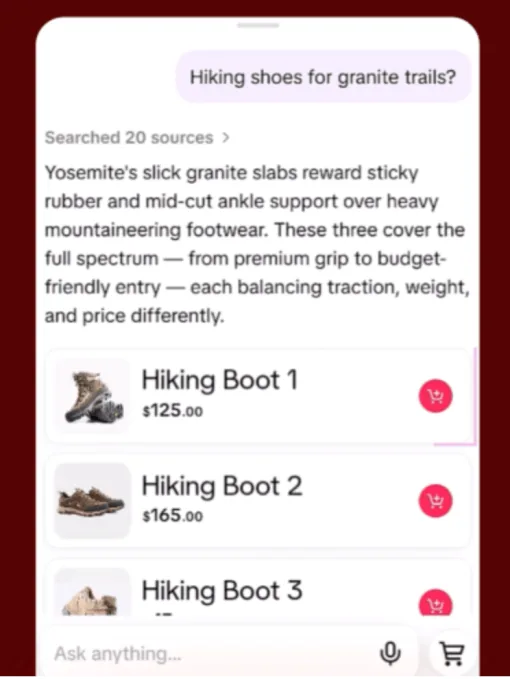
TikTok officially launched two shopping feature upgrades on October 5, 2026: an AI shopping assistant and in-app one-click checkout. Both features are now live for users of brands partnered with TikTok Shop, with no separate plugin download or app upgrade required.
- Launch date: October 5, 2026
- Feature type: AI virtual assistant (Shopper Assistant) + in-app checkout
- Entry point: product cards in the For You Feed (algorithmic recommendation feed)
- Availability: partner brand merchants already integrated with TikTok Shop
- Partners: commerce and payment platforms such as Salesforce, Shopify, Shoplazza, and Stripe
Feature Details and Business Logic
The shopping assistant is defined as a conversational AI agent. Its core capability is not to recommend products in isolation, but to provide closed-loop support around the immediate shopping intent users develop while scrolling through videos. If users become interested in a product in a video, they can tap to trigger the AI assistant for interactive consultation. The system supports real-time follow-up questions about product specifications, shipping costs, size fit, inventory status, and more, and can guide users directly to the payment page to complete the order—all without leaving the app.
The one-click checkout feature further compresses the conversion path: after users see a video product they are interested in in the For You Feed, they can tap the product card to complete payment in one click, eliminating the traditional e-commerce multi-step process of “add to cart—checkout—enter address.” This positioning aligns closely with TikTok’s existing “impulse-driven content consumption” scenario, turning temporary shopping intent that might otherwise be lost into immediate transactions.
This kind of design reveals TikTok’s deeper strategic intent: to turn its algorithm-driven feed directly into a transaction funnel entry point without relying on redirects to TikTok Shop storefronts. Compared with peers that treat short videos merely as an advertising exposure channel, TikTok is attempting to rearchitect the end-to-end responsiveness of the “discovery—consultation—payment” chain.
Key Data and Partnership Ecosystem
According to TikTok’s recently released Economic Impact Report, platform activity drove $81 billion in incremental GDP for U.S. businesses, and 54 million U.S. users said they had purchased a product after watching a TikTok video. On the e-commerce revenue side, market research firm eMarketer estimates that TikTok Shop generated about $15.8 billion in U.S. domestic sales in 2025, accounting for roughly 18% of U.S. social commerce.
One contrasting data point is worth noting: although TikTok Shop has been live in the U.S. for only a year and a half (since September 2023), its annual GMV has approached the $16 billion mark; yet compared with the single-retailer scale of amazon or walmart, that size still represents an emerging force—this feature upgrade can be seen as TikTok’s strategic attempt to move closer to a mature retail platform within the “small and fast” social commerce lane.
The current features are not a replacement for TikTok Shop, but an extension layer: after third-party e-commerce SaaS providers such as Shoplazza and Shopify integrate this capability, brands that do not rely on a TikTok Shop presence can also use its traffic pool for seamless conversion.
Relationship with Existing Paths
| Dimension | Traditional TikTok Shop Path | Newly Enhanced Path (For You + AI) |
|---|---|---|
| Transaction entry | Product page / Shop homepage | For You feed short-video card |
| User decision point | Actively searching/browsing products | Immediate consultation after being inspired by a video |
| Payment stage | In-app Shop payment | One-click direct to payment page |
| Platform capabilities relied on | TikTok Shop store system | AI assistant + fragmented payment interfaces |
The comparison shows that the new features upgrade “passive seeding” into “actively guiding purchases,” which is especially significant for small and medium-sized brands—they can plug into TikTok’s traffic monetization pipeline without having to build out a complete e-commerce infrastructure on their own.
Business Recommendations and Use Cases
Best suited for small and medium-sized brand e-commerce teams or short-video content creators to try first. If your products have a visual demonstration advantage (such as fashion styling, beauty try-ons, or small appliance demos), and your average order value is in the low-to-mid range ($30–$300), one-click payment + AI consultation can significantly lower the decision threshold. We recommend also optimizing the “hook design” of the first 3 seconds of your video to keep users engaged until the AI-assisted stage.
If your business relies heavily on complex after-sales service (such as custom large furniture or high-ticket electronics), it may be best to wait and see—the current AI assistant feature description does not mention deep logistics coordination capabilities, and returns/After-sales inquiries may still require redirecting to a third-party customer service system.
Final Thoughts
TikTok’s move confirms the second-phase characteristic of social platform e-commerce: shifting from “traffic distribution” to “funnel reengineering.” When content itself becomes a 🛒 entry point, the platform’s influence over the transaction stage will reshape the entire efficiency distribution model of advertising and e-commerce.