
Microduck’s Breakout: How a $399 Robot Became a Cultural Phenomenon
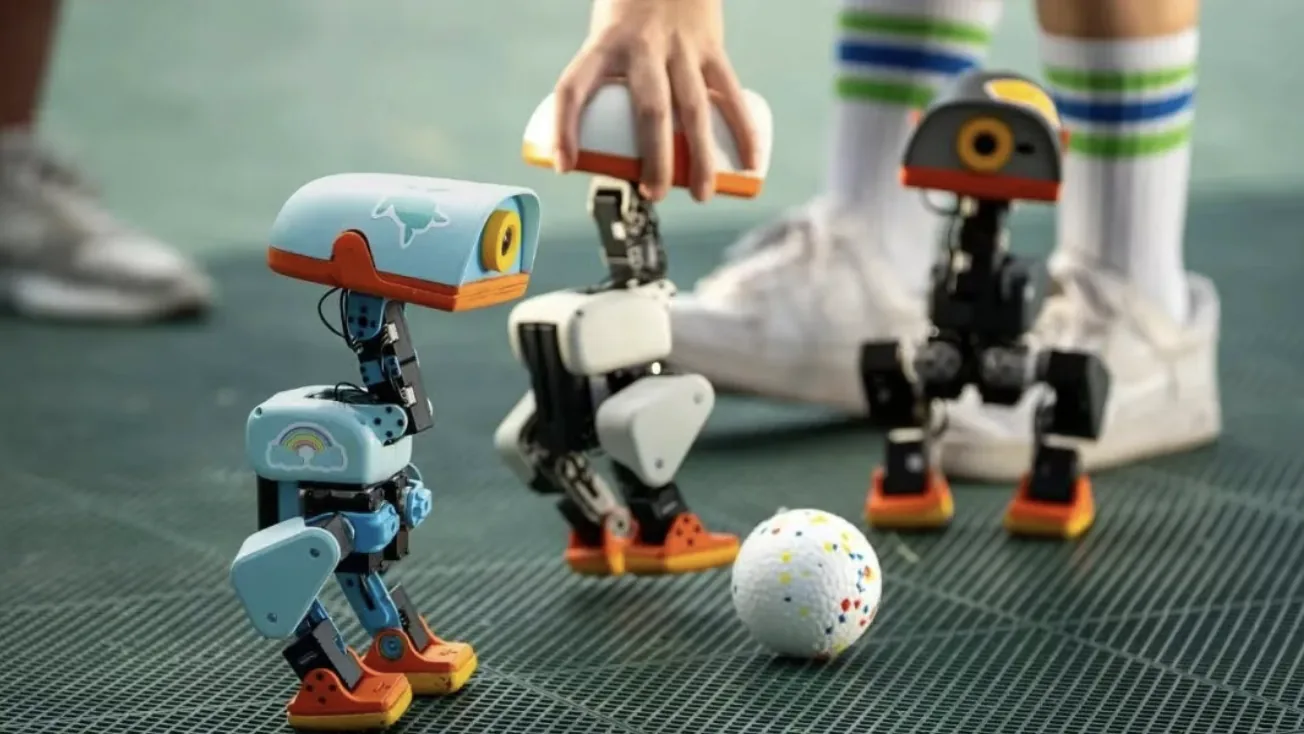
Pollen Robotics, under Hugging Face, has launched Microduck, a desktop robot that recently entered presale. Priced at $399, it reached a peak sales rate of one unit every 4 seconds, sold over 10,000 units in 5 days, with sales surpassing $5 million, and current orders backlogged into next year. This global hit is engineered and manufactured by Shenzhen-based Seeed Studio (矽递科技), which has previously manufactured Reachy Mini for Hugging Face.
Unlike functional machines, Microduck positions itself as a “silicon-based organism”: its 15 servos + controller + camera + lidar configuration creates lifelike motion that evokes pet-like affection. Its core value lies in lowering the barrier for embodied AI research—while $40,000 humanoids remain exclusive lab assets, the roughly $2000 duck enables researchers to own multiple units for sim-to-real training.
Shenzhen’s “Entrusted Legacy” Logic
Seeed’s founder Pan Hao asserts that Silicon Valley–China supply chain collaboration has evolved from “procurement” to “entrusted legacy”: when product form is unprecedented, hardware co-creation demands deep trust. Pollen Robotics and Seeed’s partnership predates Hugging Face’s acquisition, rooted in open-hardware ecosystem compatibility—clients typically arrive with functional prototypes using Seeed’s open hardware, dramatically cutting communication overhead.
A key irony lies in cost structure: despite 15 motors and lidar inside, Microduck features aggressive pricing, with replication costs reportedly exceeding off-the-shelf price. Pan attributes this to three factors: D2C distribution eliminating agent markups; high-volume negotiation leverage; and holistic supply chain optimization. He quips, “Chinese teams excel at making things cheap; American teams excel at selling them high”—hardware founders’ value resides outside hardware itself.
Supply Chain Pitfalls for New Hardware Founders
Seeed describes itself as a “selective robotics supply chain partner,” absorbing fragmented demand. Pan warns overseas founders: direct factory outreach often hits three barriers—factories dismiss small orders (e.g., smartwatch suppliers treating 10k units as minor); trust-building stretches months (Pebble’s Eric Migicovsky lived near factories half a year despite $1M+ Kickstarter); capacity mismatch kills momentum (single-factory undercapacity halts production lines).
His recommended Shenzhen onboarding path:
- First stop: Huaqiangbei or Shenzhen Robotics Valley to survey existing options, Knowing what exists instead of re-inventing;
- Hands-on practice using off-the-shelf modules rather than building from scratch;
- Build local trust via Chaihuo Maker Space.
Future Software-Hardware Division: MANUFACTURE AS A SERVICE
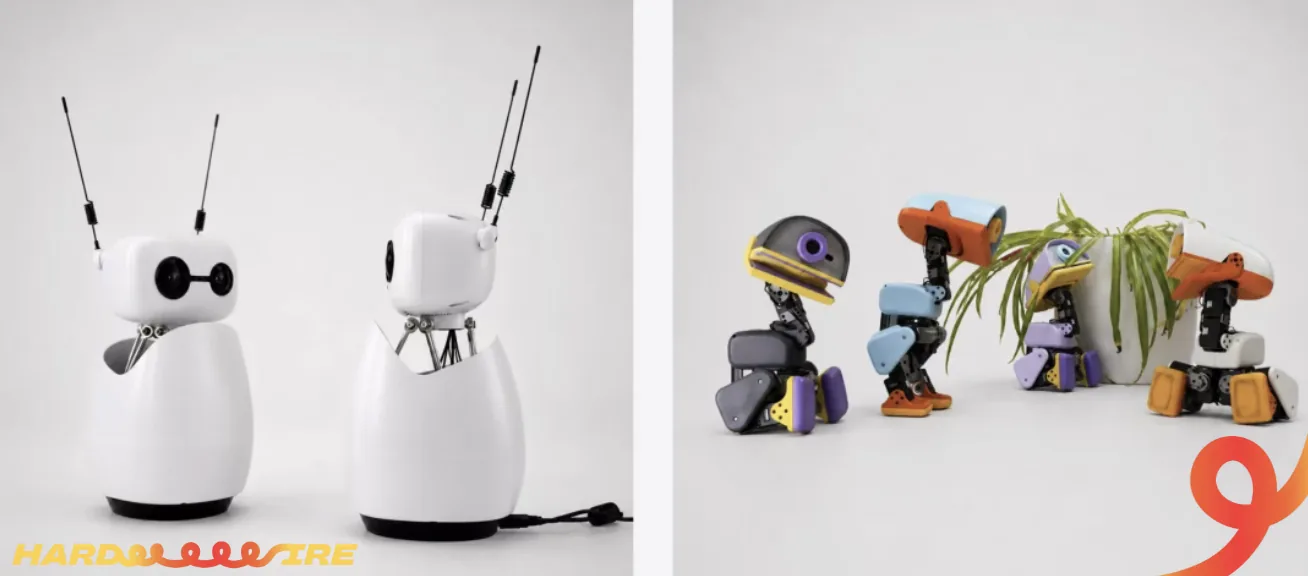
Seeed divides its product lines into two phases: Everything to AI (gathering real-world data) and AI to Everything (shrinking models to run on 30mW MCUs). Its hardware stance is clear—no components in-house, merely integrating chipsets and cameras into plug-and-play modules.
The comparison table outlines key specs and market reception for Pollen Robotics’ two flagship products:
| Product | Reachy Mini | Microduck |
|---|---|---|
| Positioning | Service/retail productivity tool | Embodied AI research & cultural symbol |
| Pricing | Unspecified (Pan: “around $2000”) | $399 |
| Showcase Event | NVIDIA CES booth | X-platform virality, C-end spread |
| Production Status | Supply-constrained | Backordered into next year |
Who should buy now, who should wait
Ready to try:
- AI researchers (multi-machine parallel training)
- Open-source developers (building atop existing hardware modules)
- Education use cases (low-cost teaching platforms)
Better to wait:
- Industrial B-end clients needing joint-level precision (servo-based design lacks high accuracy)
- Pure entertainment consumers expecting plug-and-play gimmicks (current functionality centers on training ecosystems, not plug-in toys)
Final Note
Microduck’s story transcends hardware—it signals a paradigm shift where Pan Hao’s assertion “hardware’s value lies beyond hardware” means hardware founders should grow into “vibration platforms” letting AI’s heavy brains grow atop lightweight carriers. This could herald the true arrival of a developer-driven爆款 era.