
The Rise of FDE: A ‘Bridge’ for Enterprise AI Implementation from Silicon Valley to China
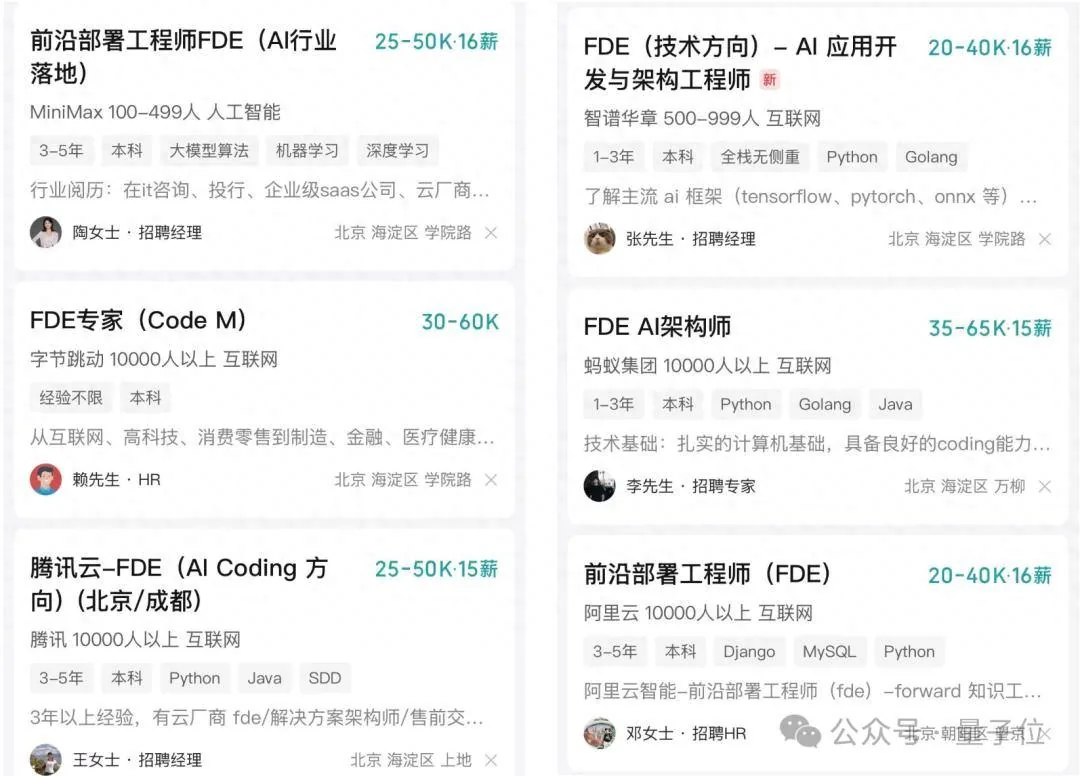
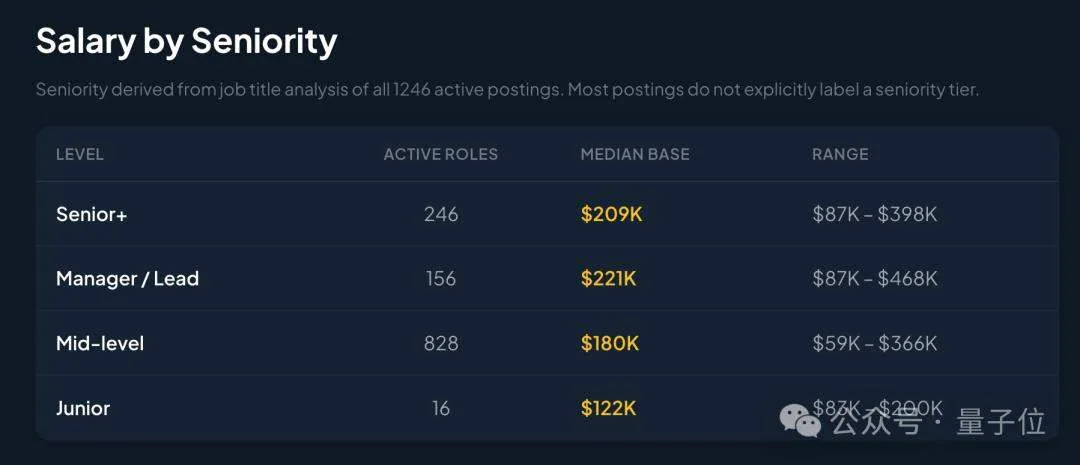
FDE (Forward Deployed Engineer) is becoming one of the hottest technical roles in the AI era. According to FDE Pulse, a recruitment data website, the median base salary for overseas FDE positions is about $200,000 (roughly RMB 1.34 million); major Chinese tech companies are offering monthly salaries of RMB 30,000–50,000, and top practitioners can earn up to RMB 50,000 per month.
Key facts:
- Overseas: Anthropic announced a $100 million investment to train FDEs; OpenAI established a $4 billion deployment company; AWS formed a $1 billion FDE division
- China: Kimi is partnering with IT service providers to jointly build an FDE team; Tencent Cloud launched the industry’s first FDE engineer certification
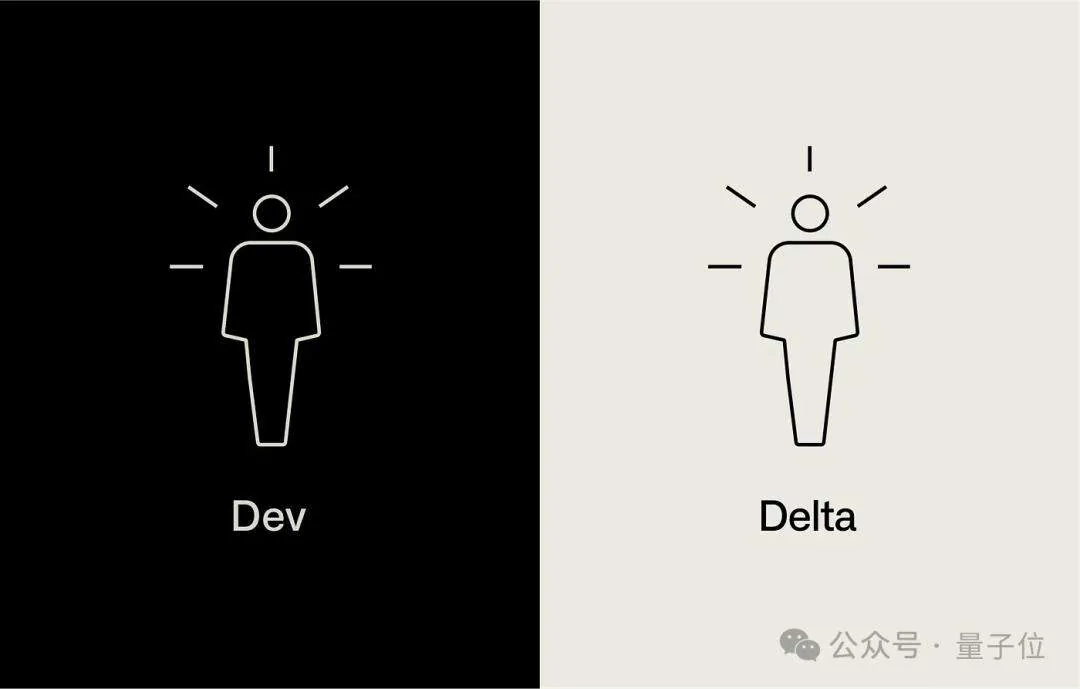
- Role types: Mainstream roles fall into Echo (business communication + solution design) and Delta (code implementation + data integration) tracks
The Two Faces of FDE: On-Site Deep Engagement and Remote Service Coexist
FDE work models are clearly diverging. As seen in the practices of SaaS vendors Layla and Sonic, on-site FDEs need to be stationed at client sites for one to two months, and their core task is to map out the enterprise’s Ontology—a “business map” that AI can call upon, encompassing departmental structure, employee roles, data relationships, and permission rules.
By contrast, FDEs at Silicon Valley company Baseten take a non-resident model. Their clients are mostly engineers, and their needs focus on technical details such as model selection, inference optimization, and cost control. They communicate requirements and build prototypes online, with low coupling to client business logic, and a high degree of standardization.
A key counterintuitive point is that FDEs spend only 30% of their time actually developing, while more than 70% is spent communicating with people. Practitioners widely report that coordinating access permissions, aligning understanding, and driving cross-departmental collaboration are the biggest challenges.
‘Guerrilla’ and Homegrown FDEs: A New Form of Lightweight Delivery
Outside big tech, independent developers are rapidly penetrating the market as ‘homegrown FDEs’. Stanford PhD Zaniel has taken on dozens of projects in five months, covering banking, law firms, coal chemicals, and other scenarios. His focus has shifted from ‘developing AI systems’ to ’teaching employees how to use AI’—connecting a general-purpose Agent with Skills (skill scripts) to existing systems often requires no new development.
Another trend is a shift toward consulting: enterprises often ‘know they need to use AI but can’t clearly articulate where the problem lies,’ so FDEs must first complete an on-site diagnosis. Practitioner Lawted distills this process as: 48 hours on-site to map processes + deliver a demo, and sign the deal on the spot, with subsequent delivery handled by an individual or a small team.
How to Choose FDE Services? Three Recommendations for Reference

- Clients suited to engaging FDEs immediately: small and medium-sized enterprises with weak IT foundations and vague AI goals; startup teams that need to quickly validate the feasibility of AI use cases; enterprises hoping to bring in external experts to elevate internal capabilities
- Scenarios where investment should be postponed: organizations that already have mature SaaS products and do not need deep customization; enterprises with closed IT architectures and no open interfaces on peripheral systems; projects whose budgets cover only one-off development and have no plans for continuous iteration
Final Thoughts
FDEs are essentially ’translators’ and ’enablers’ in the AI implementation process. Their rise reflects a reality: technology boundaries are expanding without limit, but organizations adapt far more slowly than tools iterate. As standardized tools mature, the FDE role may shift toward a longer-term role focused more on consulting and training, completing its transitional mission.