
Nuclear Startup Enters the Data Center Arena
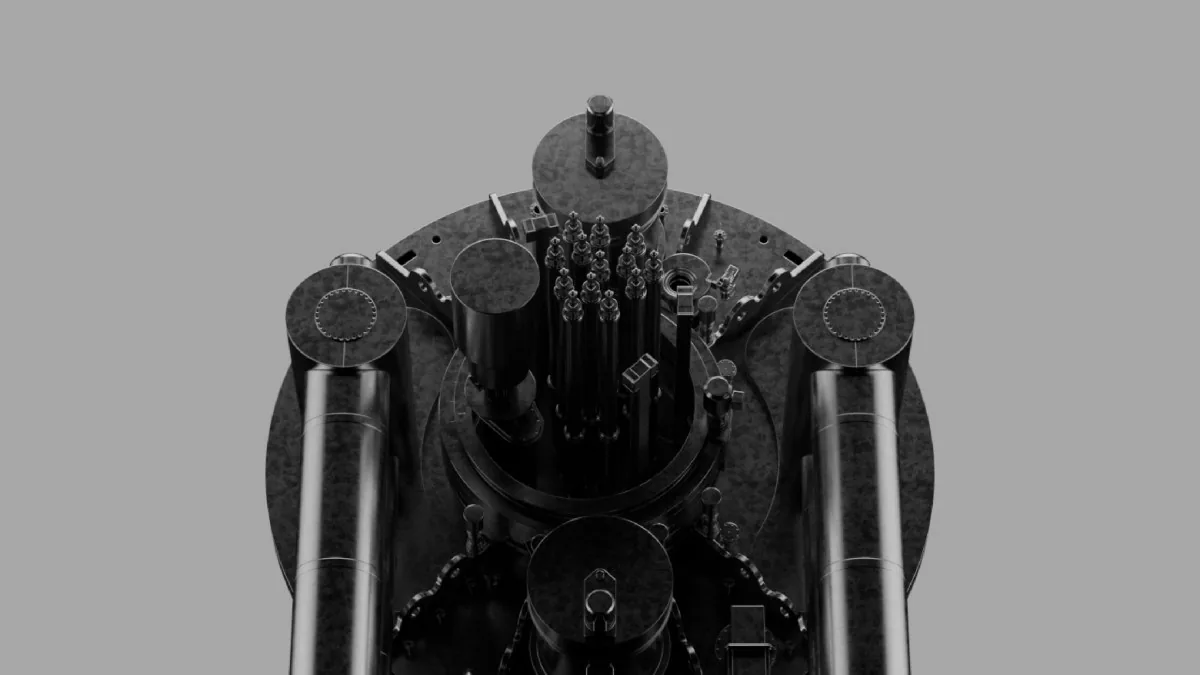
TerraPower is pitching its nuclear power solution to the AI data center market. Its core selling point is not simply “stable power generation,” but the load-following capability that comes from combining a nuclear reactor with an energy storage system. Bloomberg reports that the nuclear startup founded by Bill Gates plans to announce its first data center project this year.
The company has not disclosed the customer’s name. In January, however, TerraPower announced that Meta had agreed to purchase eight Natrium plants. Based on current information, the proposed data center project is expected to break ground in 2027 and would become TerraPower’s second plant; its first plant is already under construction in Wyoming.
AI data centers are becoming a new variable for the power industry. When training models and responding to user requests, GPU cluster loads can surge and fall rapidly, placing frequent stress on power supply systems. Nuclear startups have therefore rushed to position themselves as “around-the-clock power sources” for data centers, but not every reactor is naturally suited to this scenario.
Data Centers Need More Than Stable Power
Nuclear power’s traditional advantage is high availability. The article cites data showing that in the United States, nuclear reactors have a capacity factor of 92.5%, meaning they generate at maximum power the vast majority of the time. Capacity factor can be understood as the ratio between a plant’s actual output and its full-load capacity, a common metric for measuring the reliability of a power source.
But that is also where the problem lies: nuclear reactors are usually best suited to operating at full load. Existing reactors ramp up and down slowly; according to data from National Laboratory of the Rockies, they can increase or decrease output by only about 5% of rated output per minute. Small modular reactors, or SMRs, which many startups are betting on, can improve response speed to about 10% per minute. SMRs are nuclear reactors designed around smaller-scale, modular manufacturing, an approach the industry hopes will reduce construction complexity.
Key figures include:
- U.S. nuclear capacity factor: 92.5%;
- Existing reactor ramp rate: about 5% of rated output per minute;
- Small modular reactor ramp rate: about 10% of rated output per minute;
- TerraPower reactor design output: 345 megawatts.
For nuclear power, operating at reduced load is less than ideal. Nuclear is one of the most capital-intensive power generation technologies, and early projects are especially expensive. Even if startups hope to lower costs in the future through mass manufacturing of SMRs, that effect remains unproven and may take a decade or longer to materialize. Keeping expensive equipment running at high load as much as possible is therefore a key premise of the nuclear business model.
TerraPower’s “Secret Weapon”: Store the Heat First
TerraPower’s Natrium design uses a 345-megawatt molten-salt-cooled reactor and incorporates thermal energy storage. The idea is not to frequently increase or decrease the reactor’s own output as demand fluctuates, but to keep the reactor running continuously and store excess heat in large molten-sodium tanks; when electricity demand rises, that stored heat is used to generate more steam and drive the turbine to produce additional power.
This design was originally intended to work alongside intermittent renewables such as wind and solar. Wind and solar output fluctuates with the weather, and the plant needs to fill in more flexibly. Data centers fluctuate in a different direction: it is not supply that rises and falls unpredictably, but demand that surges and drops rapidly under the influence of GPU workloads. From a power system perspective, however, both require a power source with fast regulation capability.
TerraPower’s key advantage is this: the reactor keeps running efficiently and continuously, while power output is buffered through thermal energy storage. This allows it to retain the benefits of nuclear power’s high capacity factor while reducing the economic pressure of directly ramping the reactor. That is especially important for data centers using “behind-the-meter” power. Behind-the-meter power means a power source directly serves the user’s facility rather than relying entirely on public grid dispatch.
Cost Pressure and the Competitive Window
The electricity demand swings of AI data centers are already putting pressure on traditional power sources. The article notes that natural gas turbines can also suffer stress or even damage under such intense fluctuations. To smooth the load curve, data centers typically need to deploy large-scale battery packs, but that further drives up costs.
This is precisely the gap TerraPower hopes to fill: replacing some external battery demand with thermal energy storage while keeping expensive assets such as the nuclear island running for more hours. In other words, it is not just selling a nuclear plant, but a stable power supply architecture designed for fluctuating loads.
Still, the advantages have yet to be proven through actual project delivery. TerraPower’s first plant is still under construction, and the data center project is not expected to break ground until 2027. Early nuclear projects are costly and take a long time to build, and the cost reductions from scaling SMRs have not yet been demonstrated. All of this means its commercial competitiveness cannot be judged on technical concepts alone.
The industry trend is already clear: the expansion of AI computing power is forcing data centers to seek more stable, lower-carbon, and more controllable power sources. If TerraPower can deliver as planned and prove that thermal-storage nuclear power can handle GPU load fluctuations, it will occupy a differentiated position in the AI power race. But until then, the real test for nuclear startups remains engineering execution, financing capability, and the cost curve—not just reactor design itself.