
Tenstorrent closes a $1.5 billion Series E
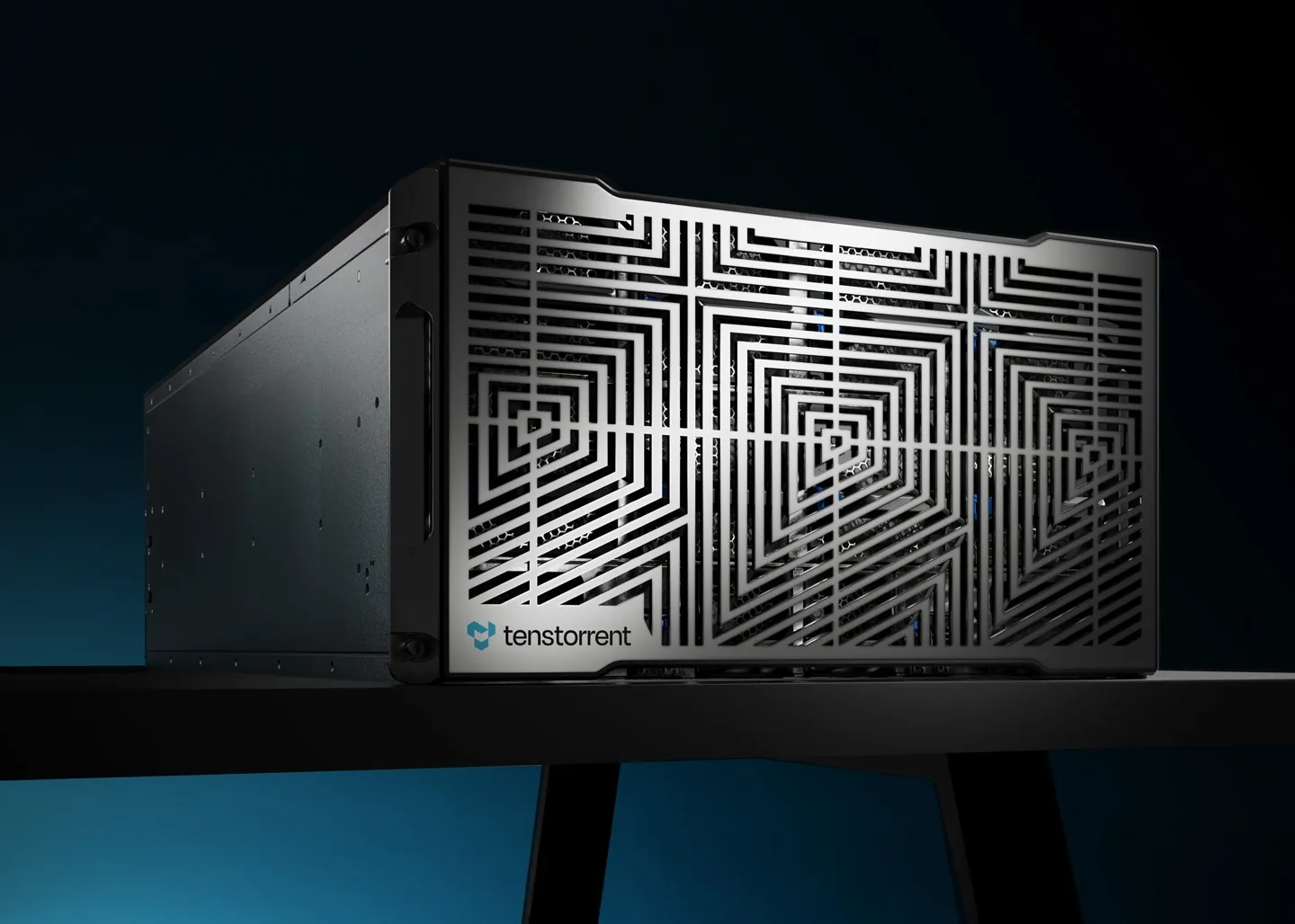
RISC-V AI compute company Tenstorrent said on Oct 19 that it has closed a $1.5 billion Series E round, giving it a $6.2 billion post-money valuation.
- Round and size: Series E, $1.5 billion (about 10.04 billion yuan)
- Post-money valuation: $6.2 billion (about 41.5 billion yuan)
- Leads: Trace Capital and Innovation X, joined by new and existing investors
- Use of proceeds: large-scale production and global commercial expansion
- Prior round: about $2.7 billion post-money in the Series D in late 2024
- Backing: led by chip designer Jim Keller; the company has released several AI chips
The valuation more than doubled in under two years
The Series D, raised in late 2024, valued Tenstorrent at about $2.7 billion. Less than two years later that figure is $6.2 billion, a gain of roughly 1.3 times. The other easy-to-miss number: the $1.5 billion raised equals about a quarter of the post-money valuation. For an unlisted chip company still scaling toward volume production, pulling in that share of its own valuation in a single round is uncommon.
The stated use of the money is narrow and practical: mass production and global commercial expansion. In chips, those two usually amount to the same thing — volume sets unit cost, and unit cost decides whether a company gets onto a customer’s procurement list. Earlier reports suggested Tenstorrent had drawn acquisition interest from Intel and Qualcomm; choosing to raise again as an independent company suggests management would rather finish the production ramp on its own.
The size of the round also signals stage. Once a chip company moves into volume production, the money it must commit up front to wafers, packaging and inventory grows fast. Dedicating $1.5 billion to production and expansion is effectively an admission that the company is shifting from R&D validation to delivery.
To understand what the company does, start with RISC-V: an open instruction set architecture, meaning the “grammar” a chip is designed around is maintained by an open community and can be used and extended free of charge, rather than licensed item by item as with Arm-based designs. Tenstorrent pairs AI acceleration with RISC-V and sells products in a range of specifications.
In the announcement, Jim Keller said the company built “a unified architecture that we sell in various sizes,” and argued the future of computing is “open, scalable and owned by the people building on it.” He said investors share that view.
On the industry backdrop, Nvidia still dominates AI compute chips while large cloud providers keep investing in their own accelerators. Startups in the middle generally choose one of two paths: compete on price-performance in specific inference workloads, or use an open architecture to attract customers who want to modify designs themselves. Tenstorrent has taken the second path, which explains the repeated emphasis on openness and scalability.
Series D versus Series E
| Item | Series D (late 2024) | Series E (this round) |
|---|---|---|
| Round size | Not disclosed | $1.5 billion |
| Post-money valuation | About $2.7 billion | $6.2 billion |
| Leads | Not disclosed | Trace Capital, Innovation X |
These figures come from the company announcement; the Series D round size and leads were not disclosed.
Who should pay attention, and who can wait
- Worth tracking: developers working on RISC-V toolchains, compilers and operator libraries, plus teams that need a second supplier for compute procurement. The money is explicitly headed for production, so hardware availability over the next year or two should become more stable — and there will be more porting and tuning work.
- Better to wait: buyers considering long-term contracts for systems or cloud services. Production and global expansion have only just started, and there is no public information yet on supply volume or pricing, so locking in long commitments now is premature. Public-market investors also lack verifiable financial disclosure; the $6.2 billion is a price set by investors.
Final thoughts
A company flying the RISC-V flag pushing its valuation from $2.7 billion to $6.2 billion in under two years is a vote of confidence in routes other than Nvidia. But chip valuations tend to run ahead of shipments, and the real test for the $1.5 billion is not in the press release — it is whether the money turns into deliverable capacity.