
Executive Summary
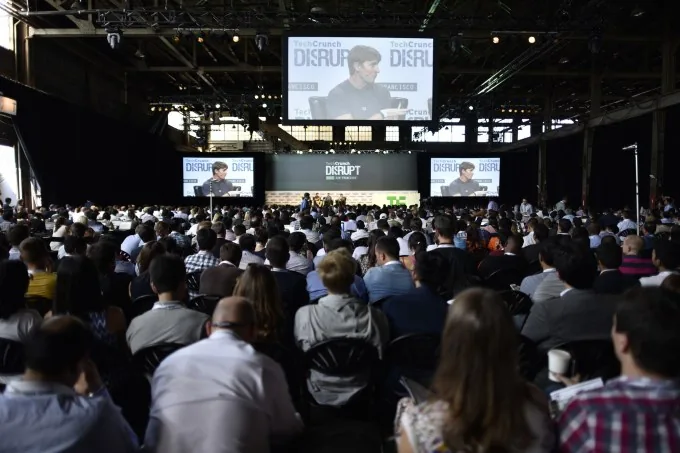
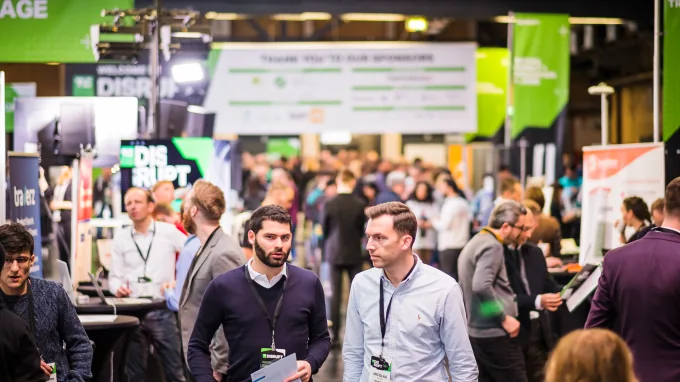
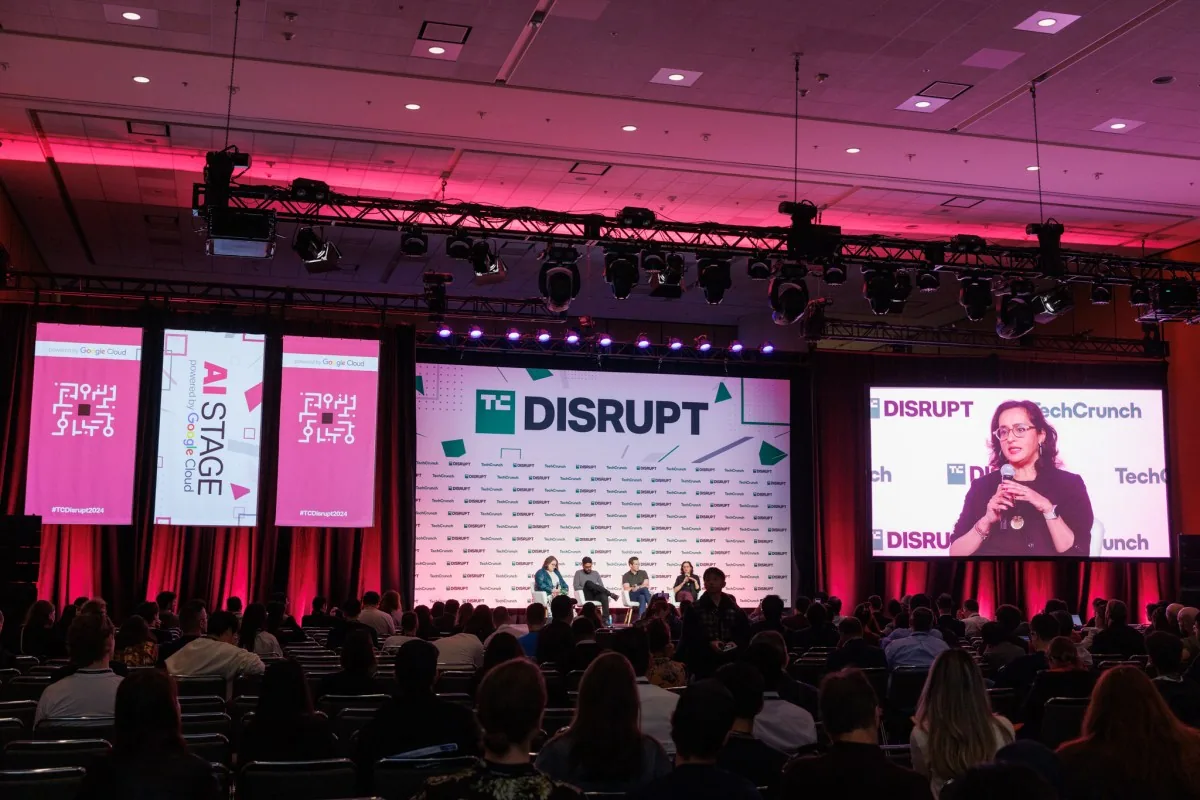
TechCrunch Disrupt 2026 returns October 13-15 at Moscone West in San Francisco, drawing over 10,000 attendees and 250+ speakers. Five dedicated AI safety sessions—spanning the AI Stage and Real World AI Stage—are now confirmed for founders building trustworthy enterprise and physical AI systems. Early-bird pricing includes up to $200 savings for registration before September 25, 2026 (11:59 p.m. PT) and 50% off a second ticket.
Speakers include executive-level leaders from Anthropic, Okta, AWS, Nvidia, Waabi, Shield AI, General Motors, and Luta Security. These sessions deliberately avoids theoretical discussion, focusing instead on deployed systems and operational realities—the kind of ground-truth insight that separates successful pilots from full-scale adoption.
The Enterprise Deployment Chasm

Cat de Jong, Anthropic’s Head of Applied AI, will share findings from direct collaboration with enterprises deploying Claude: some derive measurable ROI within quarters, while others remain stuck in pilot mode for 18 months. This stark contrast underscores a non-technical bottleneck—the misalignment between model capabilities and operational workflows—that many founders overlook when designing for enterprise sales cycles.
Concurrently, AWS VP of Security Services Rudy Mitra, Luta Security’s Katie Moussouris, and cybersecurity veteran Wendy Nather will dissect how AI elevates cloud security complexity. Their consensus: enterprises can no longer rely on perimeter-based controls when AI agents mediate database or API access. Instead, infrastructure-level permission modeling and behavioral auditing emerge as prerequisites for approval in regulated industries. For founders, this means security architecture must be a founding priority, not a post-MVP add-on.
Agent Security and Real-World Autonomy
Okta’s President of Products and Technology Ric Smith and NanoCo founder Gavriel Cohen will expose weaknesses in today’s agent security posture. Current application-level permission systems fail to constrain multi-step decision chains, allowing agents to cascade unintended actions across systems. A key insight: per-action permission checks without context-aware escalation controls create silent failure surfaces. Founders building agentic workflows must architect for least-privilege behavior, not just least-privilege identity.
On the physical AI front, Shield AI CTO Nathan Michael, GM’s Mikell Taylor, and Raquel Urtasun of Waabi will address a defining question: when does failure become acceptable? Their discussion will emphasize safety culture over test coverage alone—since exhaustive validation is impossible in open-world environments. The takeaway for hard-tech founders: robotic or autonomous deployment requires parallel investment in observability platforms and continuous validation pipelines.
Data Deficits in Physical AI
Nvidia Inception Global Head of Physical AI Les Karpas will articulate why robotics has yet to see its ChatGPT moment: unlike text or images, robot sensor data scales poorly without simulation and ground-truth labeling. The session identifies three enablers: (1) synthetic data pipelines that mirror real-world distribution shifts, (2) high-fidelity digital twins for continuous testing, and (3) foundation models fine-tuned on robotic priors. This reframes the robotics challenge—not as hardware limitation, but as data civilization problem.
Strategic Guidance for Builders
- Enterprise AI vendors should attend Sessions 1 and 3: alignment on governance and audit readiness directly shortens sales cycles in regulated verticals
- Security teams planning agent rollouts must attend Session 2: architectural patterns discussed will inform summer 2027 infrastructure planning
- Robotics startups still in PoC phase should wait on Session 5 before committing to board-level trust narratives; Karpas indicates data gap remains structural, not temporal
Final Thoughts
During the rise of autonomous systems, trust is no longer a marketing asset—it is the final product requirement. Companies that bake safety into architecture from Day One will outscale peers chasing performance metrics alone. Disrupt 2026’s safety sessions signal a maturing AI industry where reliability guarantees trump raw capability as the primary competitive differentiator.