
Core Event Overview
TechCrunch Disrupt 2026 will take place October 13–15 at Moscone West in San Francisco, now only seven days away. The event will bring together more than 10,000 founders, investors, entrepreneurs, and technology decision-makers. As an included ticket benefit, attendees can attend all roundtables for free.
Key Information Checklist
- Event dates: October 13–15, 2026 (three days)
- Location: Moscone West, San Francisco, USA
- Ticket offer: Register now and save $100; get 50% off a second ticket
- Roundtables: 15 in-depth interactive roundtables across two dedicated roundtable areas
- Access: Included with standard tickets at no extra cost
Roundtable Themes and Core Topics
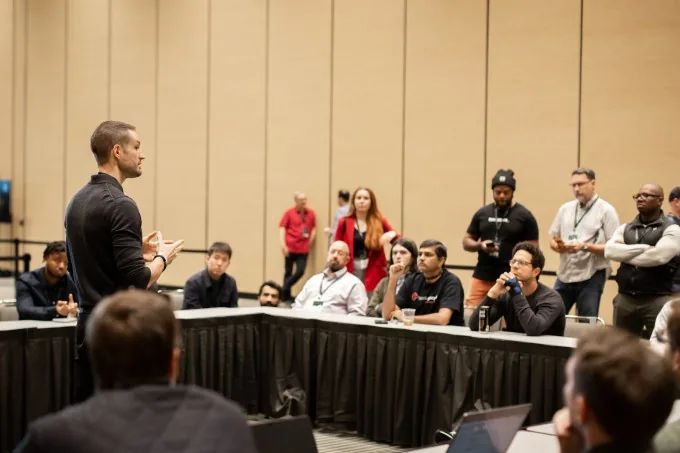
The roundtables at Disrupt 2026 are designed to emphasize “hands-on practice” and experience exchange. Each roundtable lasts about 60–90 minutes and is limited to 30–40 participants, encouraging attendees to bring their own questions to the discussion.
Physical AI Deployment Remains in Its Early Stage: Despite intense industry hype, multiple roundtables will expose real-world bottlenecks. Logan Farrell (CTO, Rugged Robotics) and Austin Yount (Partner, Brick & Mortar Ventures) will point out: “A great robot demo does not equal a deployable product”—the industry disconnect most often obscured by Hollywood narratives. Physical AI must address four core issues—reliability, workflow integration, user trust, and ROI. Scaled adoption depends on clear proof of economic value.
The Enterprise Software Market Is Undergoing a Paradigm Shift: Smartsheet CEO Rajeev Singh offers a key judgment: “SaaS is not dead; AI is simply exposing the fragmented structure underneath it.” Traditional SaaS modules lack context awareness and cross-process collaboration. The next generation of enterprise software will be rebuilt around “orchestration, organizational context, and workflow intelligence.”
AI-Driven IPO Readiness Becomes the New Normal: Pigment co-founder Eléonore Crespo and Chime SVP Sofia Fatakhova will share how modern finance teams use AI to automate audit trails and build compliance documentation systems, dramatically shortening IPO preparation timelines. Processes traditionally thought to require starting 18–24 months before a listing can now be compressed to 6–8 months under best practices.
Healthcare Shows an Unusual Adoption Curve: Brian Butler, Partner at Questa Capital, observes that electronic health record (EHR) systems took 40 years to become widespread, while generative AI achieved broad adoption in just three years. This contradiction suggests that technology transfer models need to be rethought; generative AI’s “low-friction trial” nature has accelerated the organizational learning curve.
Key Roundtables Compared at a Glance
| Roundtable | Key Speakers | Key Insight Focus |
|---|---|---|
| “The Data Challenge of Physical AI” | Radha Basu (CEO of iMerit) | Edge-case handling, multimodal data, reliable real-world data pipelines |
| “The Future of SaaS” | Rajeev Singh (CEO of Smartsheet) | Orchestration, organizational context, intelligent cross-workflow collaboration |
| “IPO Readiness in the AI Era” | Crespo & Fatakhova | Automated audits, compliance documentation, starting 6–8 months earlier |