DeepMind Launches SynthID Bio for Synthetic Biology
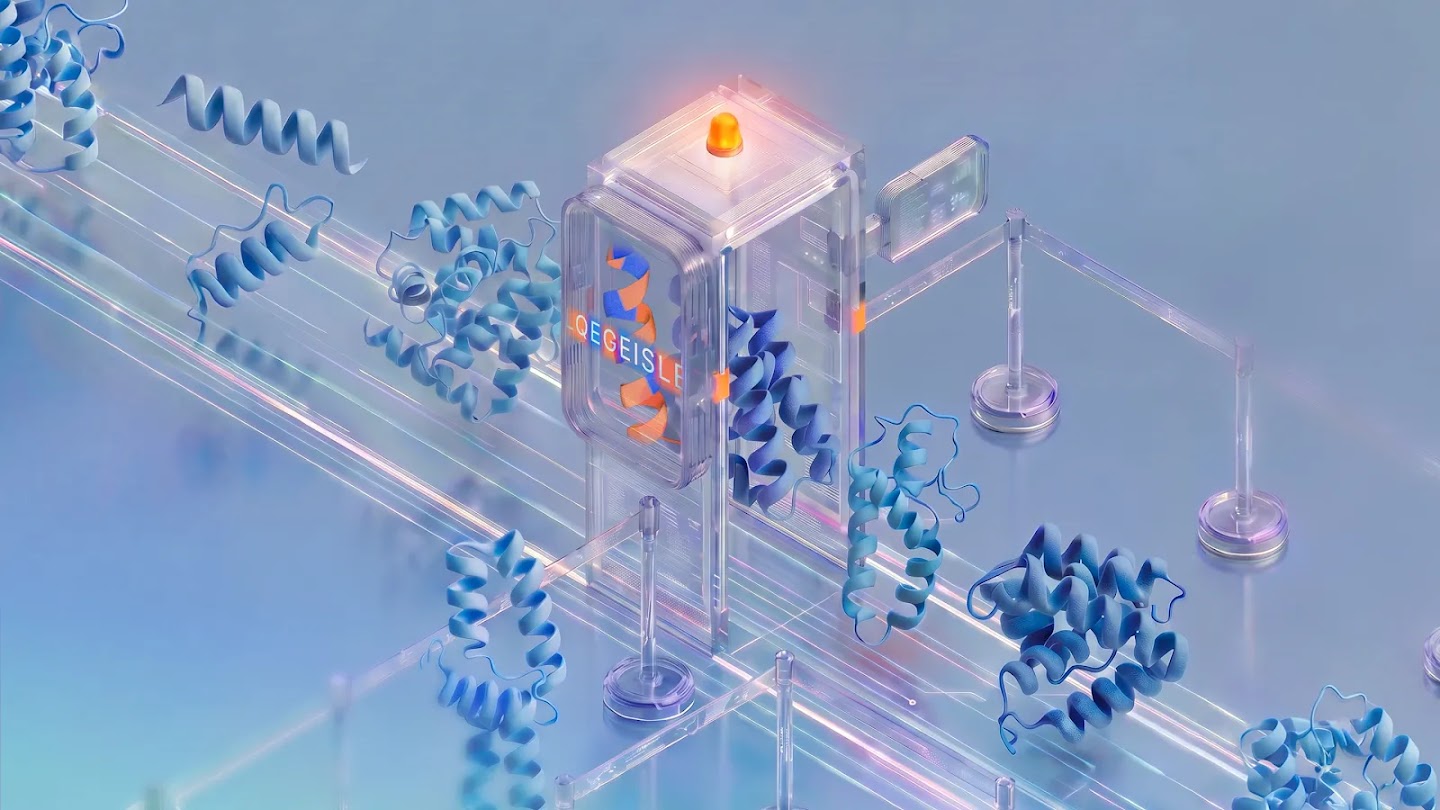
On September 30, 2026, Google DeepMind officially released SynthID Bio, a family of watermarking methods specifically designed for synthetic biology to track AI-generated biological designs. The breakthrough lies in embedding verifiable signatures directly into the physical synthesized protein itself while maintaining biological function, as confirmed by laboratory testing. The release includes the methods paper, open-source code, in vitro data, and model weights for community replication and extension.
Technical Approach and Experimental Validation
SynthID Bio adapts its watermarks based on data type: for protein sequences, it subtly guides amino acid selection; for 3D structures, it fine-tunes atomic coordinates to create detectable signals. The team combined AlphaProteo with a SynthID Bio-enabled ProteinMPNN to generate watermarked protein binders, validating across three targets—VEGF-A, SARS-CoV-2 spike RBD, and PD-L1—in wet-lab experiments.
Key results:
- Hit rate equivalence between watermarked and non-watermarked designs
- No significant KD difference (binding affinity), confirming equal binding strength
- Preservation of natural sequence diversity
For protein folding, DeepMind fine-tuned AlphaFold 3’s diffusion network weights to embed watermark capability directly, ensuring any user runs the model with watermarked outputs. This approach maintains AlphaFold 3’s prediction accuracy while achieving near-perfect detectability, preserving structural feature distributions and resisting digital noise or minor coordinate perturbations.
Collaborative Development and External Input
DNA synthesis providers sit at the biosecurity frontline, but AI-generated novel sequences can bypass traditional threat database screening. SynthID Bio provides an automated verification signal proving an order originated from a trusted, safety-enabled model. James Diggans, VP of Policy and Biosecurity at Twist Bioscience, stated the technology could streamline screening, focusing resources on high-risk sequences.
Watermarked bacteriophage research is underway with Stanford’s Hie lab and Arc Institute, using Evo 2 genome designs. Early bacterial culture tests confirm functionality, demonstrating feasibility for watermarking more complex biological objects.
Capability Comparison with Existing Solutions
| Feature | SynthID Bio | Traditional Digital Watermark | C2PA (Media) |
|---|---|---|---|
| Embedding Target | Physical合成 protein | Digital file | Digital media file |
| Verification Method | Lab-detectable signal | File metadata | File metadata |
| Function Preservation | Experimentally validated | N/A | N/A |
| Target Domain | Protein sequences and structures | Generic digital content | Audio/video media |
Engagement Recommendations
- Ready for adoption: DNA synthesis providers can integrate SynthID Bio into order verification to auto-clear orders from known supported models
- 宜 research community跟进: Academic labs and biotech firms can generate traceable public datasets, improving database submission integrity
- Wait for further development: For scenarios involving deliberatetampering concerns, current robustness against malicious attack needs community enhancement before production readiness
Final Thoughts
As SynthID extends from digital media to life sciences, SynthID Bio demonstrates cross-domain technical feasibility. This work is not a silver bullet but a critical verifiable layer in the bioresilience architecture—as AI design capabilities grow exponentially, provenance tracking must evolve in parallel to safeguard both research integrity and biological security.