
Strategic Shift Toward Physical AI Era
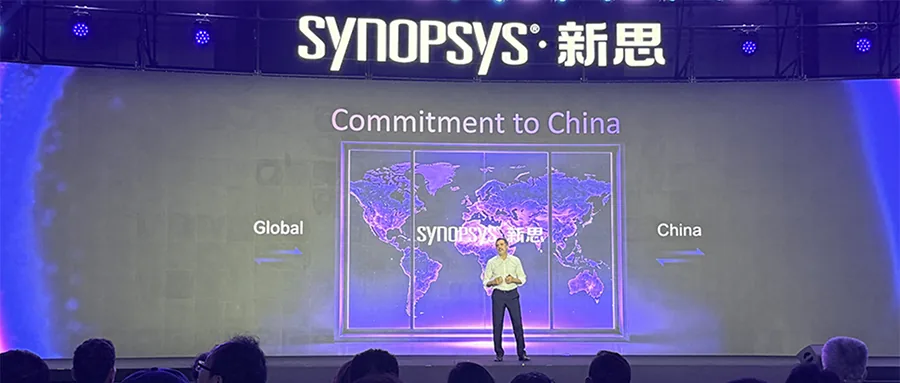
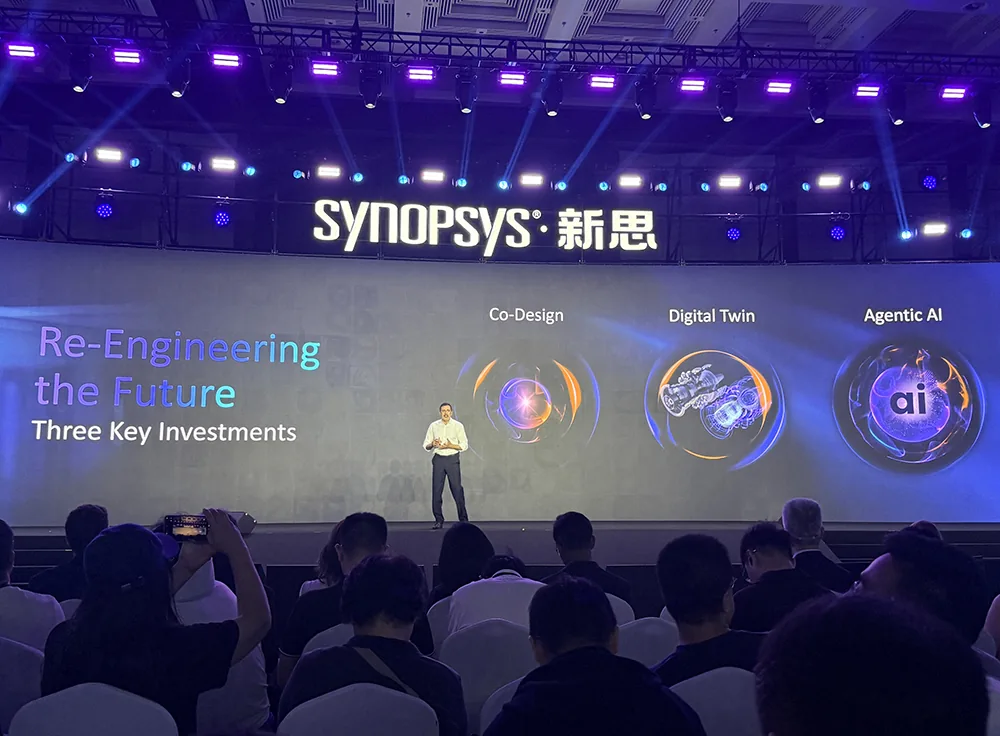
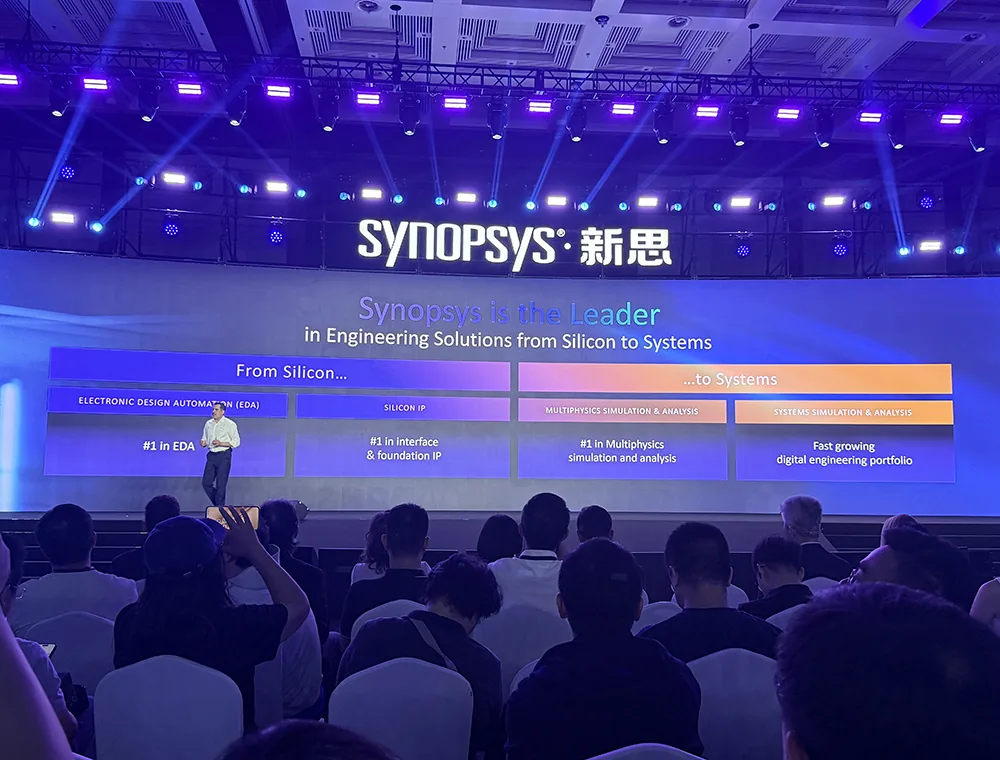
On September 16, 2026, Synopsys CEO Sassine Ghazi unveiled three strategic pillars for the Physical AI era at the Synopsys Developer Conference: Collaborative Design, Digital Twin, and AI Agents. As the global EDA leader, Synopsys is transforming from a chip design tool provider to a full-stack engineering solutions vendor covering the journey from chip to system. This strategic evolution directly follows the company’s acquisition of Ansys in July 2025, enabling integration of EDA, semiconductor IP, and multi-physics simulation capabilities.
Intelligence-Driven Transformation of Chip Design
The definitions of chip design engineers and design companies will undergo substantive change within one to two years. In traditional workflows, large teams manually operate EDA tools; in the future, end-system companies can specify chip requirements, use AI models to generate RTL, and subcontract verification, physical implementation, and manufacturing prep to design service providers. Even if AI autonomously advances from RTL generation through verification, physical design to manufacturing preparation, the sign-off checklist remains an immutable requirement before fabrication—ensuring deterministic quality, reliability, and safety.
Synopsys offers two agent business models: Agent Subscription (multi-year licensing) and software usage-based billing (pay-per-tool-call). Additional commercialization details will be shared at the Investor Day on September 30, 2026.
Divergent Physical AI Ecosystems: US vs. China
Synopsys Global VP & China CEO Yao Yao noted that the US and China AI ecosystems exhibit “convergent brains, divergent bodies”: similar ratios in MaaS and foundational model training, yet markedly different physical applications. While 61% of US AI companies are pure software, only 26% are in China, where robotics and autonomous driving dominate. The US emphasizes RL for LLM fine-tuning, whereas China prioritizes action optimization for embodied systems.
Referencing Musk’s G20 formula—Usefulness of General Humanoid = Chip Performance × AI Software × mechanical-electrical dexterity—Yao stressed that Physical AI demands synergistic optimization across silicon, software, and mechanical-electrical domains. Excessive latency incapacitates precision mechanics, making low-latency multi-die integration essential for real-time perception-decision-action loops in intelligent robots.
Three Strategic Pillars in Practice
Collaborative Design
Synopsys integrates EDA with Ansys physics simulations, launching Multiphysics Fusion products covering timing sign-off, multi-die, analog design, and design closure. These are now open for customer deployment and validated in live production flows.
Digital Twin
The digital twin platform spans supply chain, chip, cloud infrastructure, and virtual testing. ZeBu emulation delivers 2× capacity, 2× performance, and 3× debugging productivity for large-scale model validation.
Environment Digital Twin
Synopsys Ansys collaborates with NVIDIA Omniverse to build high-fidelity physical environment replicas, enabling reliable simulation-to-reality translation.
AI Agents
Synopsys has built 30+ task-level agents, each acting as an expert operator for specific EDA tools. Domain-level multi-agent systems coordinate debugging, coverage analysis, test generation, and verification execution. Long-running agents orchestrate cross-domain engineering tasks. At the DAC conference, Synopsys demonstrated doubled token efficiency and improved chip quality with NVIDIA, AMD, Microsoft, and top-tier semiconductor firms.
Capability Comparison
| Dimension | Synopsys Original | Post-Ansys Integration | Product Evolution |
|---|---|---|---|
| Design Stage | Digital/analog chip design, verification, sign-off | Material, structural, optical, fluid, EM, thermal analysis | Chip design → System-level multi-physics simulation |
| Simulation Fidelity | Electronic timing/power analysis | High-fidelity coupled multi-physics | Enhanced early physical sign-off accuracy |
| Verification Method | Traditional HDL simulation, hardware prototyping | ZeBu hardware emulation + software-defined testing | 2× capacity, 2× performance, 3× debugging efficiency |
Implementation Recommendations
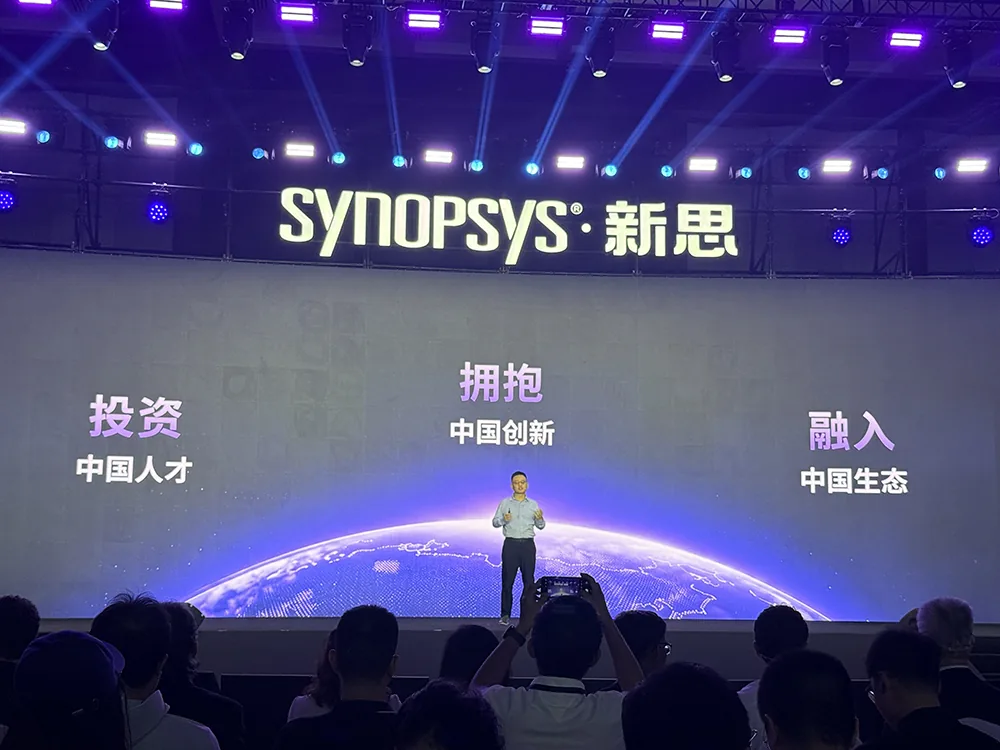
Best for early adopters: Companies designing advanced chips (2nm/3nm nodes), developing embodied intelligence (robots, AVs), or integrating automotive electronics can shorten iteration cycles via Collaborative Design; teams building robotic systems should leverage Multiphysics Fusion; enterprises already deploying generative AI in engineering can test task-level agents for token efficiency gains.
Wait-and-see: Mid-sized IC designers without system integration needs may delay adoption of long-running agent systems; firms without existing digital twin data infrastructure should build modeling capability before adopting multi-physics simulation platforms.
Final Thoughts
Physical AI’s success hinges on cross-domain engineering collaboration. As transistor density gains slow, Synopsys—through Ansys integration and AI agents—shifts innovation from “point performance optimization” to “system-level physics adaptation”. The next decade of semiconductor tooling now pivots on delivering verifiable, manufacturable products that balance performance, reliability, and cost under strict physical constraints.
This article is compiled from public materials at the Synopsys Developer Conference held September 16, 2026.