
Subaru Bets on Software-Defined Vehicles: Cuts Development Cycle by About 40%, Teams With AMD on Chips
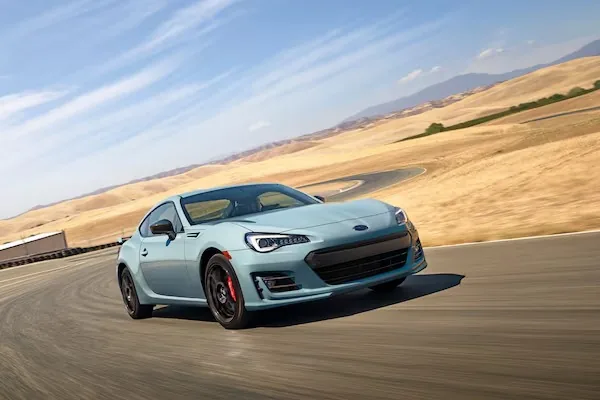
Subaru held a strategy briefing last Sunday local time at its R&D center in Sano, north of Tokyo, unveiling its software-defined vehicle (SDV) roadmap: launch SDVs in the latter half of this decade and shorten the full-vehicle development cycle by about 40%. Put simply, SDV means letting cars, like phones, have more and more functions defined by software and continuously updated through upgrades, rather than being fixed at the factory.
The key hard facts are as follows:
- Announcement time: announced last Sunday local time; IT之家 cited a Reuters report on October 19; rollout timing set for “the latter half of this decade.”
- Pace target: shorten the full-vehicle development cycle by about 40%.
- Core hardware: all models will gradually be equipped with Subaru’s self-developed integrated electronic control unit (ECU), whose core chip is jointly developed by Subaru and AMD.
- Capability scope: aims to support OTA remote updates, covering driver assistance, autonomous driving, and vehicle performance-related functions.
- Platform coverage: unified electronic platform architecture for battery electric, hybrid, and gasoline vehicles.
- Ecosystem choice: currently no plans to adopt Toyota’s Arene software platform.
ECU stands for electronic control unit, the “little computer” in a car responsible for controlling subsystems such as the engine, brakes, and steering; an integrated ECU means merging several originally separate control units to reduce wiring harness and coordination costs.
Where the 40% Comes From: Simulation, Parallel Work, Unified Architecture
Subaru’s methodology is not mysterious: use digital simulation for prototyping and advance design, testing, and production preparation in parallel, rather than queuing them up one after another in a traditional sequential process. The benefit is that much validation work can be completed before physical prototypes are built, and hardware and software progress do not have to wait for each other.
Bringing the three powertrain types (battery electric, hybrid, and gasoline) onto a unified electronic platform architecture is the other half of this approach. For an automaker, platform unification means the same software and electronic architecture can be reused across more models, and the OTA maintenance surface narrows accordingly, instead of maintaining a separate electronic system for each powertrain.
What is truly noteworthy is the contrast data: Toyota currently holds a 21% stake in Subaru, but Subaru explicitly says it has no current plans to adopt Toyota’s Arene software platform. Toyota said just last Friday that it expects the Arene platform to be installed in 10 million new vehicles annually by 2030 and to expand to alliance partner models by 2035. On one side is an ally’s tens-of-millions-scale platform vision; on the other, Subaru chooses an in-house integrated ECU—this shows not only that software-defined vehicles are viewed as a core competitive capability rather than an off-the-shelf commodity, but also that software routes within an alliance are not automatically unified.
Subaru’s In-House Route vs. Toyota Arene
| Item | Subaru (announced this time) | Toyota Arene |
|---|---|---|
| Software platform | In-house, does not currently adopt Arene | Proprietary platform |
| Chip partnership | Core chip jointly developed with AMD | Not mentioned in source material |
| Timeline | Launch SDV in the latter half of this decade | Equipped on 10 million new vehicles annually by 2030; expand to alliance partner models by 2035 |
| Coverage | Unified electronic platform architecture for battery electric, hybrid, and gasoline vehicles; all models gradually equipped with integrated ECU | Specific model range not mentioned in source material |
It should be noted that for items marked “not mentioned in source material,” the report does not provide them, and no inference should be drawn about the two sides’ relative strengths or weaknesses on other dimensions.
Who Should Pay Attention, and Who Can Wait
- Subaru owners or potential buyers: the focus is not on a given car’s current features, but on whether OTA can truly cover driver assistance and vehicle performance. Because rollout is set for the latter half of this decade, in the short term there is no need to expect current models to gain equivalent capabilities through a single update.
- Supply chain and investment observers: two lines are worth watching—AMD’s progress in automotive chip collaboration and the mass-production pace of Subaru’s in-house integrated ECU. If you originally hoped to share in the benefits of Toyota’s Arene ecosystem, you need to exclude Subaru separately. If you just want a car that can continue receiving OTA updates in the near term, it is advisable to wait for clearer models and timelines.
Final Thoughts
Cutting the development cycle by 40% is a goal, not a promise; the real test is whether simulation and parallel processes can deliver on production vehicles. By choosing in-house development and bringing in AMD for chips, Subaru is effectively keeping the initiative in software and semiconductors in its own hands. This also reminds the industry: in the software-defined vehicle era, alliance equity does not equal platform consensus.