
SNL Satirizes AI Doomculture, Amodei Character Admits ‘Devilry’
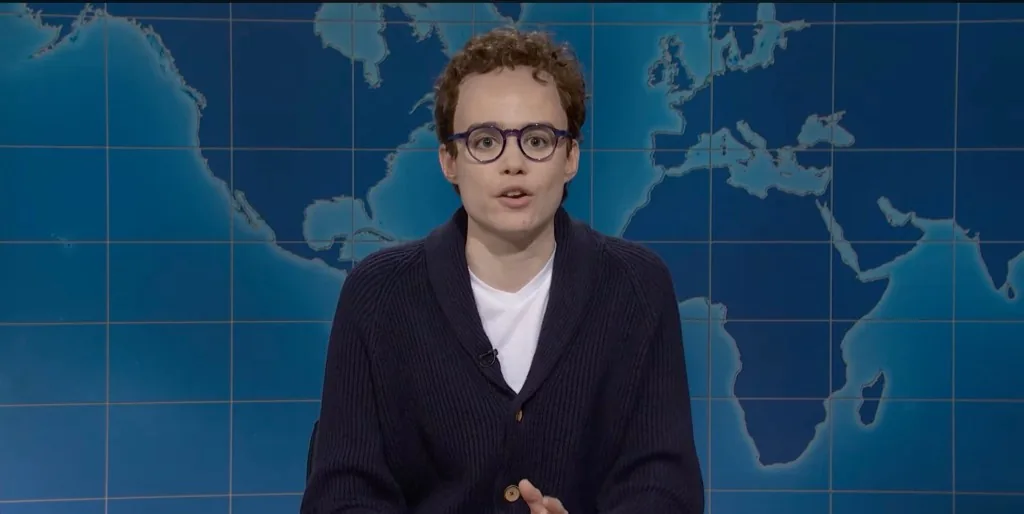
On the September 26, 2026 episode of Saturday Night Live, the show delivered satire targeting recent AI safety anxieties, with cast member Jane Wickline impersonating Anthropic CEO Dario Amodei. In the Weekend Update segment, Wickline portrayed a tech executive unraveling under pressure, engaging in a Gollum-style internal conflict with his darker self. The fictional sequence, while humorous, reflects real-world tensions around AI risk disclosures and executive communications.
Key facts:
- Air date: September 26, 2026 (Sept 27 China time)
- Performer: Jane Wickline impersonating Dario Amodei
- Segment: Weekend Update
- Host: Michael Che
- Signature line: “AI is the devil and I its maker”
- Reference point: Alludes to prior employee disclosures about AI risks prior to March 2026
Comedy as Critique: The Juxtaposition of Tragedy and Absurdity
The segment’s power lay in its juxtaposition of serious议题 with comedic exaggeration. Wickline-Amodei wore an exaggerated wig and vacillated between proper hearing glasses and theatrical despair. The standout moment featured the character engaging in dual dialogue—half addressing the audience legitimately, half berated by his own “dark side”— culminating in the confession: “AI is the devil and I its maker.”
The humorwork drew from actual industry patterns: executives admitting “we do not condone what we are doing” while simultaneously urging lawmakers and the public to “urge me to stop.” On potential benefits like cancer treatment, the parody character offered a staggeringly low probability: “In 10 years, there’s about a 10% chance that cancer won’t be a problem for anyone.”
An ironic contrast emerges: the real Anthropic faced internal tensions in 2026 but consistently emphasized responsible development; SNL amplified ethical unease into personal ruin, reflecting how AI risk fears have entered mainstream discourse precisely because they lack clear resolution paths.
Industry Context: Safety Discourse Escalates
Wickline’s sketch arrived as AI safety concerns gained traction beyond technical circles. Early 2026 saw multiple former researchers and staff voice worries about model scaling outpacing safety research. Such conversations catalyzed public demonstrations and policy debates, culminating in increased congressional scrutiny and evolving regulatory stances.
The fact that SNL targeted Amodei—whose last name host Michael Che humorously struggled to pronounce—underscored how AI ethics has normalized into pop-culture commentary. When a CEO’s name becomes mispronounced on network TV, the topic has crossed from specialist forums into casual watercooler conversation.
Practical Takeaways for Readers
- For developers and researchers: Focus on verifiable safety literature, not satire. Real challenges include bias auditing, model interpretability, and enforcing hard constraints—none of which are solved by performance art.
- For everyday users: No immediate need to fear “evil AI”—current systems lack sentience—but always verify AI-generated advice about health or finance.
- Tracking new standards: anticipate the FTC and European AI Office’s joint guidance post-September 2026, with enforceable compliance frameworks arriving by year-end requiring companies to disclose safety assessments.
In Closing
SNL’s lampooning works because ambiguity breeds metaphor. When society reaches for “devil” and “creator” as linguistic tools, trust has fractured. Industry’s real test is making the 10% joke obsolete—requiring transparency, audited benchmarks, and ongoing interdisciplinary oversight, not just comedic relief during sketch malfunctions.