
Simate-beta Launches, Marks New Paradigm in Physical AI Research
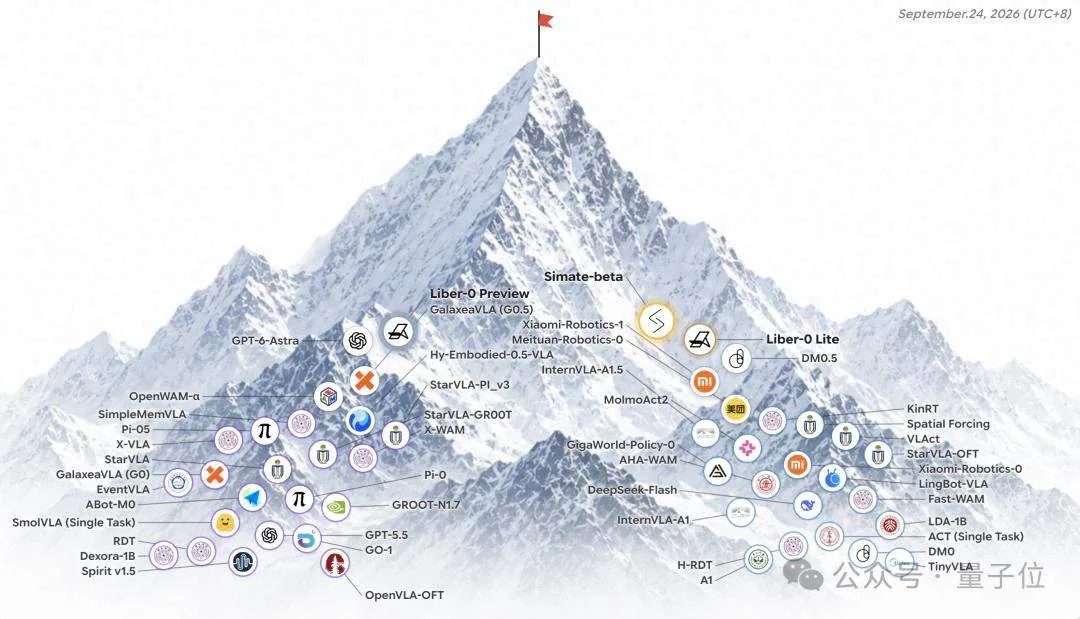
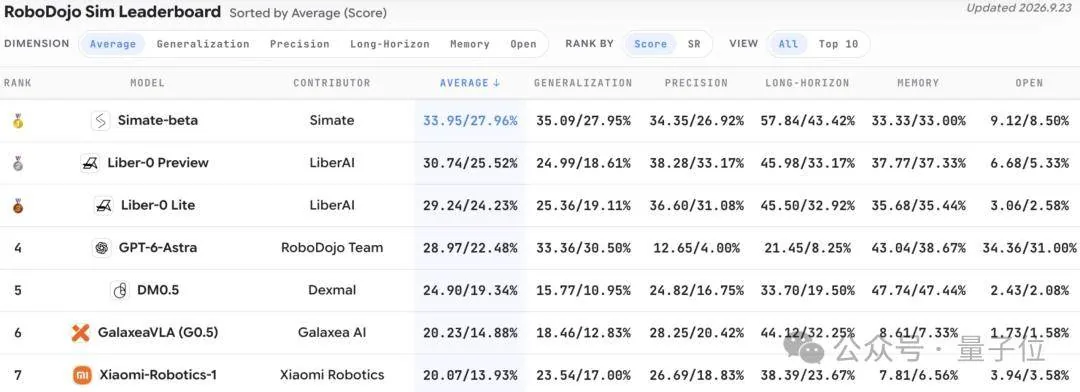
- Release Date: September 23, 2026 (RoboDojo benchmark update: 33.95 average score, 27.96% success rate, #1 ranked)
- Version: Simate-beta is the inaugural general-purpose physical fast system; no task-specific optimization applied to RoboDojo evaluation
- Availability: AutoResearch research platform enters closed beta, accessible to researchers from MIT, Caltech, Tsinghua, Peking University, etc.
- Architecture: AI for Physical AI approach with three-layer infrastructure: SiPAI model framework, AutoResearch engine, and AI-native Infra
Simate is a startup founded only three months ago. Its core team previously pushed an end-to-end autonomous driving model to Tesla FSD parity and achieved mass production. Simate-beta, the first output of its “Physical AI” research pathway, targets zero-shot generalization—performing novel tasks in unfamiliar environments without retraining.
Technical Approach: Fast System First, 4D Perception with Hierarchical Memory
Physical AI research often draws from human cognition’s System One (fast) and System Two (slow). Simate prioritizes the fast system—a high-parameter, real-time action module—rather than relying on high-level reasoning. Its dual-pillar design combines 4D physical perception (joint spatial-structural and temporal-dynamic capture) with hierarchical temporal memory (balancing long-horizon task tracking and immediate-motion response speed).
Notably, Simate-beta achieves its RoboDojo #1 ranking with a base model unrevised for the benchmark. This unexpected outcome—a three-month-old team outpacing established physical AI systems—highlights the efficiency gains from an operational AI-native research pipeline.
AutoResearch Platform Enters Beta, Accelerating Automated Experimentation
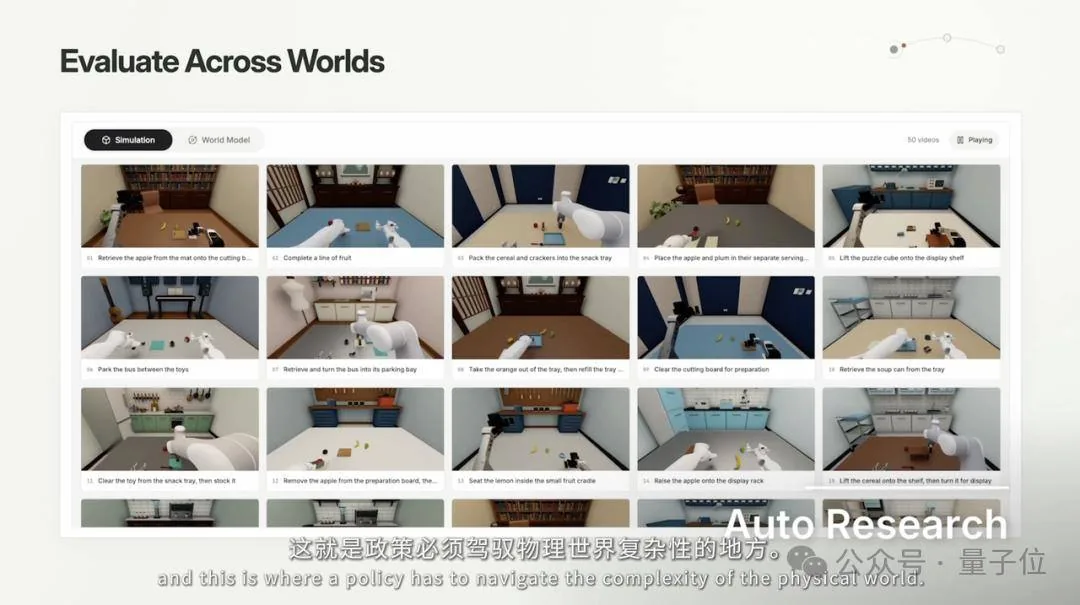
Simate’s AutoResearch system couples human researchers with AI agents: humans set goals and constraints; agents automate experiment decomposition, training, evaluation, and feedback. The key innovation is integrating external papers, internal code, historical logs, and live benchmark results into a dynamically refreshed research context.
The attached AI-native Infra covers training, simulation, and inference end-to-end, enabling dozens of independent research lines in parallel. A high-frequency filtering mechanism first weeds out unpromising directions via world models plus simulation, permitting only viable candidates to proceed to real-robot testing—a closed loop where real-world issues feed back into the study context for agent-driven iteration.
Research Team and Funding
- Core Members: Founder Zhang Ying (ex-core tech lead at top-tier Chinese AV company; participated in three generations of ADAS from map-based to end-to-end, all mass-produced); Zhan Fangneng (Assistant Professor, HKUST; World Mind Lab lead; world model specialist); Ji Mayu (00s青年 scientist; former founding member of Assured Robot Intelligence, acquired by Meta)
- Funding: Multiple rounds completed within three months, each round at hundreds of millions of RMB level; investors undisclosed
- Open-Source Plan: Three to five months—research papers and technical reports on model architecture and automated research; staged open-sourcing likely
Recommendations for Practitioners

- Best for: University robotics/Physical AI research groups; industrial R&D teams building automated experimentation pipelines. Partner institutions may request AutoResearch beta access for K-scale compute resources.
- Wait For: General developers lack direct access points. Those awaiting Simate-beta’s specific model architecture, parameter count, or inference speed trade-offs should await the upcoming technical report.
Final Word
Simate’s work validates feasibility of a “human-in-the-loop” research model—automated experiment design need not await full autonomy before delivering productivity gains.Physical AI progress may accelerate faster than anticipated, though model capability and R&D efficiency gains require continued loop validation.