
Key Event: High-Stakes AI Session at TechCrunch Disrupt 2026
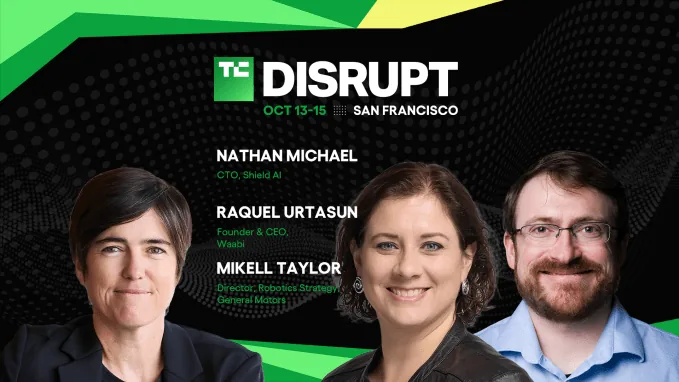
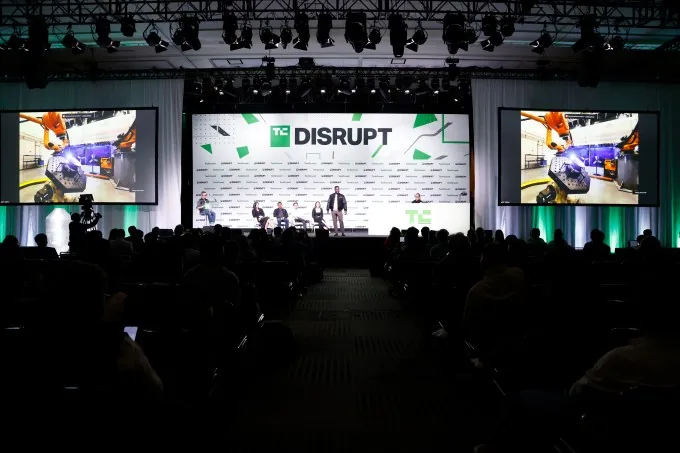
- Date: October 13-15, 2026 (Moscone West, San Francisco)
- Featured Session: “Building AI Systems When Failure Is Not an Option” featuring defense autonomy, autonomous driving, and industrial robotics leaders
- Early-Bird Offer: Save up to $200 by September 25, 2026, 11:59 p.m. PT; second pass at 50% off (select ticket types)
- Audience: Founders, engineers, investors, and tech decision-makers working on real-world autonomous systems
Three Dimensions of High-Stakes AI Deployment
In defense, autonomous driving, and industrial robotics, AI failures can ground aircraft, cause crashes, or compromise missions. This physical-world consequence makes determining when a system is truly ready for deployment a critical challenge. TechCrunch Disrupt 2026 will host three industry leaders to address these questions:
Nathan Michael, CTO of Shield AI: Leads development of Hivemind, the company’s platform-agnostic mission autonomy software. Background includes AI, control, perception, and multi-robot systems; previously directed the Resilient Intelligent Systems Lab at Carnegie Mellon’s Robotics Institute. In February 2026, Hivemind was selected as an autonomy provider for the U.S. Air Force’s Collaborative Combat Aircraft drone prototype program. A month later, Shield AI closed a $1.5 billion Series G round at a $12.7 billion post-money valuation.
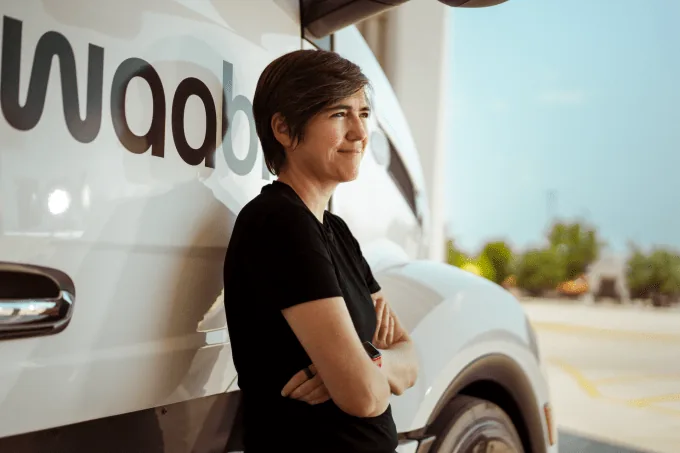
Raquel Urtasun, Founder & CEO of Waabi: 25 years in autonomous vehicle AI; former Chief Scientist and Head of R&D at Uber ATG; Professor of Computer Science at University of Toronto; co-founder of the Vector Institute for AI; over 200 AI papers published. Waabi raised $1 billion in January 2026 and partnered with Uber to support deployment of 25,000+ Waabi Driver-powered robotaxis. Surprising detail: Despite substantial funding and partnership scale, Urtasun has stated Waabi’s autonomous trucks still need full validation before driverless deployment—highlighting how safety-conscious high-stakes deployment remains, even with seven-figure commitments.
Mikell Taylor, Director of Robotics Strategy at General Motors: Over two decades in robotics, previously led Amazon Robotics team that developed Proteus (Amazon’s first autonomous mobile robot). Her work spans autonomous underwater vehicles to industrial systems, with emphasis on practical, reliable robots that work alongside people.
Deployment Logic Comparison by Domain
| Domain | Core Challenge | Validation Focus | Real-World Example |
|---|---|---|---|
| Defense/Aerospace | Mission-critical reliability, unpredictable environments | Multiple redundant systems, combat-phase certification | Shield AI Hivemind selected for U.S. Air Force CCA drone prototype |
| Autonomous Driving | Public safety, rare edge-case coverage | Virtual simulation + real-world testing, regulatory approval | Waabi uses Waabi World simulator for training and stress-testing |
| Industrial Robotics | Human-robot collaboration reliability, user acceptance | User experience validation, workplace robustness testing | GM’s Autonomous Robotics Center guiding industrial deployment |
The panel discussion will cover safety culture development, testing and validation frameworks, regulatory navigation, trust-building strategies, and objective criteria for declaring a system “ready for the real world.”
Practical Takeaways
- Attend if you are: A developer or engineer building autonomy systems for mission-critical environments; an investor evaluating high-stakes AI startups; or a policy professional seeking international deployment benchmarks.
- Consider waiting if you are: An early-stage autonomous driving startup without closed-loop validation processes; or a team lacking multi-robot coordination experience—address foundational testing capabilities first.
写在最后: When autonomous systems enter the physical world, “almost ready” becomes unacceptable. The session underscores a shared truth across domains: missions with high safety requirements require systematic architecture, extreme-condition testing, and long-term user trust—not just algorithmic performance.