
Core Event and Context

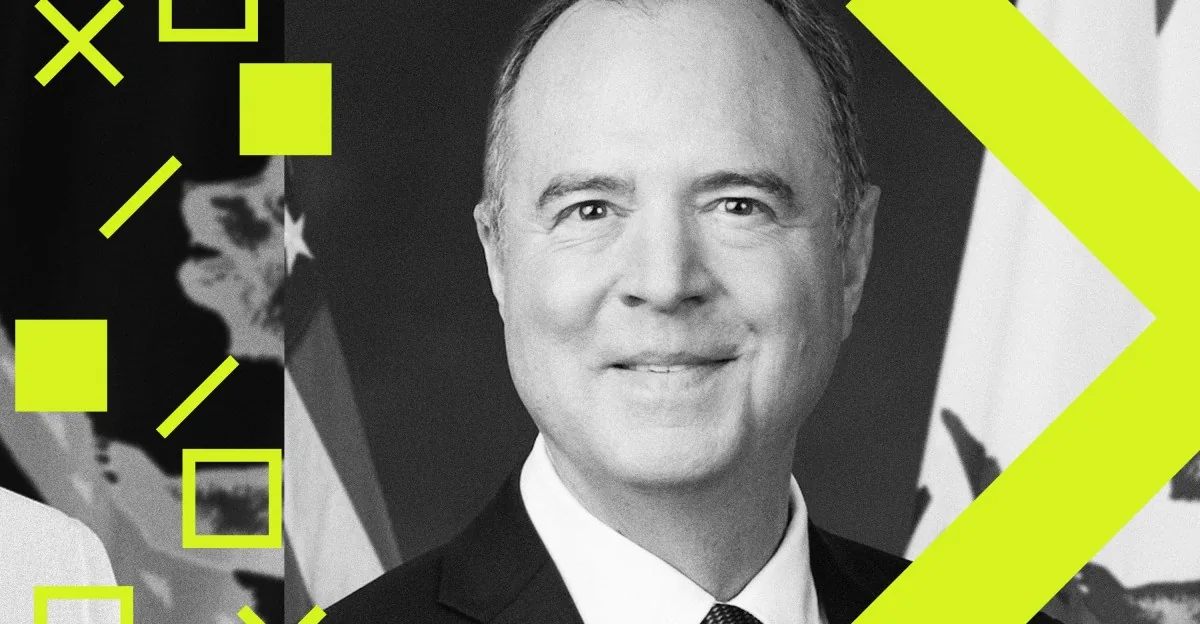
Senator Adam Schiff (D-CA) articulated a comprehensive vision for AI regulation in a recent interview with The Verge’s Decoder podcast (October 2026), emphasizing three key points: voluntary pledges are insufficient to address AI risks; Congress must establish a dedicated regulatory agency; and intellectual property and copyright issues are existential to the industry’s foundation. Schiff, repeatedly emphasized as the ranking member on three critical subcommittees under the Senate Judiciary Committee—from Intellectual Property to Privacy Technology and Law to Antitrust Competition and Consumer Rights—serves as a central legislative figure shaping U.S. AI policy.
No specific effective dates or regulatory timelines were announced, but Schiff explicitly rejected the current administrative approach favoring voluntary compliance as structurally inadequate.
Regulatory Framework Realities
Schiff highlighted a striking contradiction: tech executives publicly pledged cooperation at the White House while simultaneously stating outside its premises that “We need regulation.” This behavioral split, he noted, reflects corporate submission to political pressure rather than genuine commitment. The national security stakes are concrete: algorithmic involvement in military targeting (referencing the Iranian girls’ school bombing), Pentagon reliance on unvetted AI systems, and the administration’s retaliation against Anthropic for refusing AI use in domestic mass surveillance and autonomous weapons.
A major legal obstacle involves the overturned Chevron deference doctrine. The Supreme Court’s Loper Bright decision means new regulatory frameworks will face immediate litigation delays. Schiff stressed that any AI agency must be designed with judicial review in mind from inception.
Current congressional discussions, Schiff confirmed, presuppose regulation as inevitable—the debate centers on implementation: whether an independent agency is needed, how to coordinate existing regulators, and federalism boundaries. He underscored that while copyright囤积 threatens entertainment companies’ core assets, AI also show promise—like the USPTO using AI to reduce patent backlogs—underscoring that technology itself is neutral.
Key Policy Pathways
Policy consultations are converging on three actionable tracks:
- Data transparency mandates: Requiring AI developers to catalog copyrighted materials used in training, establishing factual baselines for fair use determinations
- Safety and ethics legislative red lines: Codifying prohibitions on AI use for domestic mass surveillance and fully autonomous weapons systems, replacing voluntary constraints
- Agency architecture design: Evaluating models inspired by the FDA or SEC for a dedicated AI regulatory body
Schiff建立 trust on institutional checks, not executive goodwill, questioning whether presidential assertions like “these companies love America” constitute valid national security policy—a fundamental分歧 between discretionary authority and制度性制衡.
Practical Recommendations for Stakeholders
- Suitable for tech companies to integrate now: Firms relying on licensing or training data sourcing should implement documentation systems tracking copyright material usage; proactive compliance prepares for inevitable disclosure requirements
- Suitable for VCs to revise evaluation frameworks: Regulatory readiness should become a key due diligence metric, favoring teams demonstrating compliance-aware architecture over pure model performance
- Academic institutions should await legislative clarity: Research involving AI-generated content copyrights should delay final attribution decisions until Congress clarifies fair use boundaries for training and output protection.
Bottom Line
Schiff’s position reflects a growing congressional consensus: AI regulation is not a matter of if but how urgently to implement. The primary bottleneck is not technical uncertainty but political inertia favoring short-term行政便利 over medium-term governance investment. When voluntary commitments replace structural oversight, regulatory delay transforms from a technical hiccup into a systemic governance failure.