
Rabbit OS3 Launches, Pioneering Alternative Path for Agent Evolution

Rabbit officially released OS3 on September 27, 2026—one day before Muse Charm’s debut. Unlike hardware-bound predecessors, OS3 is accessible via web browser, allowing users to connect their own chosen models and local devices. The platform is free to use, supports up to five connected devices (local PCs, office machines, and cloud VMs), and accepts interaction through iMessage, Telegram, or the r1 hardware. Model support is open-ended, including Alibaba’s Qwen and other Chinese models; users bring their own API keys and pay usage-based fees.
From Cloud VMs to User Devices: Reversing the Technical Trajectory
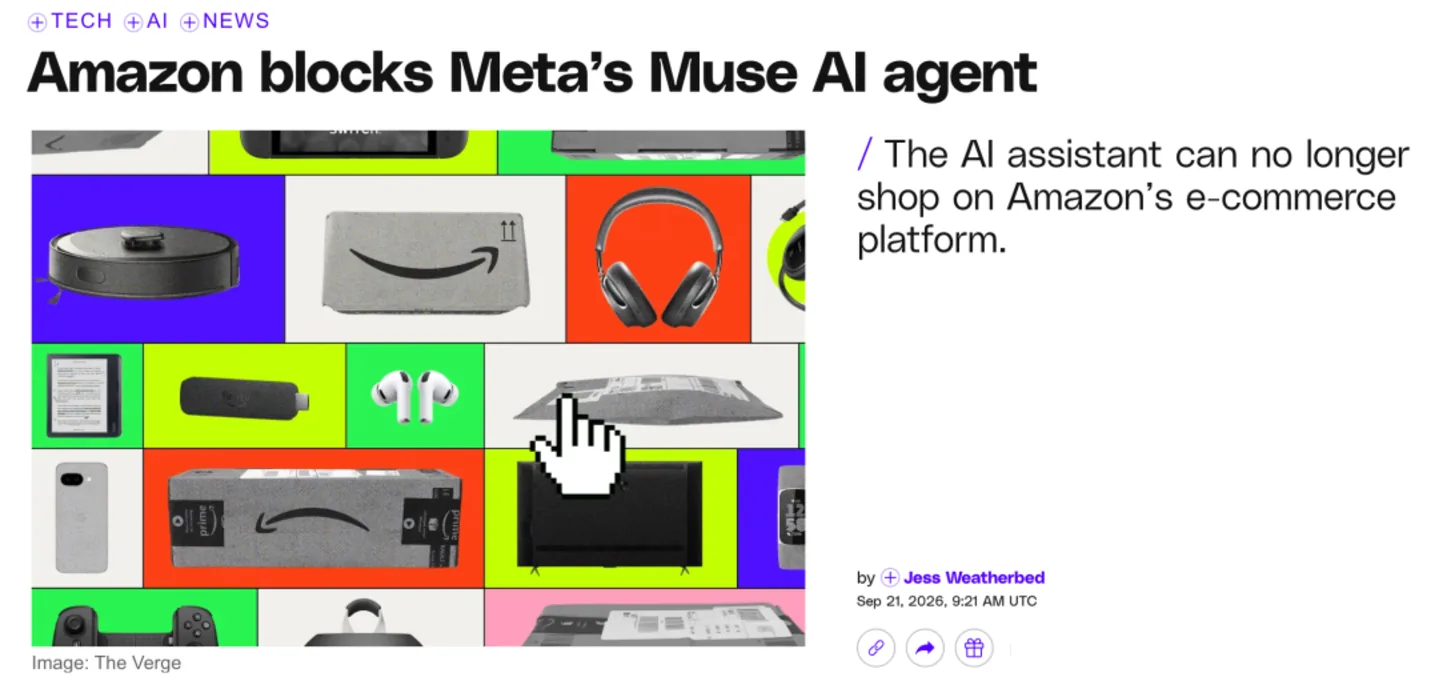
OS3’s core innovation lies in shifting execution to the user’s machine. Early r1 relied on cloud virtual machines, which routinely faced platform restrictions: Meta’s Muse was blocked by Amazon for shopping, while AI phones using similar tech were banned by major apps. Rabbit’s early 2025 Android Agent research preview quickly encountered the same resistance; early 2026 saw the DLAM (Desktop Local Action Model) upgrade, enabling Agent operations directly on authorized Windows/Mac devices—bypassing many platform blocks, since local actions appear as normal user behavior.
This path highlights a key divergence from big-player tactics. While Muse Charm was halted by Amazon and had to scramble into partnerships with Instacart and Duffel, Rabbit’s 15-person team had already faced—and adapted to—these same limitations years earlier through iterative LAM improvements. Small teams rely on technical finesse where big players deploy ecosystem leverage.
Continuous Dialogue and Multi-Device Coordination: Two Breakthroughs
OS3 addresses two long-standing friction points:
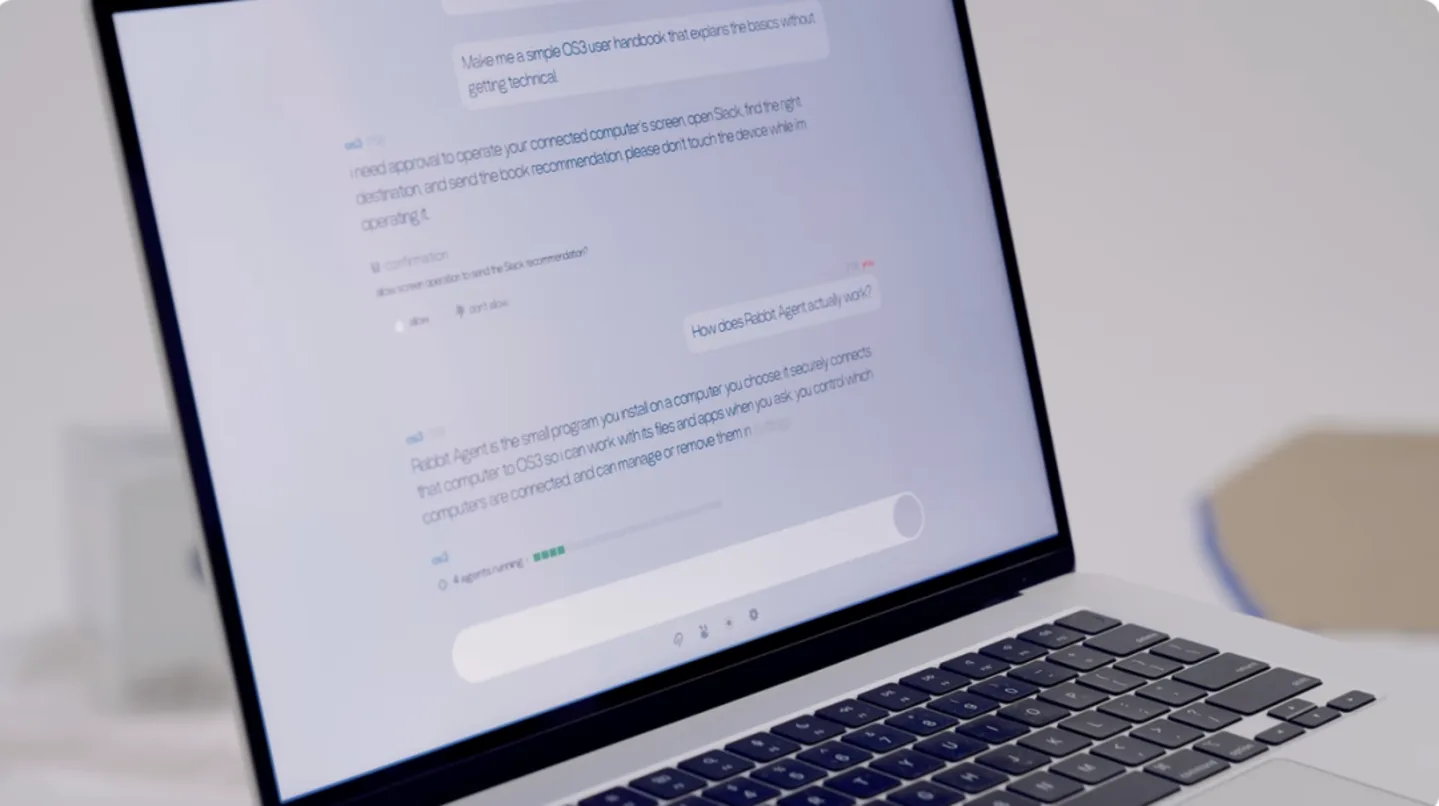
- Continuous Conversation Interface: Users can batch下达 multiple tasks (e.g., “find philosophy book → create reading guide → Slack to self → research Liverpool FC → build interactive web page → write competitor analysis → draft user manual”) in one chat. System auto-splits tasks and runs them in parallel.
- Intelligent Device Dispatch: Tasks resolves which device to use based on environmental needs—e.g., find a video on Machine A, edit on Machine B (with specialized software), upload on Machine C (logged in). Rabbit claims such cross-machine handoff “appears to be unmatched elsewhere.”
These features reduce user burden: no more clarifying references like “the file I mentioned earlier”—the system maintains context and task history automatically.
Real-World Performance and Market Positioning
Within three days of launch, Rabbit’s Community page recorded over 10,000 tasks completed by new users, with API token consumption totaling nearly 1 billion per day—far exceeding typical Agent product averages. In one test, OS3 completed a Muse Charm research brief and notified the user via iMessage in approximately 15 minutes, with the report saved to iCloud.
Three fundamental constraints remain for all Agents:
- Platform Enablement: Unauthorized agents cannot reliably place orders or book services;
- Commercial Incentives: Platforms fear losing influence over user choices and commission revenue;
- Device Dependency: Cloud tasks pause on disconnection or sleep; local execution depends on machine availability.
OS3’s answer: local execution to avoid blocks, and multi-device orchestration to balance capability and uptime.
| Feature Comparison | Rabbit OS3 | Muse Charm | Rabbit r1 (LAM Era) |
|---|---|---|---|
| Execution Environment | Local devices + cloud VMs | Cloud VM only | Cloud VM only |
| Device Support | Up to 5 local/cloud devices | Cloud-only | r1 hardware only |
| Model Flexibility | Open (includes Qwen, others) | Proprietary Muse Spark | Proprietary LAM |
| Platform Restrictions | Device-local approach reduces blocks | Blocked by Amazon and others | Blocked by app ecosystems |
| Interaction Modes | iMessage/Telegram/r1 | Web/iMessage | r1 buttons only |
Who Should Adopt Now?
Ideal for: Users with existing Windows/Mac setups, heavy multi-taskers, and those comfortable self-funding API costs (e.g., Qwen usage runs roughly 10–20 RMB/day for intensive use).
Wait and Watch: Users expecting turnkey, closed-cloud solutions (OS3 doesn’t cover API costs), single-device households (multi-machine advantages go unused), or those with high device downtime (tasks frequently interrupt).
Final Note
Personal Agents have moved beyond proof-of-concept into a phase defined by engineering trade-offs. Rabbit’s local-first path proves platform restrictions are circumventable, while its device-handoff system offers fresh ammunition against continuity challenges—the next battleground is not just model accuracy, but real-world operability.