
Core Announcement: HBC Architecture Brings Near-Memory Compute to Snapdragon
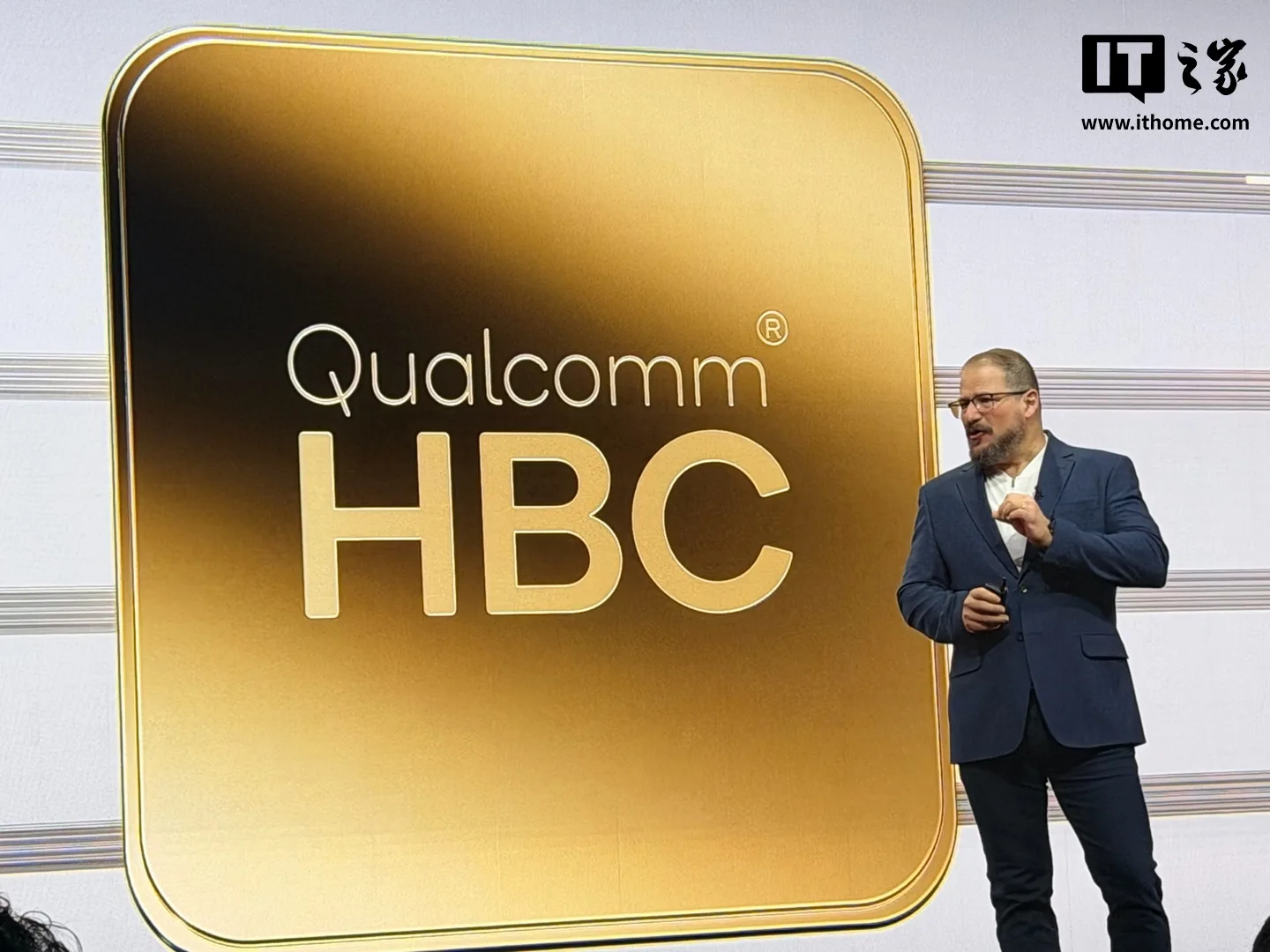
Qualcomm announced at its Snapdragon Summit on September 22, 2026 (9:00 AM Hawaii time / 3:00 AM September 23 Beijing time) that HBC (High Bandwidth Compute) technology will be integrated into future Snapdragon chips. This moves the near-memory computing architecture from data center applications to mobile devices.
- Technology debut: June 2026 investor day (data center focus)
- Mobile announcement date: September 22, 2026 Snapdragon Summit
- Core architecture type: Near-memory computing (near-memory computing)
- Implementation method: 3D integration + through-silicon vias (TSV)
- Target application: Improved on-device AI inference efficiency and power efficiency
Technical Principles and Industry Significance
HBC’s core innovation lies in reconfiguring the spatial relationship between computing units and memory. By placing the compute chip directly beneath stacked LPDDR DRAM and utilizing 3D integration with TSV technology, data transmission paths are significantly shortened. This classic near-memory computing approach targets the “memory wall” problem in AI inference—where data transfer between processor and memory outpaces the compute unit’s processing speed, creating a performance bottleneck.
A key counterintuitive point: HBC improves effective bandwidth, not physical memory capacity. High-bandwidth memory (HBM) is often conflated with large storage, but HBC’s focus is on reducing the physical distance between compute and memory, thereby lowering data transport latency and power consumption. For mobile, this means enhanced AI inference efficiency without necessarily increasing DRAM capacity.
Mobile AI bottlenecks have shifted beyond raw NPU multiply-accumulate capability to include data movement speed between memory and processor for model parameters and intermediate data. By executing computations closer to memory, HBC drastically reduces data shuttle overhead, simultaneously improving latency and power consumption. Stakeholders include Qualcomm (integration), LPDDR standards bodies (memory ecosystem), and smartphone OEMs (product deployment).
Technical Advantages and User Benefits
HBC delivers three key improvements for mobile AI:
- Performance lift: Shorter data paths mean reduced transmission latency
- Energy efficiency gain: Less data movement directly cuts memory subsystem power
- Model capacity expansion: Supports larger parameter counts and longer context windows under identical power/thermal budgets
These enhancements enable smartphones to run more complex local large models—supporting real-time AI features (local voice assistants, image generation/editing) while reducing cloud dependency, improving both privacy and responsiveness.
User Recommendations and Expectations
- First-to-evaluate users: Premium flagship users prioritizing on-device AI, battery life, and privacy should evaluate actual experience with HBC-powered Snapdragon devices post-launch
- Wait-for-validation users: Users with strong on-device AI needs but no urgency should await post-launch reviews validating battery life and thermal performance before upgrading
Note: Information herein is based solely on Qualcomm’s announced technical direction. Specific release timing, third-party model deployment openness, and product details remain undisclosed at time of publication.
Bottom Line
HBC’s expansion from data centers to mobile devices marks near-memory computing’s democratization. As hardware innovation bridges the physical gap between computation and memory, the performance ceiling for on-device AI may be fundamentally redefined.