Anthropic on October 14, 2026, published an update on its safeguards for the 2026 US midterm elections. The update explains how the company connects users to trusted voting information, measures and prevents political bias, and defines misuse of Claude in election contexts.
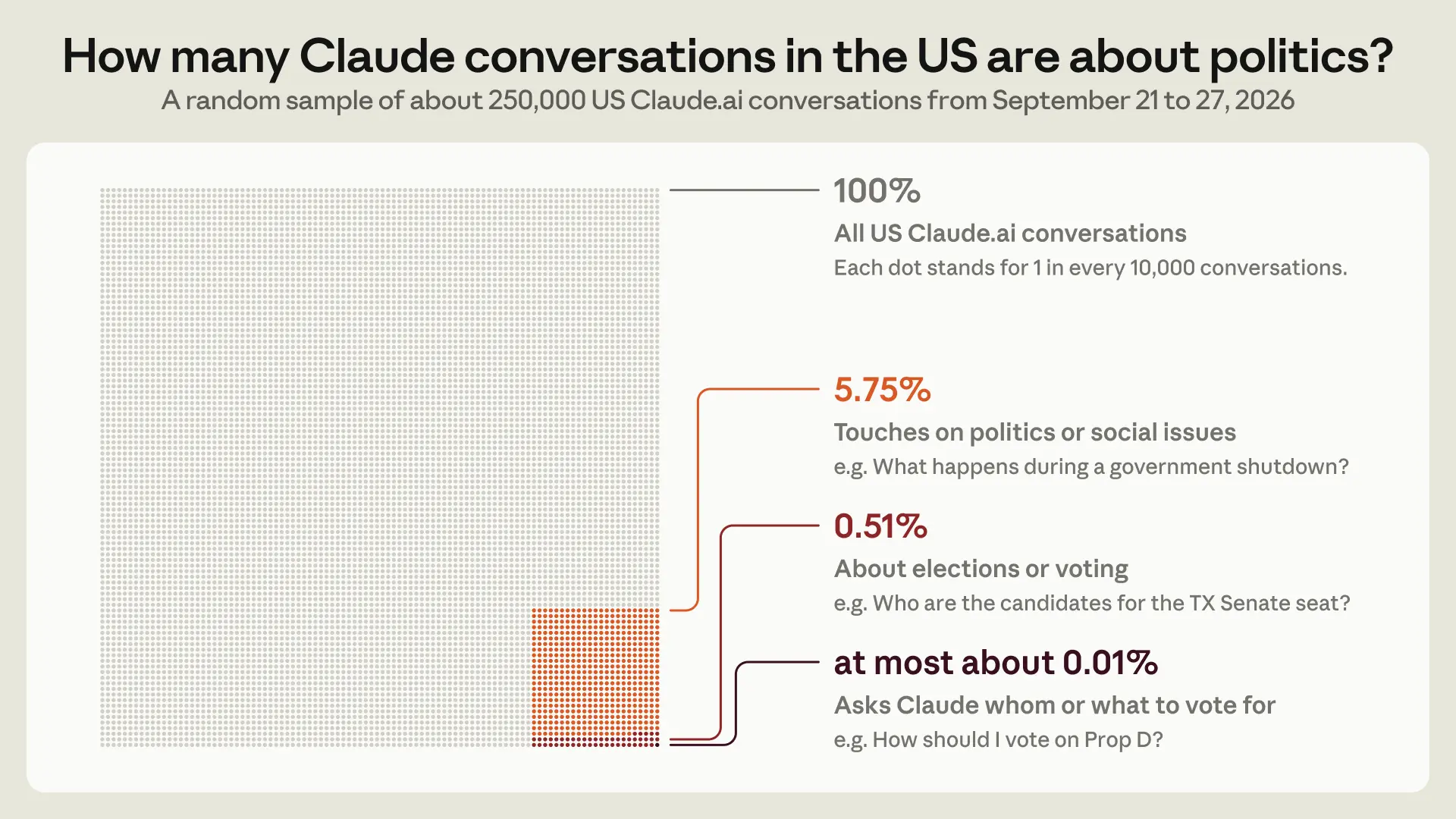
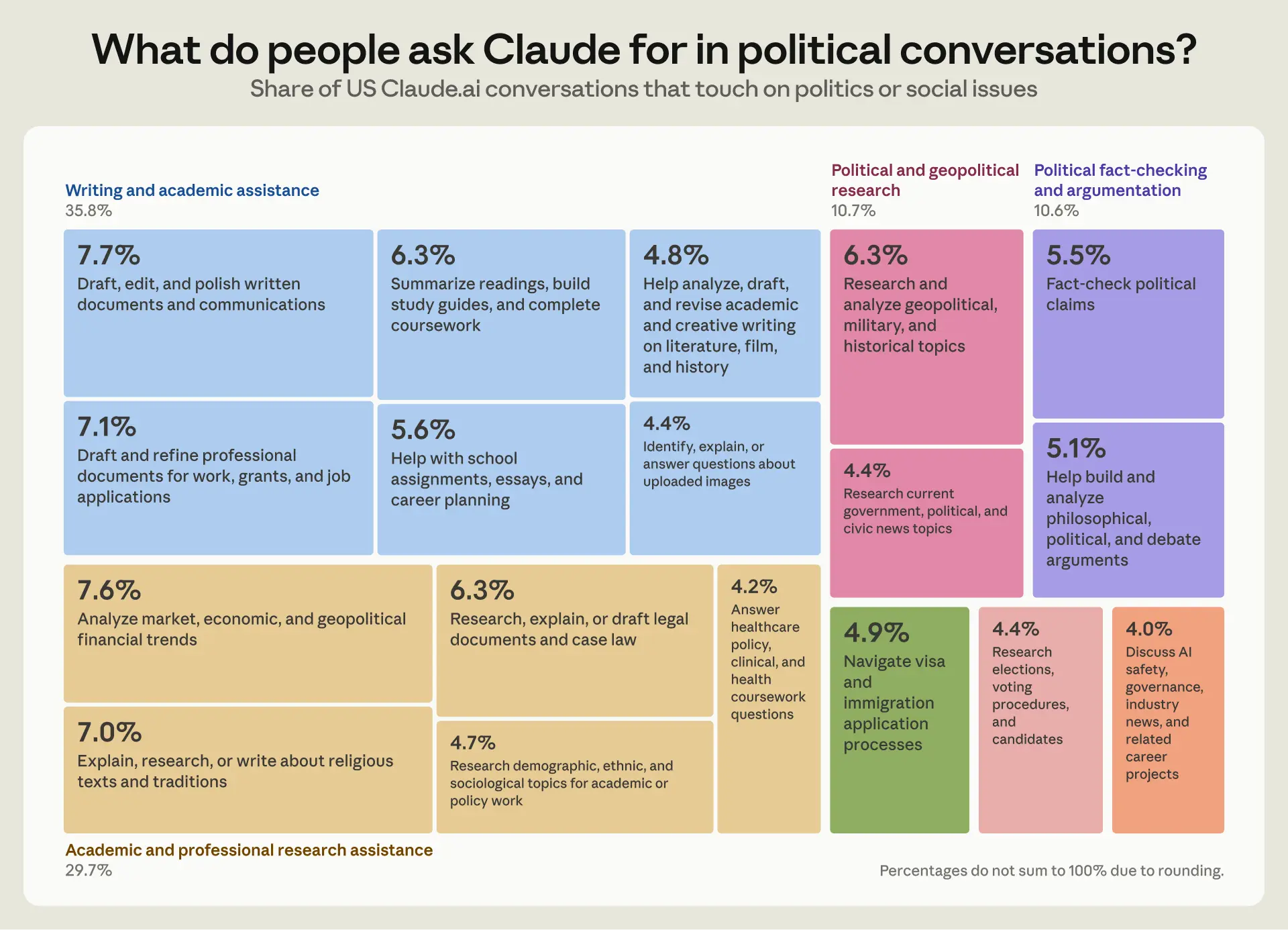
Using Anthropic Insights, the company analyzed about 250,000 US Claude.ai conversations over one week. It found that conversations broadly touching politics, public policy, or social issues made up about 5.75% of all conversations. Elections or voting made up about 0.51%. Requests asking whom or what to vote for were about 0.01%, while requests that violated election integrity policies were about 0.002%. Most political use was informational, such as following news, researching candidates, learning about policy, and navigating government services.
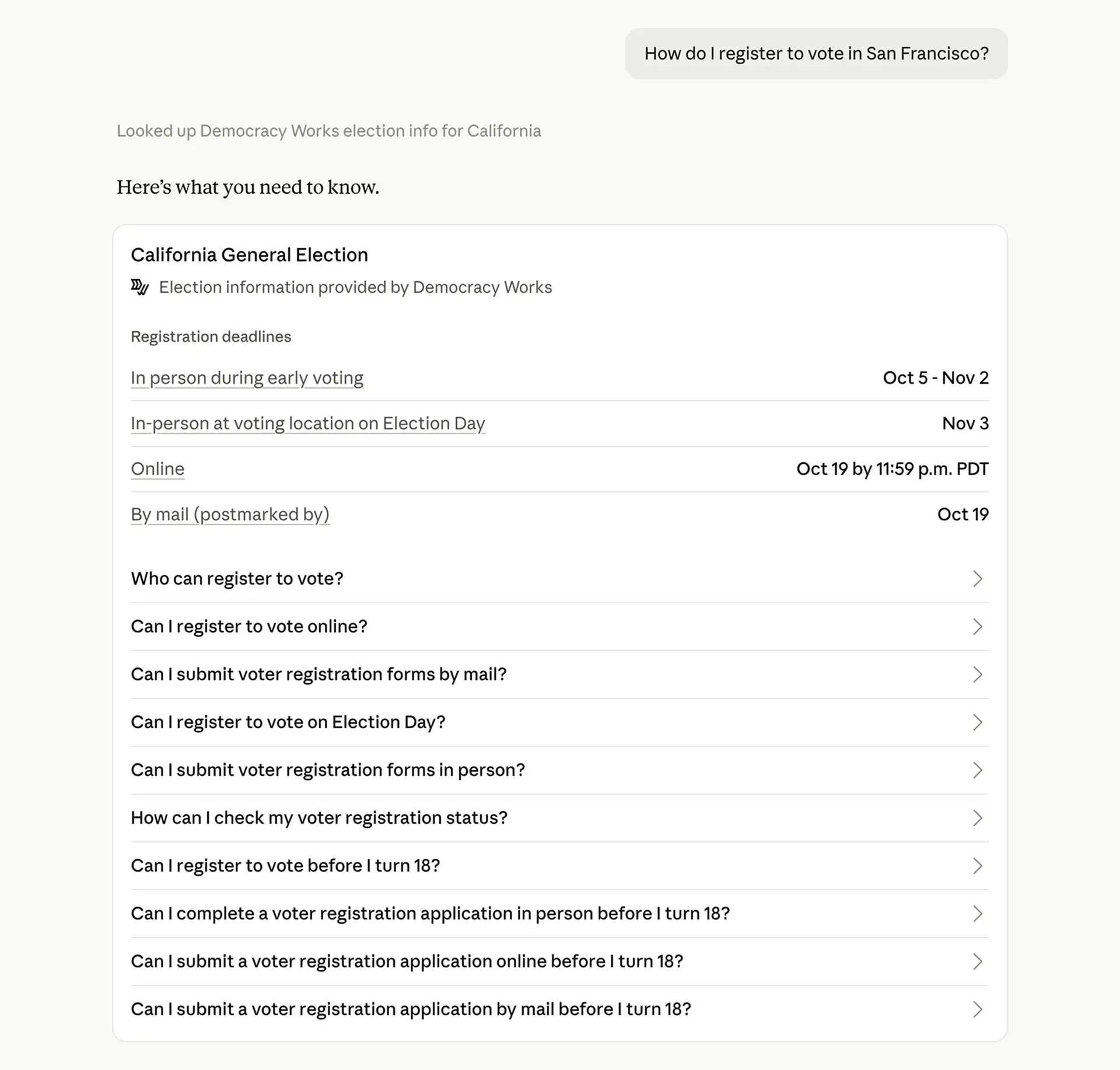
For trusted information, Claude will continue to show a banner linking to TurboVote when users ask about voter registration, polling places, or election dates. Later this month, Claude will also draw official US voting information from Democracy Works into responses, giving state-specific answers about where to vote and what ID to bring. On election night and afterward, Claude will show up-to-date official vote counts and results when users ask for current results.
On political bias, Anthropic said Claude Opus 5.5, Sonnet 5.5, and Haiku 5.5 scored 99% on its political evenhandedness evaluation and are less likely to decline political requests. Three independent groups reviewed Claude: Future of Free Speech, Foundation for American Innovation, and Collective Intelligence Project. Their reviews found that Claude rarely refused requests but sometimes added unsolicited caveats or opposing views, and in one evaluation showed uneven hedging that softened right-leaning arguments more often. Anthropic says it is improving responses to direct yes-or-no questions, short-answer requests, and consistent treatment across the political spectrum.
On misuse, the Usage Policy prohibits using Claude to deceive voters or disrupt elections, including spreading false candidate or voting information, impersonating election officials, or trying to suppress turnout. The company updated its policy to clarify election rules and added examples. It also published a guide for political campaigns on legitimate uses such as drafting press statements, fundraising emails, debate preparation, turnout analysis, and voter outreach materials. Prohibited uses include fake social media profiles, mass-generated engagement, and content for sites falsely presented as independent news outlets.