
All-New Flagship Officially Launches
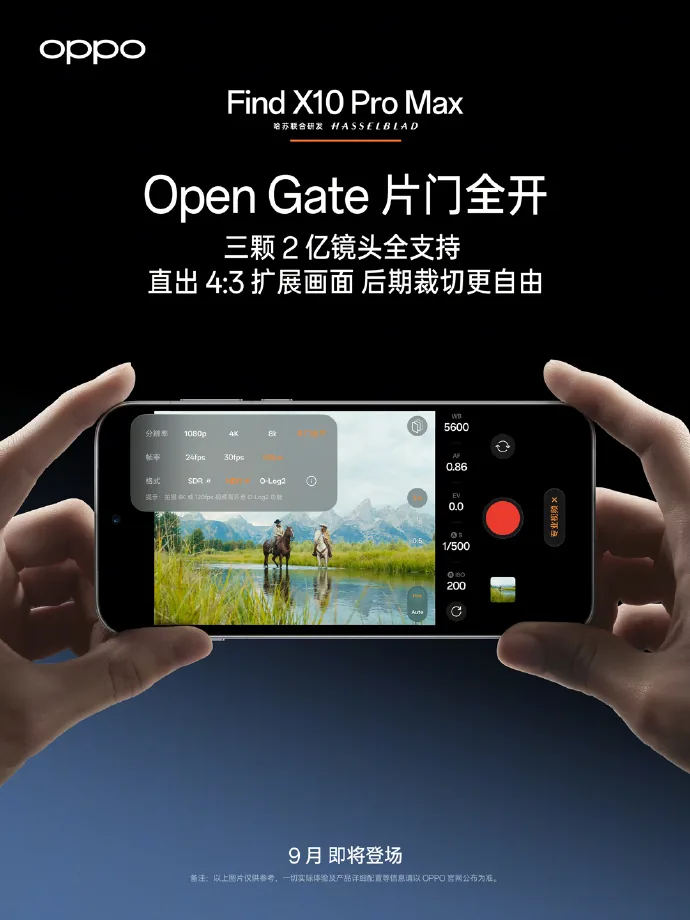
OPPO Find X10 Pro Max officially unveiled its core imaging capabilities today. The key hard specs are as follows:
- Launch date: September 9, 2026 (reported today by ITHome)
- New version feature: All three rear cameras support OpenGate full-gate recording
- Core capability: Full-focal-length 8K video capture, with the claim “press record and it’s a full-focal-length 8K cinema camera”
- Platform support: Full native support for the Blackmagic Camera app
- Additional expansion: Support for Tilta (third-party brand) professional camera cage system
OpenGate Full-Sensor Recording: 4:3 Original Quality with Crop Freedom
OpenGate full-gate recording is the standout feature of this update. When enabled, it uses the entire CMOS sensor to record a 4:3 image. This technology gives you enormous freedom to crop in post—after recording 4:3 original footage, users can crop as needed to 9:16 (vertical short video) or 16:9 (horizontal video) content, adapting to the distribution logic of platforms such as Douyin, Bilibili, YouTube, and others.
Unlike conventional video recording, which uses only a portion of the sensor, OpenGate’s physically full-sensor operation directly delivers better light intake and signal-to-noise ratio, especially preserving overall image quality in low light. The unexpected twist is that all three rear cameras support this feature, including the main, ultra-wide, and telephoto lenses, all of which can record with the full sensor. This is extremely rare in the Android camp—previously, such professional capabilities were usually limited to the main camera, or required sacrificing resolution/frame rate.
Native Blackmagic Camera Integration: Android’s Dolby Vision Debut
OPPO Find X10 Pro Max has announced full native support for the Blackmagic Camera app, marking the first time an Android mobile device has achieved native-level support for professional film and television software. This integration allows direct access to professional capabilities such as O-Log2 (OPPO’s proprietary log curve) and OpenGate within the app, with no compromise to image quality or post-production workflow.
Particularly noteworthy is that the Find X10 Pro Max is the first Android device to support Dolby Vision video recording. This means users can record HDR10+/Dolby Vision-level high dynamic range content right on their phone, laying the foundation for direct playback on Dolby Vision-compatible TVs and monitors later, without needing a second color grading or transcoding pass.
Professional Ecosystem Expansion: Full Support for Camera Cage + Hasselblad Teleconverter
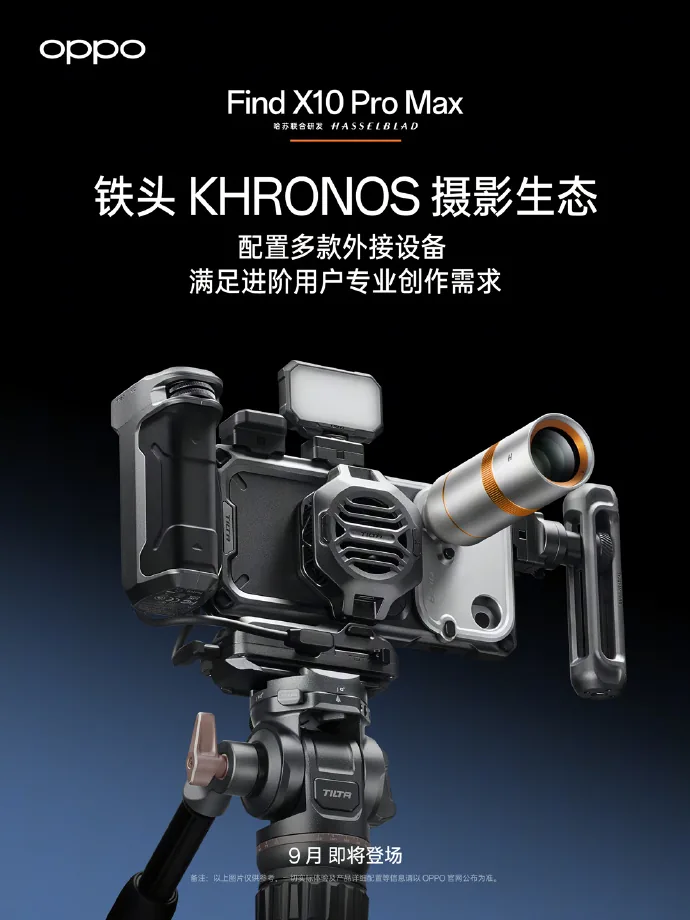
OPPO has partnered with third-party brand Tilta to launch a full professional camera cage system for the Find X10 Pro Max. The system supports flexible expansion with the following equipment:
- Filters (ND/CPL/Colorgrade, etc.)
- Manual follow-focus handle
- Magnetic cooling fan
- External hard drive (for long, edit-free direct recording)
The system fully supports Hasselblad professional teleconverters, continuing the imaging collaboration between OPPO and Hasselblad. With the cage and teleconverter combination, the Find X10 Pro Max can deliver a handling feel and expansion boundaries close to a professional cinema camera while retaining its phone form factor.
Practical Advice: Who Should Buy Now, Who Should Wait
- Those who should buy immediately: Content creators, independent video teams, and multi-platform video operators—all three cameras with OpenGate + 8K native footage will greatly simplify post-production workflows for multi-platform distribution; users with a hard requirement for Dolby Vision should also prioritize it.
- Those who should wait: Ordinary photography enthusiasts—if you mainly use auto mode and post directly to social platforms, the Pro mode’s professional capabilities may not be used often; you can wait for user feedback after the first sale to verify sustained recording stability and thermal control.
Final Thoughts
The Find X10 Pro Max marks a further blurring of the line between phones and professional filmmaking equipment: when all three lenses can function as independent 8K imaging units that interconnect and seamlessly plug into the Blackmagic software ecosystem, the productivity boundaries of mobile imaging are being redefined. The phone is no longer just a recording tool; it is becoming a complete vehicle for a lightweight cinema camera.