
Core Event Summary

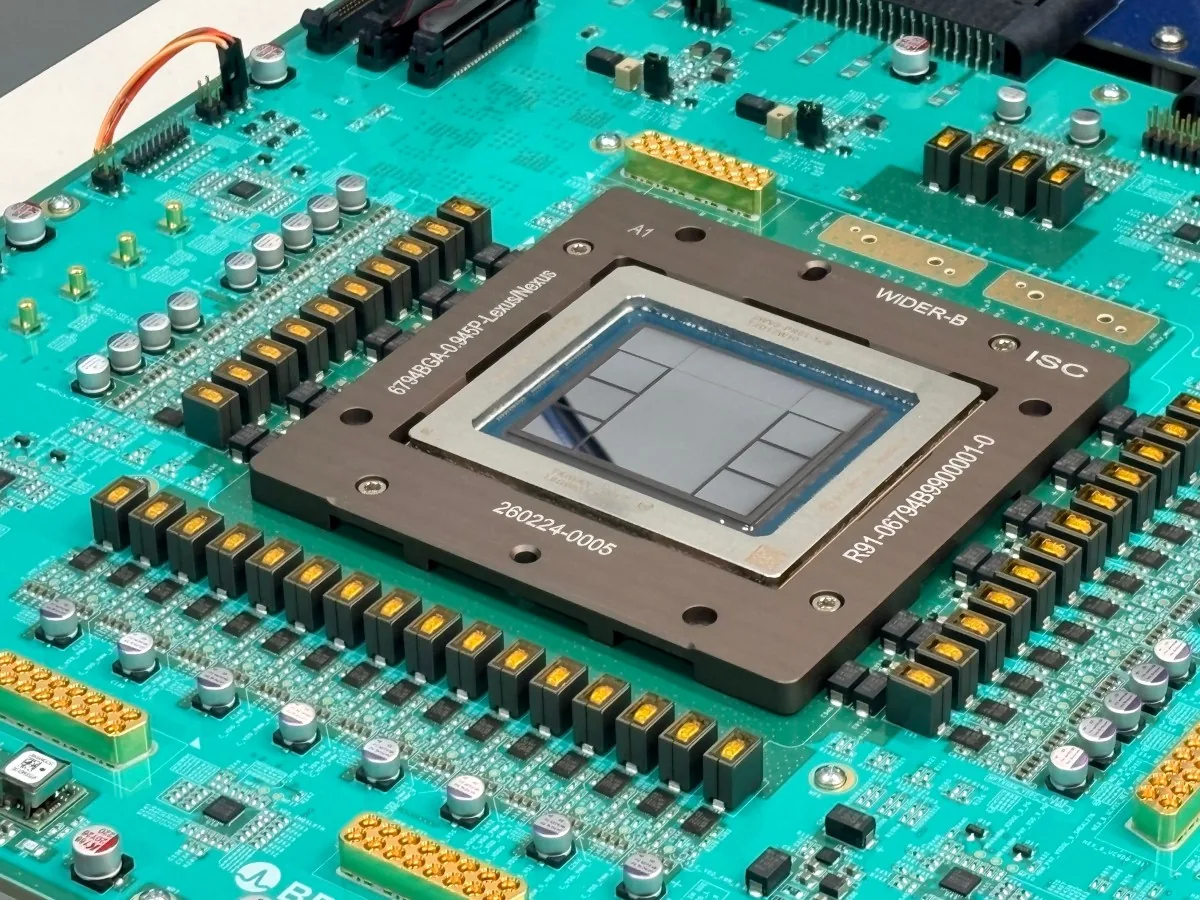
OpenAI officially unveiled the first benchmark results for Jalapeño, its in-house AI inference chip, at this Tuesday’s Hot Chips conference. The chip was developed through a deep collaboration between OpenAI and Broadcom, and is expected to begin extremely small-scale deployment in late 2026, with broader adoption in 2027. No specific pricing or procurement plans have been announced.
Key hard facts at a glance:
- Announcement date: August 25, 2026 (Hot Chips conference)
- Current status: First round of testing completed; not yet in mass production
- First deployment: Late 2026 (very small batch)
- Full deployment: 2027
- Partners: Broadcom (hardware), OpenAI internal models (assisted design)
- Open source? No; expected to be proprietary deployment
Technical Details and Benchmark Performance
In SemiAnalysis’s InferenceX benchmark, Jalapeño surpassed current leading commercially available products on two key metrics:
- Higher tokens per user — a single inference request can serve more end-user interactions
- Better throughput per kilowatt — significantly leading energy efficiency compared with existing solutions
Richard Ho, OpenAI’s head of hardware, said on a media call: “Jalapeño can handle more AI workload per unit of power while also delivering faster response times. It is suited both to serving high-concurrency customer bases and to achieving ultra-low-latency responses.”
The chip design focuses on two major bottlenecks in the inference pipeline: the prefill phase (where the model reads the input prompt and generates an initial representation) and the communication phase (data synchronization across multiple chips or servers). By explicitly placing model state (including KV cache) in local memory and intelligently orchestrating the right mix of compute, memory, and network resources, Jalapeño significantly reduces data movement and communication latency—common performance bottlenecks in current inference systems.
One notable contrast: the test comparison target was NVIDIA Blackwell systems, which are currently widely regarded as the industry leader in inference performance. Jalapeño’s ability to win in a direct comparison highlights the potential of full-stack co-design. However, OpenAI also acknowledges that by the time full deployment arrives in 2027, competitors may have released newer products.
Full-Stack Co-Design Roadmap
Jalapeño is not an isolated hardware project, but part of OpenAI’s planned multi-generational platform system. Its core logic is to let AI products, models, chips, and memory evolve in sync, avoiding the disconnect of the traditional “chip first, model adaptation later” approach.
Specific technical strategies include:
- Model code directly participates in the chip design process (OpenAI’s in-house models assist development)
- KV cache (Key-Value Cache, a memory structure that supports generative AI context memory) is explicitly managed in local VRAM
- Different inference phases (prefill vs. decode) dynamically allocate the optimal resource mix
This design enables Jalapeño to avoid cross-node data copying during the prefill phase while reducing latency in communication-intensive scenarios. As the blog puts it: “We designed Jalapeño to minimize data movement and communication latency.”
Competitor Comparison Reference
| Metric | Jalapeño | NVIDIA Blackwell (baseline comparison) | Notes |
|---|---|---|---|
| Benchmark | InferenceX | InferenceX | Publicly comparable third-party benchmark |
| Energy efficiency | Higher throughput per kilowatt | Current industry leader | Specific wattage not disclosed |
| User handling | More tokens per user | Current industry leader | Specific token counts not disclosed |
| Deployment status | Very small scale in 2026Q4 | In mass production and commercially available | Mainstream choice in 2026 |
Note: The table is based only on the comparison relationships mentioned in the original text; specific performance figures have not been disclosed.
Practical Recommendations for Readers
- Enterprise AI infrastructure teams: If planning large-scale inference deployments after 2027, continue tracking progress in the Jalapeño ecosystem, especially integration timelines for the OpenAI API or cloud services
- Research institutions and developers: There is no need to change hardware right now; Blackwell remains a reliable choice. If testing new OpenAI models, check official channels for Jalapeño compatibility plans
- Investors and industry analysts: Watch the stability and actual power consumption data from the small-batch deployment in late 2026; these will determine the degree to which the long-term cost advantage is validated
Final Thoughts
Jalapeño marks a further deepening of the paradigm shift in AI infrastructure from “general-purpose GPUs + general-purpose frameworks” to “custom chips + specialized stacks.” As cloud inference costs become a key bottleneck in the commercialization of large models, marginal improvements in energy efficiency and latency will directly affect product pricing and service SLAs.