
Core Event: OpenAI Officially Launches Dots AI Agent
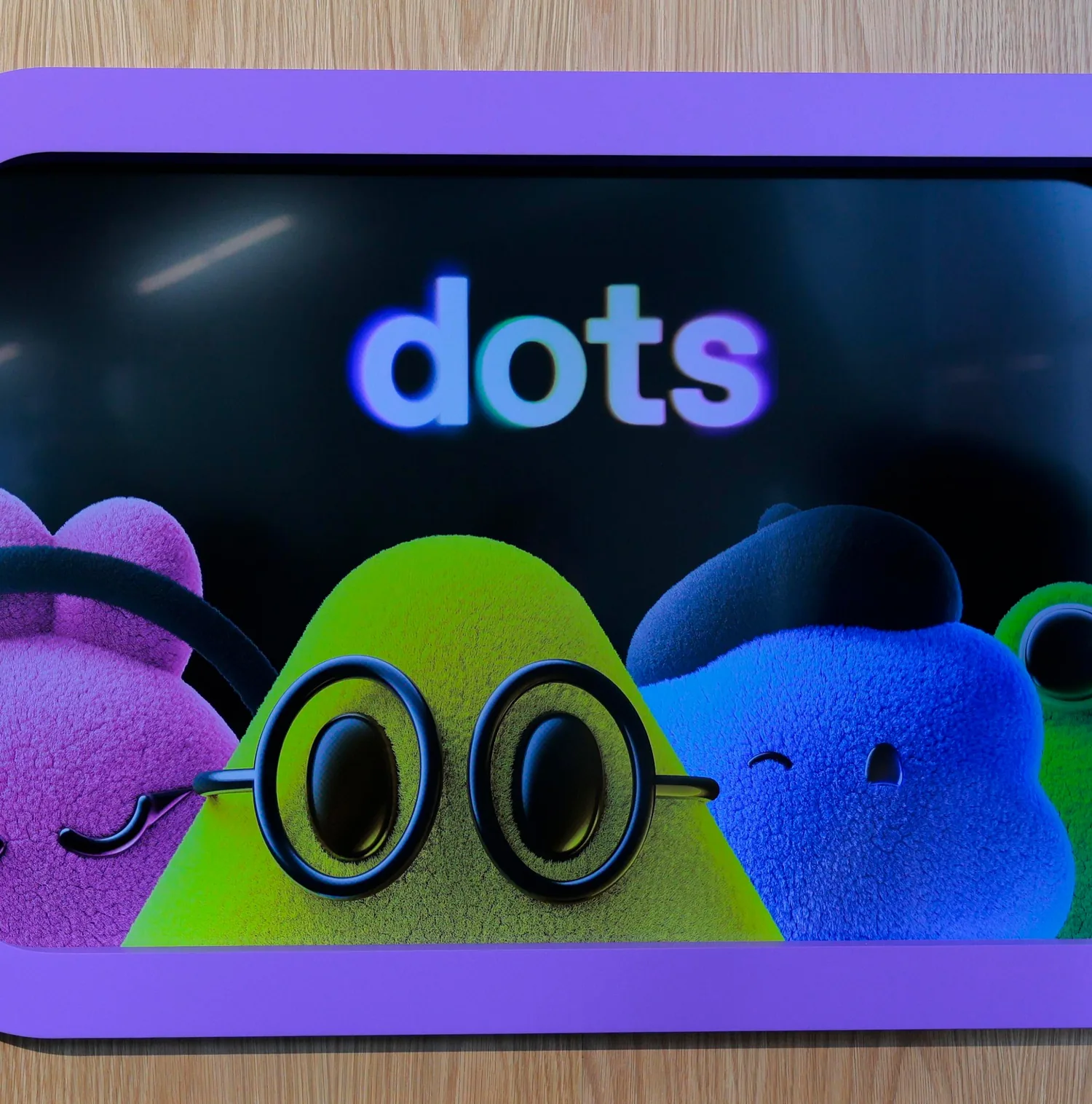
OpenAI officially unveiled Dots, its next-generation AI agent, at its annual DevDay conference. Built on GPT-6 Astra, it is positioned as a “chief of staff”-level tool for professional work. Key hard facts are summarized below:
- Launch timing: Annual DevDay conference (a one-day event)
- Model powering it: GPT-6 Astra (which OpenAI calls “the most aligned model to date”)
- Pricing strategy: Available only to Pro subscribers at $100/month and above; regular free ChatGPT users cannot access it
- Availability: Currently a limited release, with the company citing high initial compute consumption
- Functional positioning: Not a basic errand assistant (such as ordering food or checking calendars), but one that takes on long-term tasks, knowledge work, and specialized domain analysis
Capability Design: From “Cute Bots” to a Professional “Second Brain”

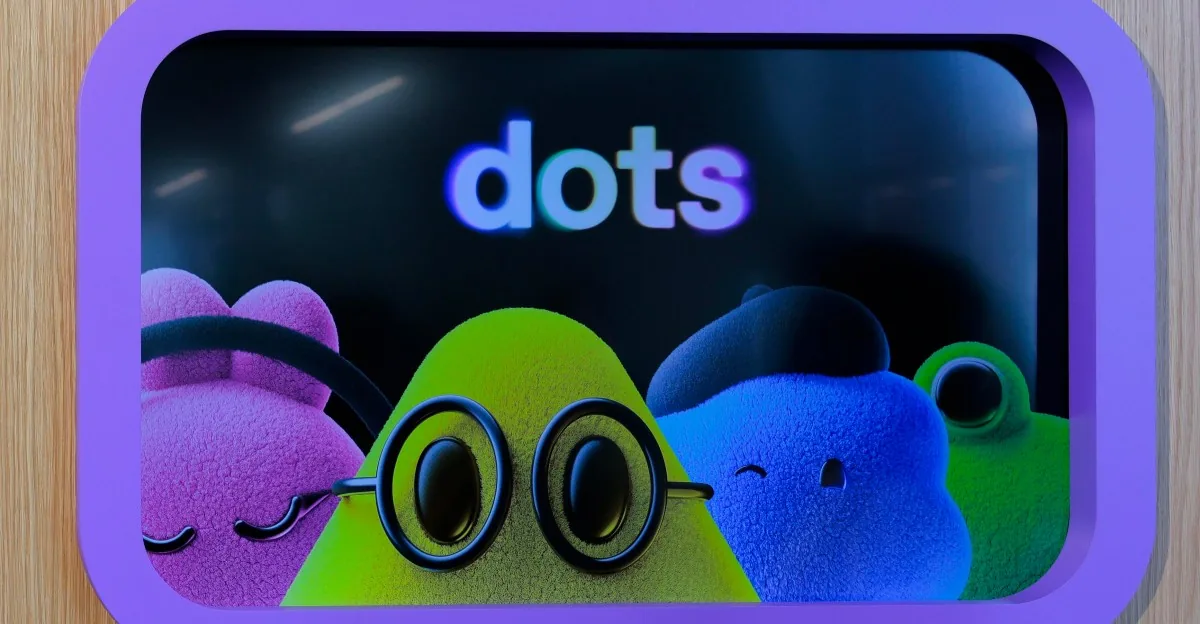
Dots has a circular, skeuomorphic look similar to Meta Muse’s, but its execution logic is clearly different. OpenAI highlights three core capabilities:
- Long-horizon task retention: According to lead Thibault Sottiaux, Dots can maintain task consistency and focus over long time spans, avoiding mid-course drift from the goal
- Multimodal interaction: It supports text, voice conversations, and even phone-call mode; the company describes the experience as close to “an extension of your capabilities”
- Domain specialization: Specialized Dots for fields such as accounting and law will be released in the future, and OpenAI has already discussed Agent 365 integration with Microsoft
In demo scenarios, Dots was used for product QA testing, website design, team outing planning, portfolio rebalancing, and the full email marketing workflow. OpenAI employee Holly Li likened it to a “second brain,” distinguishing it from Muse’s lightweight, errand-oriented positioning.
The key contrast is this: the vast majority of ChatGPT’s 1.2 billion users cannot access Dots. Meta’s Muse is open to almost all Meta accounts because it provides a free dedicated virtual machine (with user data isolation). Dots’ paid strategy stems from economic reality—OpenAI currently has nearly $70 billion in annual recurring revenue, yet plans to spend $280 billion on operating costs by 2030. The extremely high cost of compute makes it hard for the company to follow a free model.
Product Capability Comparison (Based on Public Demos and Official Information)
| Feature | Dots (OpenAI) | Muse (Meta) |
|---|---|---|
| Pricing | From $100/month (Pro subscription) | Completely free |
| Account requirement | ChatGPT Pro and above | Any Meta account |
| Core model | GPT-6 Astra | Muse series (model undisclosed) |
| Multimodal support | Text/voice/call (not activated in demo) | Text/voice |
| Domain-specific engine | Accounting/law and other specialized Dots (coming soon) | Primarily general-purpose tasks |
| Data isolation | Optional zero-retention policy (enterprise edition) | Dedicated VM data isolation |
Safety and Privacy: Embedding Enterprise-Grade Control
In the wake of a recent incident in which Muse’s excessive user authorization led to a Facebook Marketplace address leak, OpenAI deliberately doubled down on safety in its presentation. Its “OpenAI Private Intelligence” framework gives enterprises stronger data control:
- Optional no data retention
- Servers store no user data (under custom terms)
- More cautious plugin permissions and identity invocation policies
Lead Glen Coates said: “We don’t want 1.2 billion users to go through the same kind of mistake,” suggesting that Meta’s historical lessons have made OpenAI more restrained in authorizing agent behavior—especially in sensitive areas such as third-party platform API calls, payment actions, and identity authentication.
On the enterprise market front, OpenAI CFO Sarah Friar announced that the enterprise business has doubled since July, and Dots is seen as a key lever for moving into areas where Anthropic has traditionally been strong.
Practical Recommendations for Readers
Users who should try it right away:
- Working professionals already subscribed to ChatGPT Pro ($100/month) or Team/Enterprise plans
- Teams that need long-term collaboration on complex tasks (such as engineering design, legal documents, or financial modeling)
- Mid-size and large enterprises with strong data-sovereignty requirements that are willing to pay for security features
Users who should wait and see:
- Heavy users with everyday assistant needs (such as itinerary management or simple search)—Muse or Instinct is more cost-effective
- Individual users already deeply invested in the Meta ecosystem (deeply integrated with Facebook/Instagram/WhatsApp)
- Students or independent creators with limited budgets who still want to experience cutting-edge agent capabilities
Final Thoughts
Dots’ high pricing reflects the dilemma of commercializing frontier AI: massive compute investment is difficult to sustain for free, while consumer-market expectations demand extreme accessibility. OpenAI has chosen to target the enterprise market first and transition to the mass market later. Its success will depend on whether professional value is enough to sustain continued willingness to pay at the $100 threshold. If the real advantages of long-tail task handling are validated, paid agents may become a new standard for knowledge-work tools; otherwise, free Muse may still dominate the lightweight market through its ecosystem integration.