
The “Advanced Recording Device” in the Conference Room

The bottom line: An OpenAI engineer was arrested on suspicion of planting a recording device in the USB port of a TV in an office conference room; the company says it has fired him and referred the matter to the FBI.
The key hard facts are as follows:
- The individual involved: Abdulrahman Alfozan, 35, a Saudi national.
- The charge: The U.S. Department of Justice says he was charged with using or attempting to use a device to intercept oral communications.
- Where it was found: The USB port of a TV in the executive conference room. OpenAI says discussions involving “highly confidential technical, business, and strategic information” often take place there.
- Timeline: The device was installed around September 28, was covered with toilet paper, and its contents were encrypted; he was arrested on Friday, made his first appearance in federal court on Tuesday, and has been in custody since.
- Company action: OpenAI says it fired the employee and referred the incident to the FBI; an October 13 update added information from the Justice Department.
- Weights and data: OpenAI says there is currently no indication that this person improperly accessed or leaked model weights, source code, or customer data.
Two terms need explaining here: model weights can be understood as the core parameter files that determine a large model’s behavior; intercepting oral communications refers to secretly recording or eavesdropping on someone else’s conversation without consent.
The Device, Surveillance, and Another Recorder
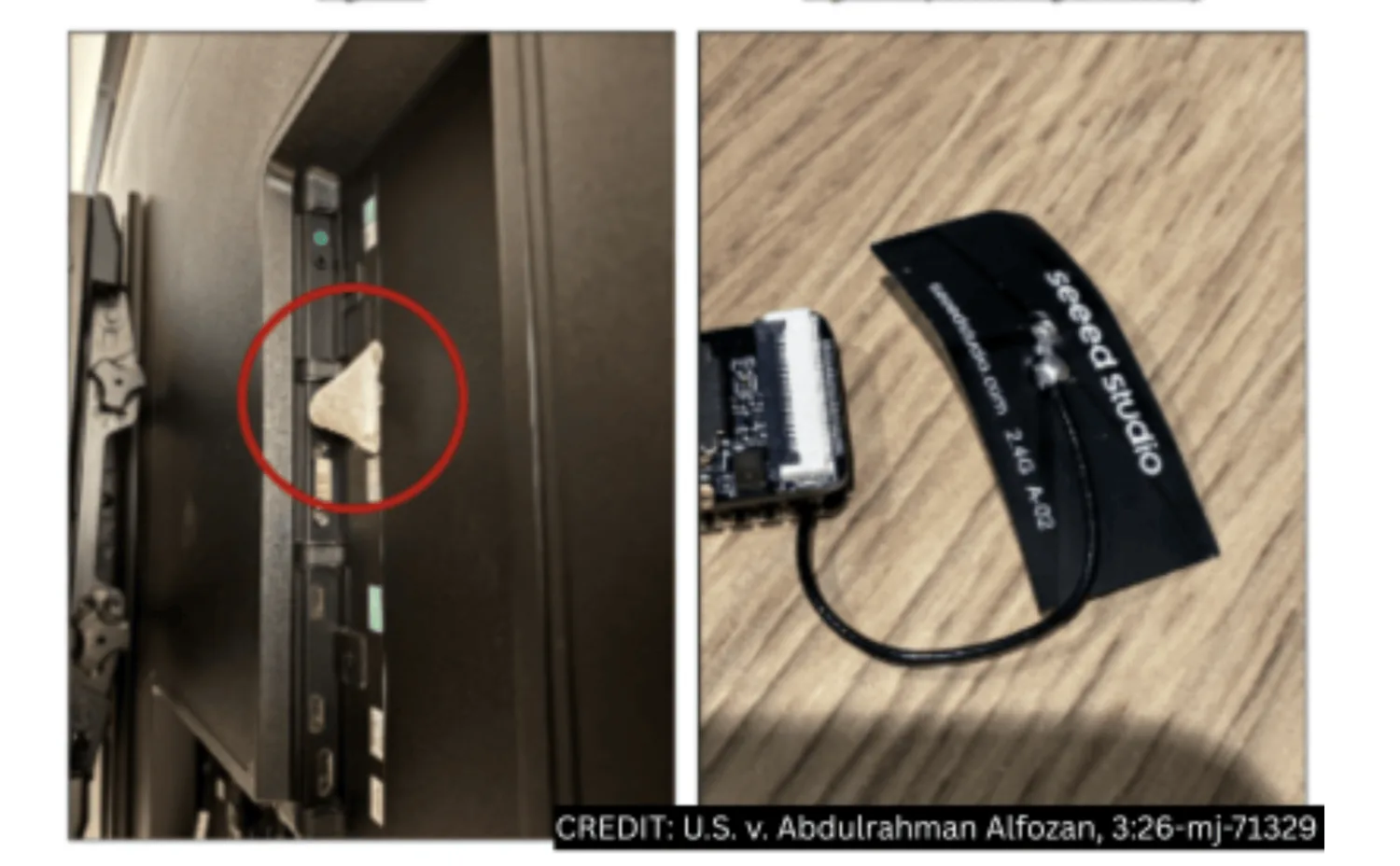
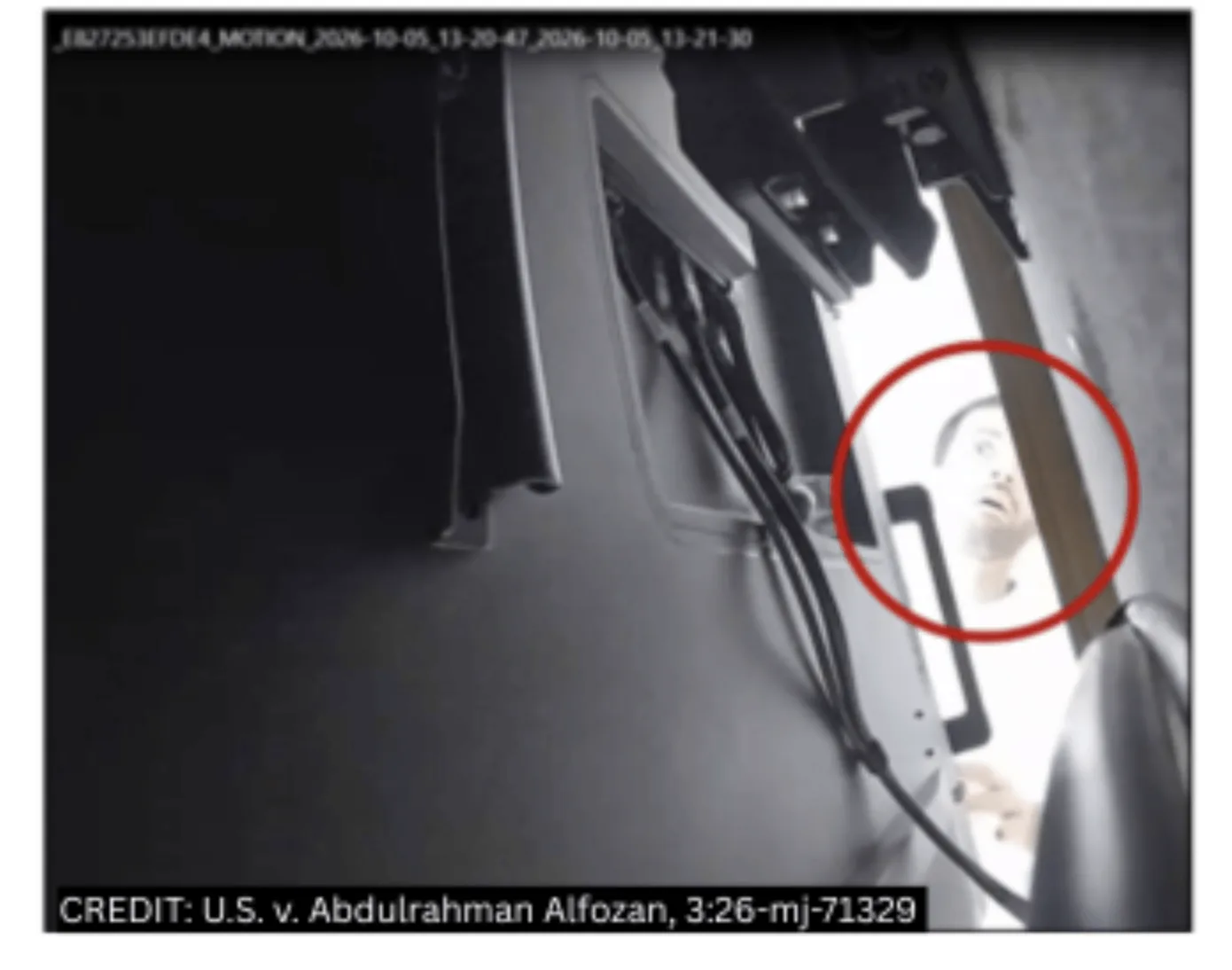
According to the Justice Department, Alfozan did not have authorization to enter this executive conference room. But CCTV footage allegedly shows that on multiple dates before the device was discovered, he appeared near the executive conference room; the footage also captured him apparently looking behind the TV where the device was installed.
In a public statement, OpenAI said the company discovered a “sophisticated recording device” and used its own AI model to “understand the device and where it came from,” ultimately identifying a specific employee who had planted it several days earlier. This detail is the most striking contrast in the incident: the things being protected are AI models and confidential information, while the investigative tool is also AI. Another contrast is that the device was described as “sophisticated,” yet it was covered with toilet paper and plugged into a TV USB port—hardly a discreet location.
The Justice Department also said OpenAI security personnel found a bag left by Alfozan in another room at the company’s office, containing his wallet, identification documents, and another recording device. OpenAI said it has handed the matter over to the FBI, that the FBI investigation is ongoing, and that the company will continue to support the investigation. OpenAI also emphasized that its security program is designed to defend against a range of threats, from insider risks and cybercriminals to nation-state actors, and called this case an example of AI helping address complex security threats.
Why This Incident Matters
This is not an ordinary office dispute, but a case involving physical security, insider threats, and the protection of an AI company’s core assets all at once. Executive conference rooms often host “high-value conversations” about product roadmaps, business partnerships, and technology strategy; if recorded, the consequences may go beyond a privacy breach and could affect negotiations, competition, and national security assessments. OpenAI calling the incident a matter of “national importance” also shows that it treats insider risk as seriously as external hacking attacks.
But it is also important to recognize the limits: the available information comes from company statements and a Justice Department press release; the case is still under investigation and in legal proceedings, and charges are not the same as a conviction. OpenAI explicitly says there is no indication that model weights, source code, or customer data were improperly accessed or leaked. For now, this can only be understood as the company’s statement, and further disclosures are still needed.
Practical Takeaways for Readers

If you are a corporate security or IT leader, you can treat this incident as a reminder: audit executive conference rooms, USB ports, access-control permissions, CCTV coverage, and visitor logs, especially TVs, monitors, speakers, and power outlets that “look like no one would ever touch them.” Physical eavesdropping devices are often easier to overlook than cyberattacks.
If you are simply an ordinary reader following the AI industry, there is no need to infer from a single case that OpenAI’s models or data are already unsafe. A more reasonable course of action is to wait for the FBI investigation, court filings, and further disclosures from OpenAI before judging whether this is an isolated insider incident or whether it has exposed a broader security vulnerability.
Final Thoughts
AI companies are becoming high-value targets. What needs protecting is not only code and servers, but also a single sentence spoken in a conference room. OpenAI’s use of its own model to trace the device’s origin shows that AI is entering corporate security investigation workflows. But until a legal conclusion is reached, this remains a charge awaiting trial, not a story that has been settled.