
A Belated Teen-Specific Version
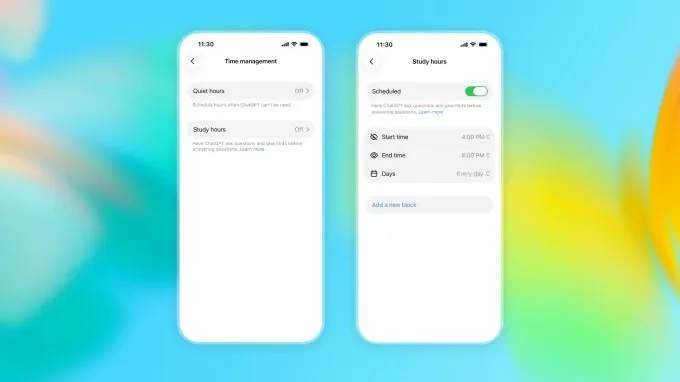
OpenAI has announced ChatGPT for Teens, an attempt to add safety, learning, and parental management mechanisms for teens who are already using generative AI in large numbers. According to TechCrunch, this new version arrives after multiple lawsuits over inadequate safety measures around AI chatbots, involving teen suicide, mental health concerns, and school cheating issues caused by ChatGPT-assisted homework.
Since its launch in late 2022, ChatGPT has spread rapidly, and the report notes that its weekly active user base has reached 900 million. Before this, however, dedicated protections for minors had not been part of the product’s original design. The core change in this teen version is making “age-appropriate protections” the default experience, rather than placing minors directly into the same interaction environment as adult users.
Study Mode: From Giving Answers to Guiding Understanding

In educational settings, OpenAI is emphasizing a new Study Mode. It does not simply ban questions; rather, it aims to turn the chatbot from an “answer generator” into a “learning tutor.” Study Mode can be understood as an interaction style that guides students to understand key concepts through questions and step-by-step prompts.
OpenAI says teens will see guiding questions and step-by-step support to help them understand the material. When the system determines that a user may be bypassing the learning process and directly asking for homework answers, ChatGPT will show a homework reminder and nudge the user toward Study Mode. The app will also support quizzes and learning visualizations, and parents or guardians can control when Study Mode is enabled by default.
Key features include:
- Age-appropriate safety protections enabled by default, reducing exposure to harmful content or content unsuitable for their developmental stage;
- Study Mode helps understanding through guiding questions and step-by-step support;
- Homework reminders prompt users to turn to learning in suspected cheating scenarios;
- Quizzes and learning visualizations reinforce the learning process;
- Parental controls to manage settings, receive safety notifications, and set Quiet Hours.
Parental Controls and Safety Boundaries Still Need Verification
OpenAI says the teen version’s age-appropriate protections are based on the “Under-18 Principles” in its Model Spec and draw on developmental science and expert advice. The parental tools build on previously introduced family features and can be used to manage settings, receive safety notifications, set quiet hours, and more.
TechCrunch also points out a practical question: how hard are these mechanisms to bypass? Teens are often very good at evading parental controls, platform restrictions, and various digital lockouts. If users are deliberately uncooperative, whether Study Mode, homework reminders, or default safety settings can remain effective in real-world scenarios will require more rigorous external testing and long-term observation.
This is also where the difficulty of teen AI products lies. Large models are systems that can generate text, images, or other content based on input, and the stronger their open-ended conversational capabilities, the harder they are to fully manage with traditional “blacklist”-style rules. For platforms, the challenge is not just blocking obviously harmful content; it also includes identifying vulnerable mental states, avoiding