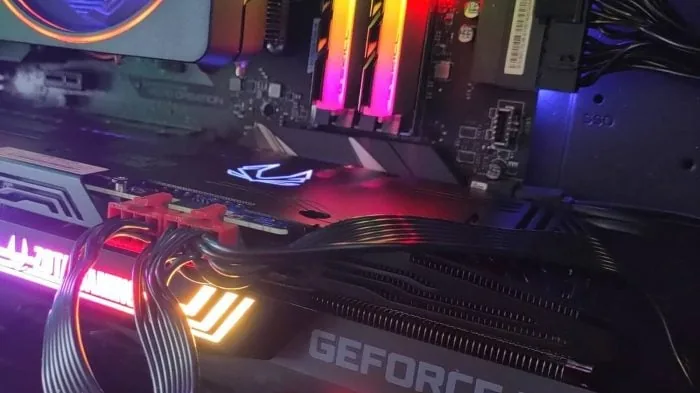
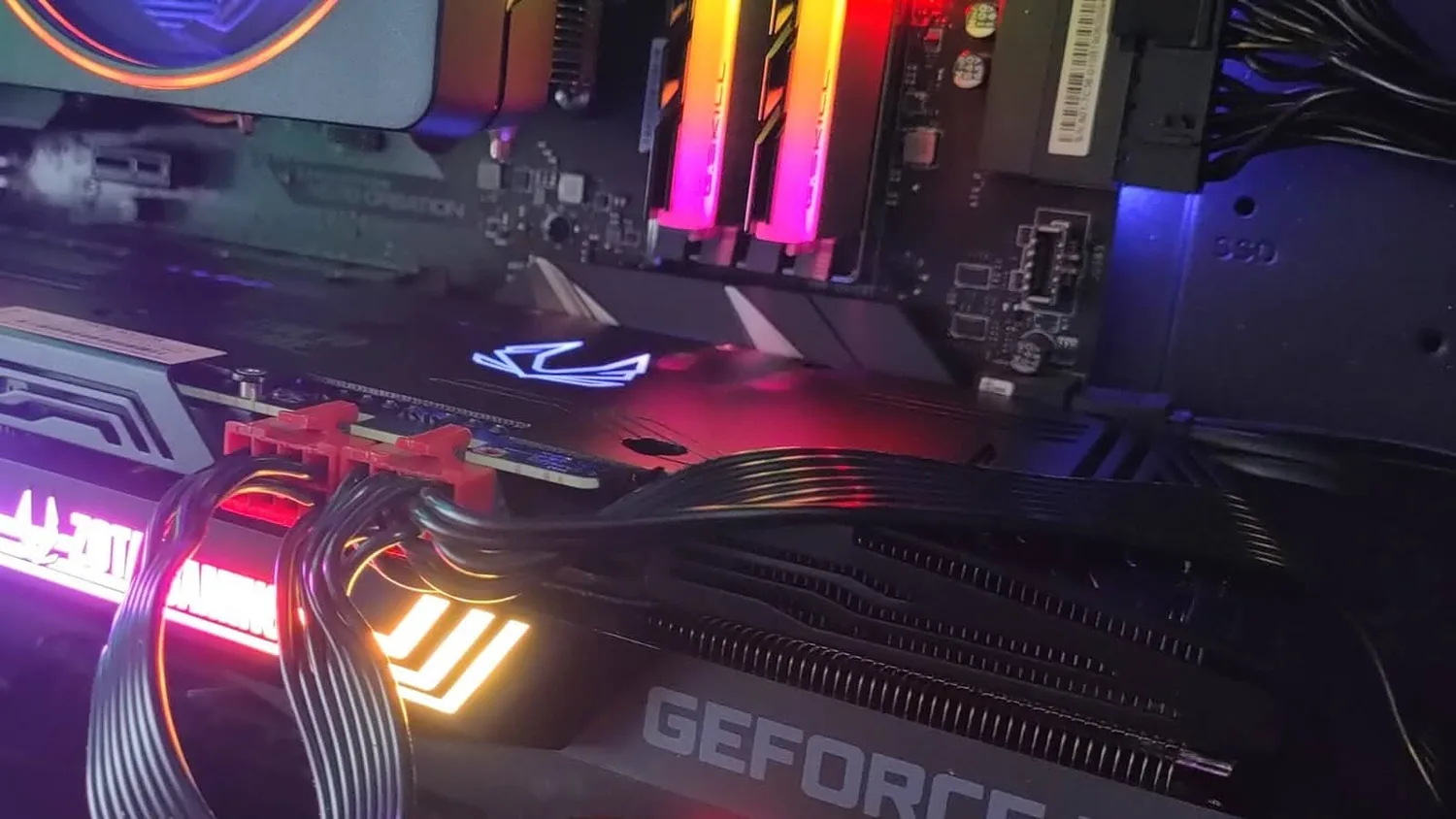
According to GameApps.hk, the open-source tool gpu-unlock, created by GitHub developer Zagitta, targets NVIDIA GeForce RTX 30-series cards based on the Ampere architecture. Developer-provided information says these cards have an instruction issue-rate limit when executing FP16 and BF16 Tensor Core operations using FP32 accumulation, leaving some compute speeds at about half those of NVIDIA professional cards.
How it works
The tool removes this limit by modifying a hardware speed-select register. It uses a Linux kernel module to modify the register before the NVIDIA graphics driver loads, then resets the GPU and lets the unmodified stock driver take over. The report says this process does not require permanently modifying the VBIOS or installing a modified NVIDIA driver. The technique is based on earlier research into NVIDIA CMP mining cards.
Community test data
| Test | Before | After | Gain |
|---|---|---|---|
| RTX 3090 BF16 | 77.5 | 129.6 | +67.2% |
| RTX 3090 TF32 | 40.2 | 69.8 | +73.6% |
| RTX 3090 Ti BF16 | 87.5 | 157.4 | +79.9% |
Unit: TFLOPS. The data comes from compatibility tests provided by community users and is not game FPS performance.
Actual gains depend on workload
Another RTX 3090 user said that when running a local large language model (LLM), long-context prompt processing performance improved by about 16%, but actual token generation speed was almost unchanged. A ComfyUI test on the RTX 3090 Ti showed that throughput improved by about 47% to 59% in several AI image-generation workloads that make heavy use of BF16 compute. The report says actual effects depend heavily on the workload, and the theoretical Tensor Core compute gain should not be treated as the acceleration all AI programs will receive.
Gaming and platform limits
Because NVIDIA DLSS also uses Tensor Cores, there is interest in whether the technique can improve AI-assisted image rendering performance. However, the report says there are no independently verified gaming tests showing that gpu-unlock can improve game FPS. The original tool only supports Linux. A separate experimental Windows port unlocked a specific RTX 3090 system and booted Windows, but this does not mean it has broad compatibility.
The unlocking method remains experimental, and installing it on a main gaming PC used daily carries some risk. Project link: https://github.com/Zagitta/gpu-unlock