
Key Event: NVIDIA Unveils Five Major Technology Advances for the Vera Rubin Ecosystem
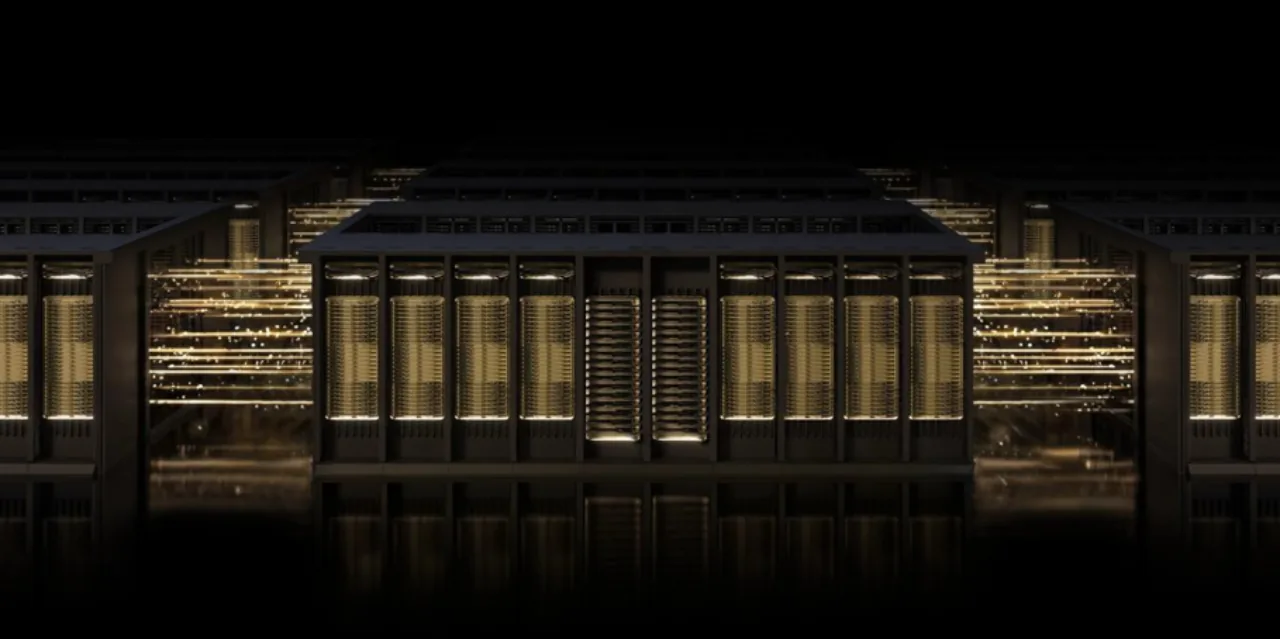
On August 24, 2024 (local time), during the Hot Chips conference, NVIDIA disclosed a set of major updates centered on Vera Rubin for AI factories:
- NVIDIA Groq 3 LPX: Now in volume production, this low-latency inference accelerator is purpose-built to boost token generation speed
- Spectrum-X Multi-Plane: Supports scaling to large clusters of 512,000 GPUs without adding a Layer 3 network
- Scale-In: Built on BlueField-4 and the DOCA platform, it takes over security, storage access, and operations tasks
- NVLink Fusion: Sixth-generation NVLink lets third-party XPUs and CPUs connect to NVIDIA’s rack architecture
First deployments: Nebius will become the first adopter of Groq 3 LPX, connecting it to its production-grade inference platform Nebius Token Factory. Developers can keep their existing APIs with no migration required.
Groq 3 LPX: A Low-Latency Token Generation Accelerator
NVIDIA explicitly defines Groq 3 LPX as an “interactive AI inference accelerator.” It is not a replacement for the Vera Rubin GPU; rather, it is a platform extension specifically designed to address latency accumulation during the token generation phase.
Applications such as coding agents must go through execution flows of hundreds to thousands of steps, so per-generation latency accumulates continuously and directly affects end-to-end task time. Test results show:
- In Artificial Analysis tests using the open Gemma 4 31B model with a 100,000-token context, output throughput reached 3,400 tokens per second, the fastest recorded result for this model to date
- On latency-sensitive workloads such as agents, response speed can be up to 4x that of the closest alternative platform
The deployment path for Groq 3 LPX is already clear: AI cloud providers will adopt it first. Following Nebius, Groq will also be an early adopter.
Spectrum-X Multi-Plane: 10,000+ GPU Scaling Without Adding a Layer 3 Network
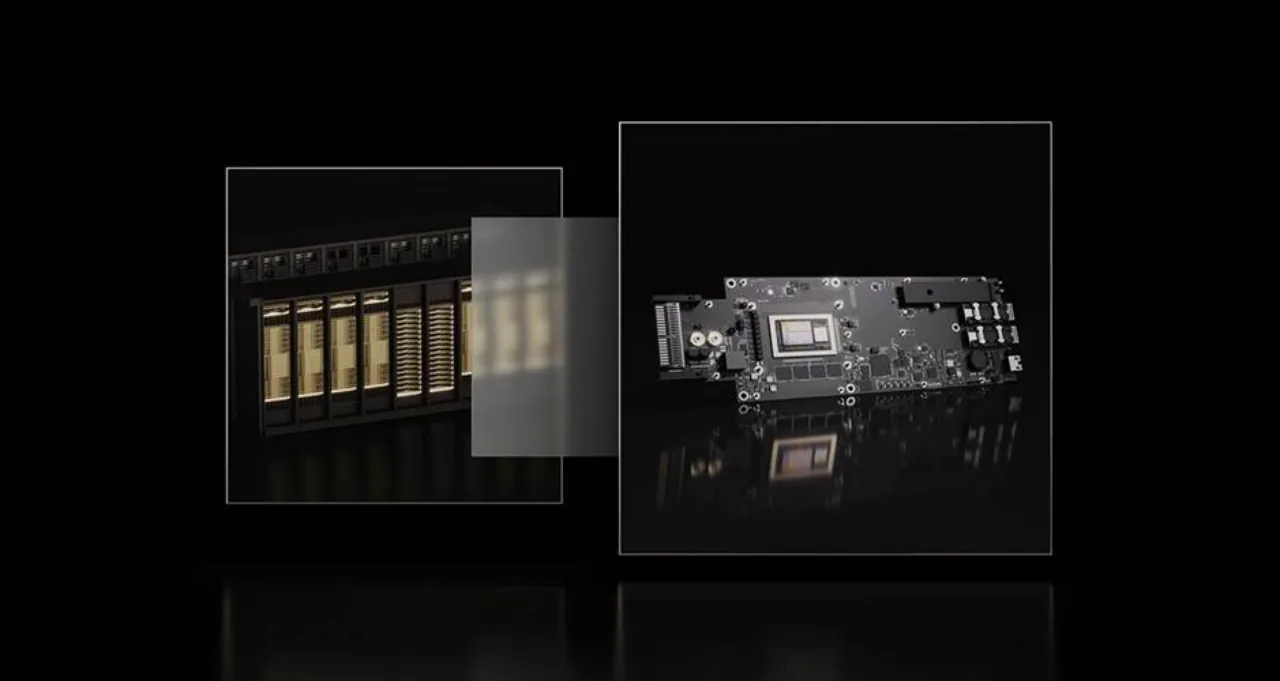
When traditional two-tier Ethernet clusters scale to large sizes, they usually need a Layer 3 network, which introduces extra switch hops, latency, jitter, and higher hardware costs.
What sets the Spectrum-X multi-plane architecture apart is this: in an eight-plane topology, a single plane failure still leaves about 90% of total bandwidth available, and hardware-based recovery is 11x faster than software-based approaches, which can increase AI factory output by 1.6x.
On the technical specifications side:
- Spectrum-X SN6000 series switches use the 102.4Tb/s Spectrum-6 ASIC
- Paired with ConnectX-9 SuperNIC, they provide up to 1600Gb/s of bandwidth per GPU
- ConnectX SuperNIC has built-in hardware engines for traffic distribution and failover
- Spectrum-XGS can connect multiple data centers, improving multi-site NCCL collective communication performance by 1.9x
Scale-In and NVLink Fusion: Security, Connectivity, and an Open Ecosystem
NVIDIA calls Scale-In the “fifth pillar” of its AI networking system. It is powered by the BlueField-4 processor and the DOCA software platform, and connects over Spectrum-X Ethernet. Its core function is to separate multi-tenant networking, storage access, security, resource provisioning, and real-time observability from the host side, moving them into a separate hardware-accelerated domain so they do not continuously consume CPU and GPU resources.
Complementing this is NVLink Fusion. In the past, NVLink was used only for interconnect between NVIDIA GPUs; now, through sixth-generation NVLink, NVLink Switch, and NVLink-C2C technologies, it extends those capabilities to third-party XPUs and CPUs:
- Sixth-generation NVLink can create a 72-XPU interconnect domain, reducing end-to-end XPU-to-XPU transfer latency to one-third and increasing packet rate by 10x
- NVLink-C2C can connect XPUs to NVIDIA Vera CPUs or other ecosystem CPUs, with up to 6x the energy efficiency of a PCIe interface
This allows cloud providers, while continuing to use MGX racks (power, liquid cooling, networking, management software, and supply chain), to deploy their own chips alongside NVIDIA GPUs in similar infrastructure, dynamically adjusting the chip mix based on supply and workload.
Comparison of Key Technical Specifications

| Technology Component | Core Capability | Key Parameters | Baseline | Performance Improvement |
|---|---|---|---|---|
| Groq 3 LPX | Token generation acceleration | 3,400 tokens/s (Gemma 4 31B) | Closest alternative platform | 4x response speed |
| Spectrum-X Multi-Plane | 10,000+ GPU cluster scaling | 512,000 GPUs / 51.2 racks | Traditional Layer 3 network | 11x faster recovery, 1.6x higher output |
| NVLink Fusion | XPU access interconnect | 72-XPU interconnect domain | General-purpose Ethernet solution | Latency reduced to 1/3, packet rate increased 10x |
| Scale-In | Infrastructure service offload | BlueField-4 + DOCA | Host CPU/GPU processing | Isolates security, storage, and operations tasks |
Deployment Recommendations
Best for Immediate Adoption: Cloud providers or enterprise AI platforms that already have large-scale GPU clusters and face token generation latency or network scaling bottlenecks should evaluate the combined Groq 3 LPX and Spectrum-X Multi-Plane solution; for cloud providers that have deployed NVIDIA MGX racks and plan to add their own XPUs, NVLink Fusion will lower the integration barrier.
Consider Waiting: If your current workloads are mainly offline training, are not sensitive to real-time inference latency, and have no cross-data-center collective communication requirements, existing Vera Rubin GPU clusters still offer a cost advantage; Scale-In requires BlueField-4 hardware, and you need to assess compatibility with your existing host platform.
Final Thoughts
NVIDIA is expanding the competitive boundary from individual GPUs to the complete architecture design of the entire AI factory. The five technologies announced here are not independent products; they are coordinated optimizations across compute, networking, storage, and operations, marking a new stage in which AI infrastructure competition happens at the system level.