
Core Event: DGX Spark New Version Released
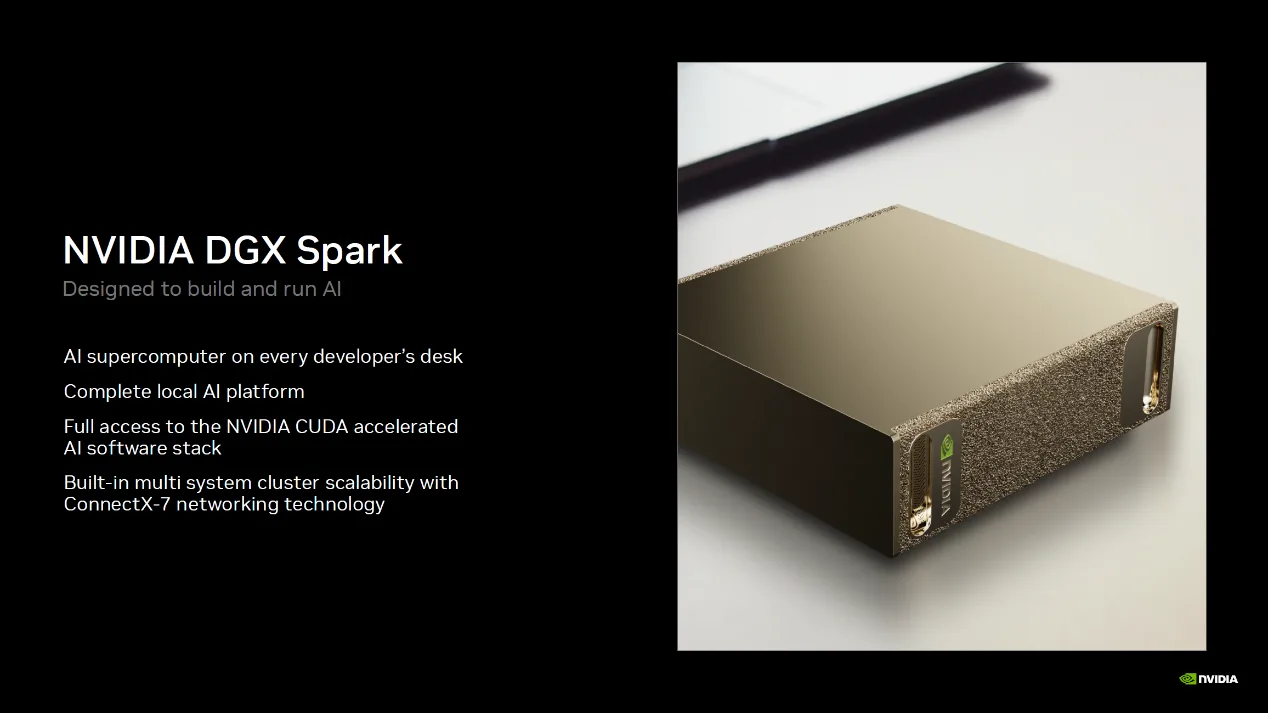
On October 2, NVIDIA officially announced the 64GB memory version of the DGX Spark desktop AI computer, further lowering the barrier to deploying large models locally.
- Release timeline: Announced October 2, 2026; officially on sale October 23
- New version: 64GB memory edition, plus updated pricing for the existing 128GB version
- Starting price: 64GB version at $4,999 (approx. RMB 33,566); 128GB FE version at $6,950 (approx. RMB 46,666)
- Actual usable memory: 64GB total, with about 8GB reserved by the system; about 56GB available for model weights and KV cache
- Hardware platform: Based on the GB10 Grace-Blackwell superchip, with a unified memory architecture (UMA) that unifies CPU and GPU memory space
- Openness status: Supports NVFP4, works out of the box with multiple open-source models, and runs without requiring special licensing
Hardware and Performance: A Radically Integrated Desktop Supercomputer
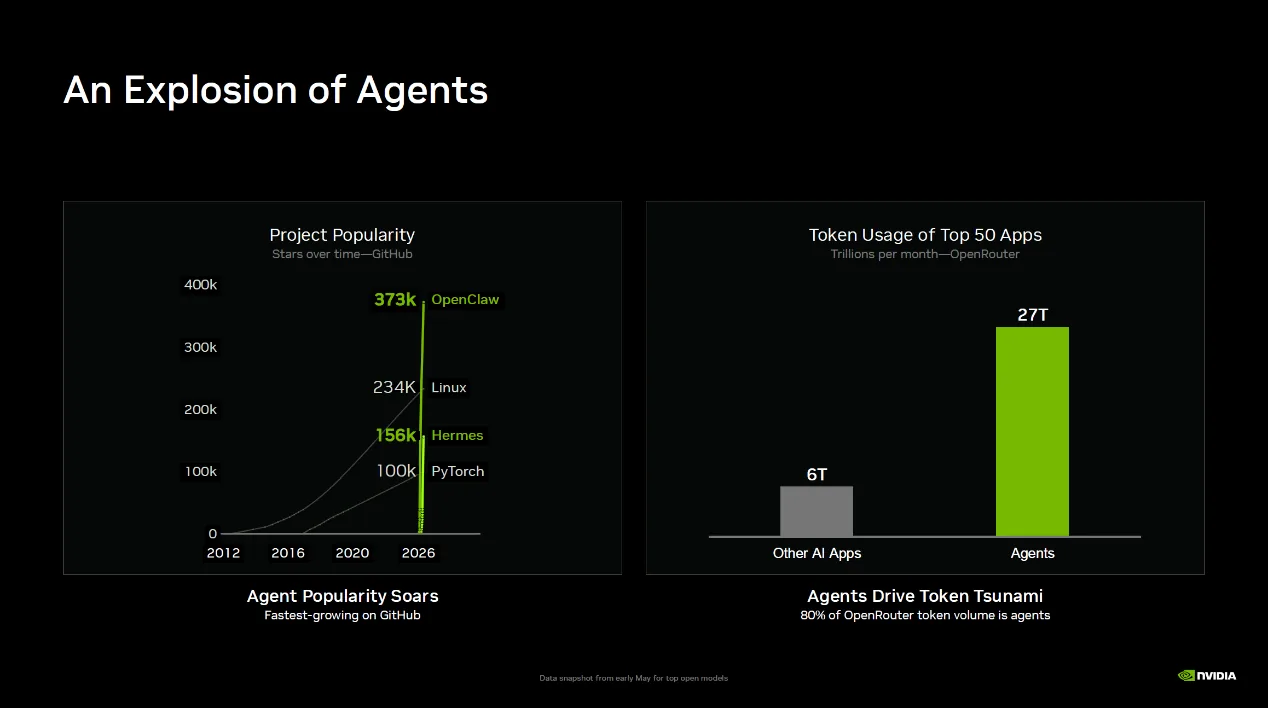
DGX Spark uses a unified memory architecture design that lets the CPU and GPU share the same memory space, significantly reducing data-copy overhead, making it especially well suited to local large-model inference. Although the 64GB version is an entry-level configuration, its roughly 56GB of actual usable space is enough to support today’s leading open-source large models:
- Gemma4 26B
- Qwen3.8-27B
- Meta Muse Glimmer
- Nemotron3.5 Lightning
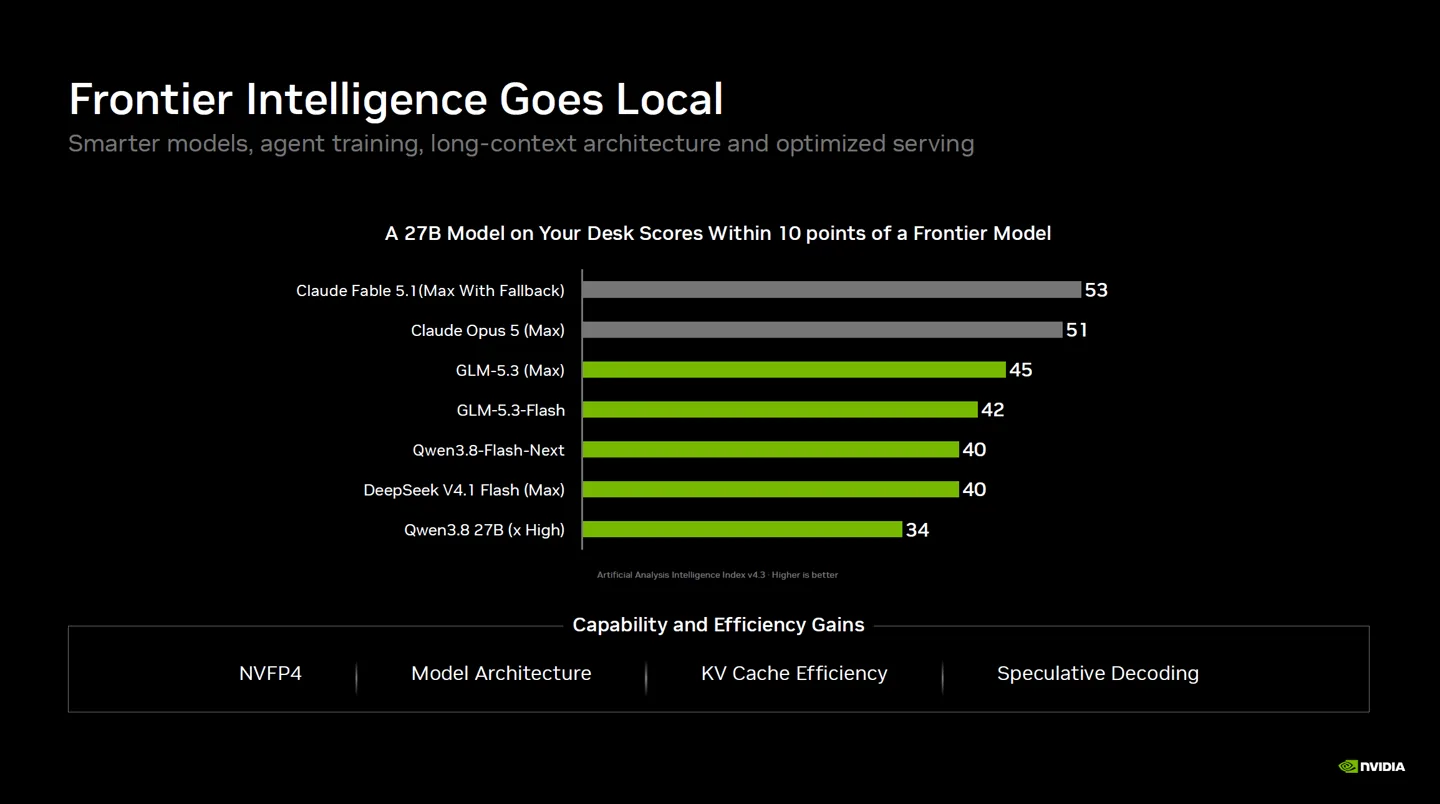
Notably, the Qwen3.8-27B model deployed on DGX Spark delivers strong performance, with benchmark scores now significantly approaching those of frontier closed-source models—a gap that is rare on local desktop devices, confirming that desktop hardware now truly has professional-grade inference capability. Perplexity founder Aravind Srinivas commented that the device can “nearly max out both GPU and memory load,” and its unified memory design maximizes token output efficiency per watt, making it suitable for running local agent tasks 24/7.
Cluster Expansion and Ecosystem: Everyday Developers Can Build Multi-Node Clusters Too
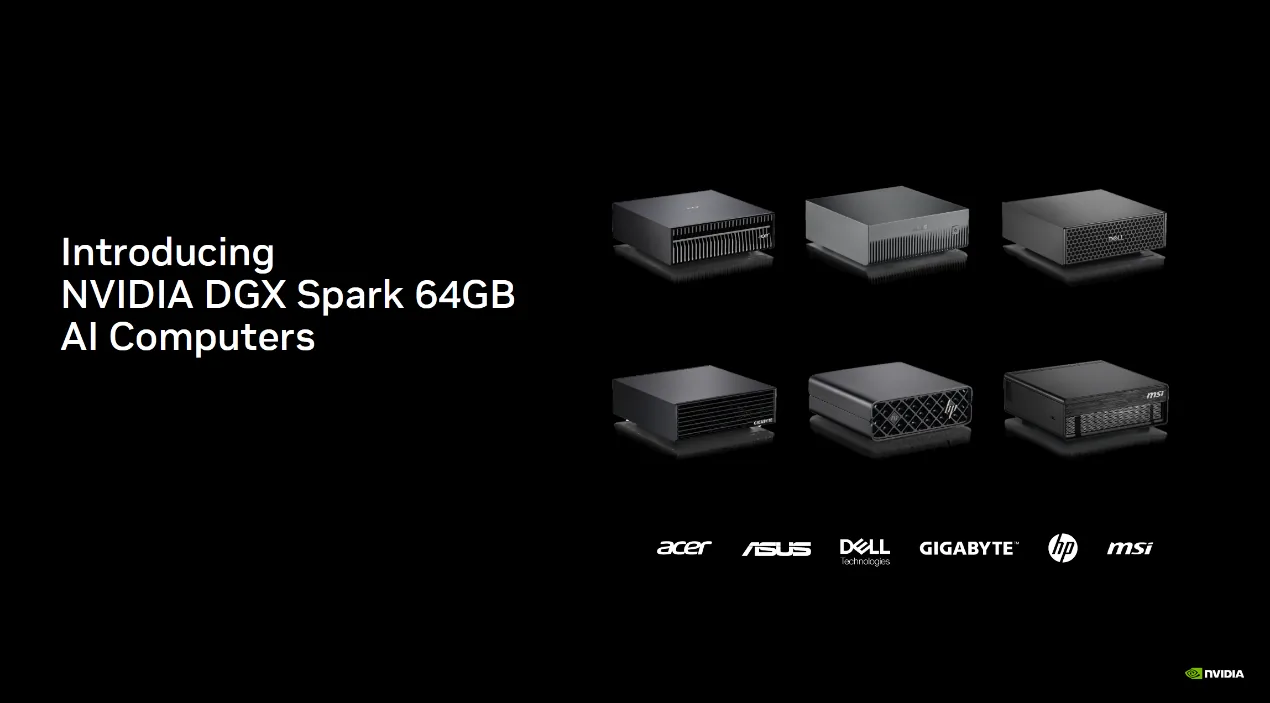
One of DGX Spark’s biggest highlights is its native multi-machine cluster expansion capability: with a built-in ConnectX-7 high-speed NIC and the all-new NVIDIA Sync tool suite, ordinary developers can deploy a multi-node cluster without deep networking or operations expertise.
- The Cluster Assistant automatically handles network configuration, device validation, and SSH environment setup
- Supports clusters of up to four DGX Spark units
- Official testing: a cluster of two 64GB units running Qwen3.8-27B delivers up to 1.7× higher inference performance
- Supports remote access to the cluster from an ordinary PC, integrates with IDEs such as VS Code/Cursor, and starts vLLM inference containers with one click
On the software ecosystem side, the machine ships with the full NVIDIA CUDA-accelerated AI stack and offers deep support for the vLLM and llama.cpp inference frameworks. With optimizations specifically for local agent workflows, inference speed improves by up to 1.9×. Perplexity has launched a portable agent optimized for DGX Spark, and the Laguna S2.1 118B model can be deployed and run locally.
64GB vs. 128GB Version Comparison
| Version | Memory Configuration | Price (USD) | Price (RMB, estimated) | Recommended Use Cases |
|---|---|---|---|---|
| 64GB | 64GB (~56GB usable) | $4,999 | ¥33,566 | Open-source large-model inference, multi-node clusters for small teams, local agent training/inference |
| 128GB FE | 128GB | $6,950 | ¥46,666 | Larger model weights, long-context workloads, higher throughput requirements |
Who Should Get One?
Recommended for immediate purchase:
- AI researchers and independent developers: 56GB of usable memory is enough to run today’s mainstream 25B-class open-source models
- Small AI startups: a desktop supercomputer starting at $4,999 costs less and is easier to deploy than traditional GPU server solutions
- Teams that need multi-node expansion but lack ops expertise: the Sync suite and Cluster Assistant greatly lower the barrier to distributed deployment
Better to wait:
- Users who only need lightweight models (7B class): current consumer-grade RTX 4090/6000 Ada and similar cards already meet their needs at a lower price
- Developers who don’t need local deployment and only need API calls: cloud services may offer better value
Final Thoughts
The launch of DGX Spark marks a shift in large-model inference from being cloud-exclusive to desktop-accessible. The 64GB version brings the barrier to local deployment down to the tens-of-thousands-of-RMB level, and combined with its cluster expansion capability, enables small teams to build a complete AI development and inference loop—this dual evolution in hardware performance and deployment convenience is reshaping the landscape of the local AI ecosystem.