Muse and Dots: Consumer AI Agents Officially Launch
In October 2026, Meta and OpenAI simultaneously rolled out AI agent products for the masses: the free Muse unveiled at Meta Connect, and the paid Dots platform revealed at OpenAI DevDay. Both use cute animated mascots as interaction portals and offer autonomous agent services on call 24/7. Muse is already live and free, while Dots is offered via paid subscriptions across a base tier and Specialist Dots. xAI’s Grok Bot has also entered the race, but has not yet undergone large-scale public testing.
Technology Traces Back to OpenClaw, Product Paths Diverge

The recent breakthrough in AI agents can be traced back to the conceptual exploration phase in 2022 and the deployment trial-and-error phase in 2023. What truly pushed major vendors to accelerate was OpenClaw, an open-source tool built over a weekend in 2024 by developer Peter Steinberger—an always-on agent running on the user’s own Mac Mini. Despite its privacy and security flaws, OpenClaw still attracted a large number of tech enthusiasts. Its core innovation was this: wrapping a large model in a “harness” so it can autonomously execute multi-step tasks through a browser, without the user guiding it instruction by instruction.
Both Meta’s and OpenAI’s products inherit this paradigm. Muse was developed by Meta from scratch, inspired by OpenClaw; Dots was completed by OpenAI after directly recruiting the OpenClaw creator team. The two are essentially the same: an autonomous entity deployed on a cloud Linux virtual machine, with its own separate “thinking scratchpad” for internal reasoning, ultimately presenting complete task results rather than asking follow-up questions step by step. As reporter Hayden Field puts it, just as a human assistant can memorize a regular customer’s SkyMiles number and automatically complete a booking, agents need this kind of common-sense reasoning ability.
The Unexpected Contrast Between Free and Paid
There is a striking contrast in market strategy: Meta does not yet have a mature frontier model, yet it is entering the consumer market with a free strategy; OpenAI, leveraging its ChatGPT user base, has chosen to make Dots a paid service and expand into specialized professional scenarios. Muse is positioned as a general-purpose personal assistant covering everyday matters such as ordering food, shopping, and itinerary planning; Dots further differentiates into “specialist” roles such as marketing, legal, and accounting. Behind this difference lies the combination of Meta’s traditional strength in consumer product distribution and OpenAI’s commercialization path.
| Item | Muse | Dots |
|---|---|---|
| Launching company | Meta | OpenAI |
| Free? | Yes | No (subscription-based) |
| Core function | General life assistant | General + specialist domain agents |
| Technical origin | Inspired by OpenClaw, self-developed | Led by the OpenClaw creator team |
| Deployment | Cloud Linux virtual machine | ChatGPT integrated architecture |
Privacy Trade-off: The Tug-of-War Between Convenience and Control
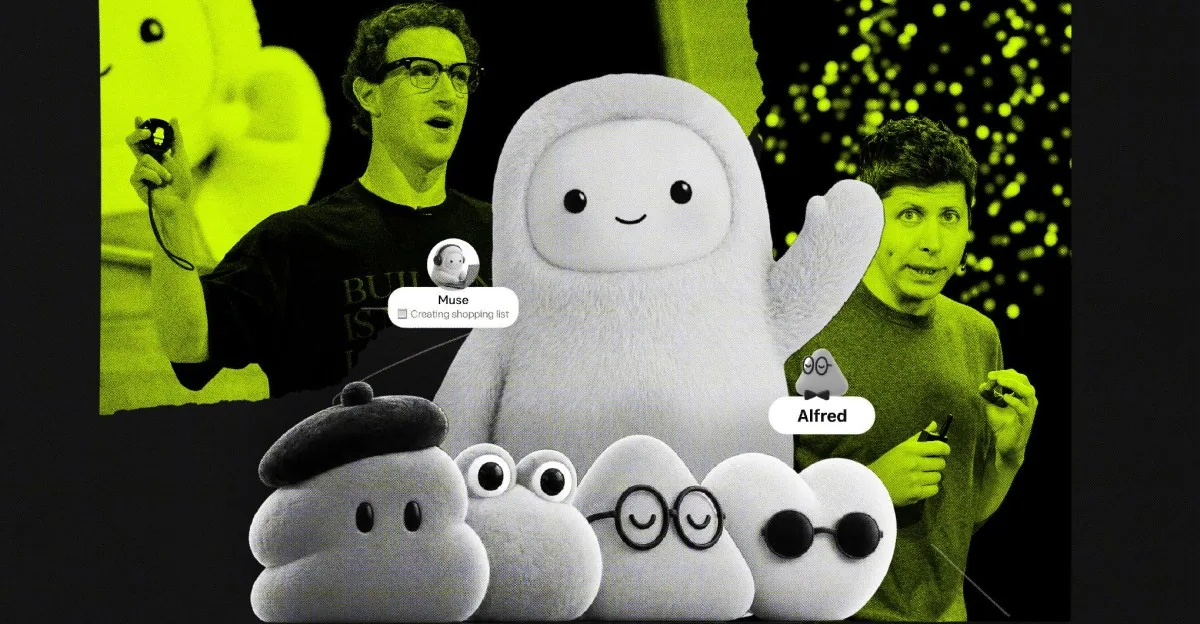
The real challenge for agents is not technical maturity, but the ceding of data sovereignty. These agents need continuous access to email, calendars, payment information, and even local folders in order to carry out complex automation tasks. Users must trust that their control will not be abused or leaked—even when the agent runs without the user holding a device. Hayden Field points out that OpenClaw raised security concerns due to overly open local network permissions, while cloud deployment isolates user devices but migrates sensitive data to corporate servers. Whether consumers are willing to pay the privacy price for this convenience remains an open question.
Who Should Try It? Who Should Wait?
- Those who should try it immediately: Users who are used to testing technology, value the Meta ecosystem (such as WhatsApp/Instagram integration), and are sensitive to subscription fees can find value in Muse’s free strategy; professionals who frequently handle repetitive tasks (such as itinerary planning and batch data filtering) can test Dots’ specialist functions to improve efficiency.
- Those advised to wait: High-net-worth individuals sensitive to data security, older users without a technical background, or small and medium-sized businesses with strict business data compliance requirements should wait at least 6–12 months for product iteration and third-party audit certification. The current version’s technical robustness and privacy protections have not yet reached enterprise-grade standards.
Final Thoughts
AI agents have already shifted from geek toys to mass infrastructure, but the gap between technical accessibility and user trust remains the industry’s biggest bottleneck. The real competition is not about model scale, but about who can maintain consumer-grade ease of use while building verifiable security boundaries and explainable decision logic—after all, an agent running your life should at least let you sleep at night.