Morning Brief at a Glance

- Insta360 launches the Insta360 Mic
- Anthropic introduces the Claude Duet AI agent
- PFU announces the HHKB Professional Elite keyboard
- Bose acquires Skullcandy
- EA shuts down BioWare and cancels the next Mass Effect
- Australian court rules Apple must open iPhone sideloading and third-party payments
- EU opens investigation into Booking.com
- China’s National Computer Virus Emergency Response Center issues a Weaxor ransomware warning
Insta360 Launches the Insta360 Mic
On October 22, Insta360 released the Insta360 Mic wireless microphone, positioned between the Mic Pro and the Mic Air. The transmitter carries the same 1.22-inch six-color e-ink display as the Mic Pro, supports automatic clipping prevention and dynamic gain, two levels of noise reduction, timecode, and a maximum transmission distance of 400 meters. The microphone unit matches the Mic Air, using a single capsule with omnidirectional pickup only. The Insta360 Mic has no built-in storage but accepts microSD cards from 8GB to 1TB, enabling 32-bit float internal recording once a card is inserted. It supports up to four transmitters to one receiver and two transmitters to four receivers, and can be mixed with Mic Pro transmitters, freely combining on the same receiver. Battery life is slightly longer than the Mic Pro: 13 hours for the transmitter and 34 hours for the charging case. Pricing is 439 yuan for a single transmitter, 799 yuan for a one-transmitter one-receiver kit, and 1,199 yuan for a two-transmitter one-receiver kit.
Anthropic Introduces the Claude Duet AI Agent
On October 21, Anthropic announced Claude Duet, a new app positioned as an AI agent that can work proactively. It compiles important cross-app items each day, proactively flags issues that need attention, and continues working on delegated tasks in the background after the user steps away. On the tooling side, Claude Duet can call on more than 6,000 connectors and plugins in the Claude Marketplace, covering common productivity and business services such as Gmail, Slack, QuickBooks, Stripe, LinkedIn, Canva, Shopify, and DocuSign. It can also complete user-confirmed online payments through Link or Shop Pay, using virtual cards to avoid exposing real card numbers. On security, Anthropic says Claude Duet never directly touches user passwords or login tokens, and must obtain user approval before sending messages, making payments, signing documents, or deleting content. The system also includes dedicated classifiers that block requests likely to leak highly sensitive information such as credit card numbers and government ID documents. Claude Duet is built on Claude Opus 5.5 and is available as standalone iOS and Android apps plus a claude.ai web version. A research preview is live immediately, with a waitlist first opened to Pro and Max subscribers in the United States; during the preview, usage counts against the same plan limits as other Claude features.
PFU Announces the HHKB Professional Elite Keyboard

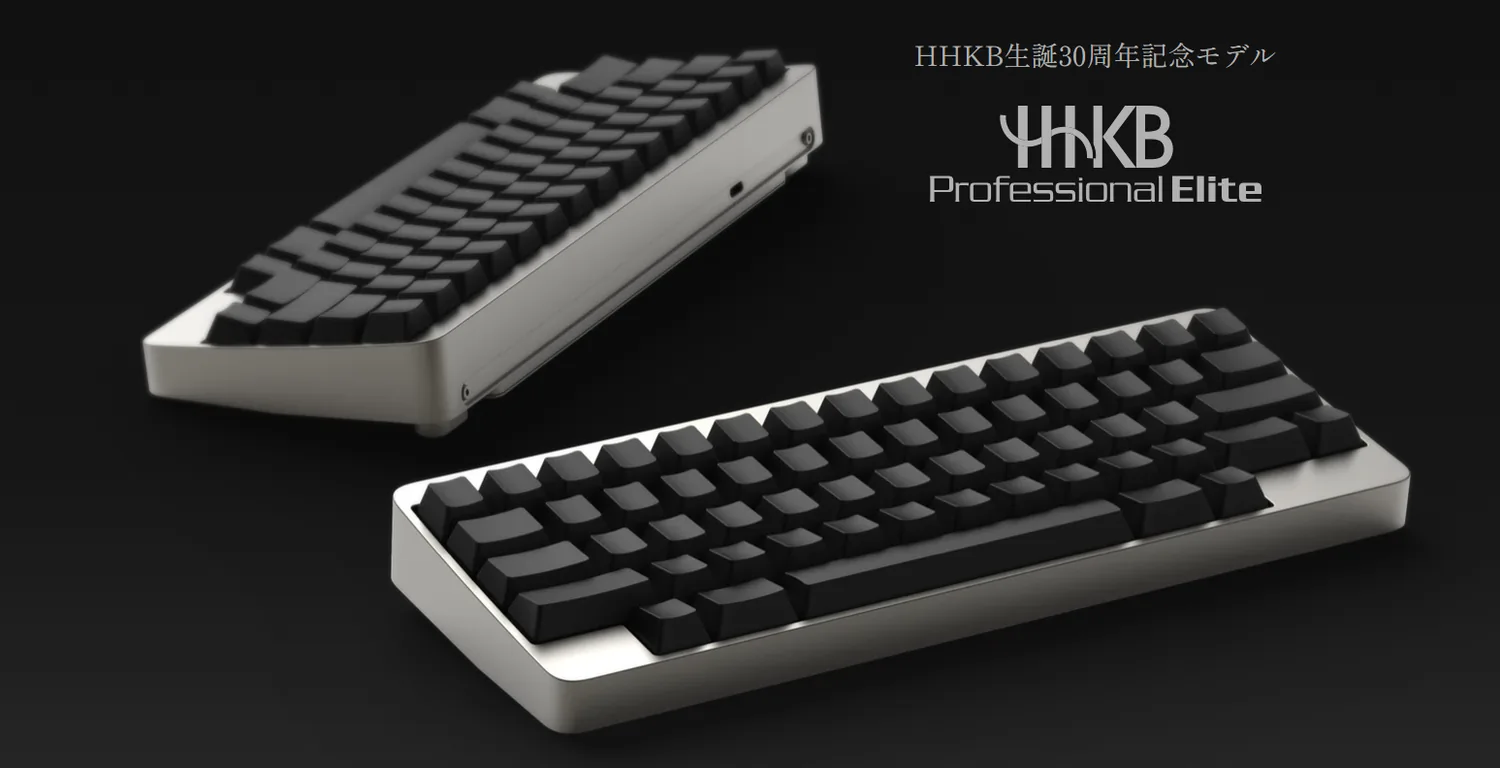
On October 22, to mark the 30th anniversary of its HHKB brand, PFU announced the limited-edition HHKB Professional Elite. The anniversary model is based on the 2006 10th-anniversary HHKB Professional HG, while the Elite name traces back to the development codename of the first HHKB Professional. The HHKB Professional Elite features a unibody machined aluminum chassis with bead-blasted and anodized surfaces, Type-S silent electrostatic capacitive switches with a newly designed internal mounting structure, and a new replaceable foot assembly at the bottom offering four tilt angles. It is limited to 300 units worldwide (250 in Japan, 50 in China), each laser-engraved on the underside with the HHKB Professional Elite name and limited-edition number. The price is 300,000 yen excluding tax, roughly 12,700 yuan.
Bose Acquires Skullcandy
On October 22, Bose announced it had completed its acquisition of the lifestyle headphone brand Skullcandy. Bose said the core purpose of the deal is to broaden its user reach. Skullcandy is known for bold design, street culture, and sports communities, with strong influence in music, gaming, fitness, and board sports such as skiing, skateboarding, and surfing, which can help Bose reach younger consumers it had previously covered less. Skullcandy will continue to operate as an independent brand and retain its Park City, Utah headquarters, joining Bose’s premium consumer audio business. The company will gain access to more Bose audio technology, R&D resources, global distribution channels, and business partnerships. The two had already maintained a multi-year partnership, with Sound by Bose technology introduced across a range of Skullcandy headphones.
EA Shuts Down BioWare and Cancels the Next Mass Effect
On October 21, EA announced cost cuts in an internal letter to employees, cancelling some projects including BioWare’s next Mass Effect, which was still in early development. It will continue investing in sports games, the online shooter Apex Legends, and action-adventure projects, including the next entry in the Star Wars Jedi series and a new title starring Marvel’s Iron Man. The company also said it will keep developing the Battlefield series, with Respawn and DICE co-developing new projects. BioWare, the studio behind Mass Effect and Dragon Age, subsequently posted a closure announcement on its official account. People familiar with the matter said EA will cut 400 positions, about 3 percent of its total workforce.
Australian Court Rules Apple Must Open iPhone Sideloading and Third-Party Payments
After years of antitrust litigation with Epic Games, a Federal Court judge in Australia ruled on October 22 that Apple must make broad changes to App Store rules. Apple has confirmed it plans to appeal. The judge also published a 235-page ruling requiring that, starting March 1, 2027, Apple must allow iPhone users with Australian Apple accounts to install apps from third-party app stores and websites. Apple may apply for a delay to May 3, 2027 before February 15, subject to court approval. The ruling also referenced a series of Apple actions against Epic Games in 2020, including refusing to enable Epic’s direct payment option, removing Fortnite from the store, and later banning Epic’s developer account. The judge described removing the game and banning the account as typical examples of Apple enforcing restrictive terms, in violation of Section 46 of Australia’s Competition and Consumer Act 2010. The court also barred two Apple practices: requiring developers to report transactions completed through third-party payment channels, and forcing developers to offer Apple payment alongside their own payment methods. These are rules Apple currently applies in markets such as Brazil and Japan. Apple told Reuters it will seek to stay the ruling and appeal, hoping for a decision that respects intellectual property and protects the safe, reliable App Store experience consumers and developers expect.
EU Opens Investigation into Booking.com
On October 21, the European Commission announced a formal investigation into Booking.com under the Digital Services Act, examining whether it adequately assesses and effectively mitigates risks such as fake listings and phishing scams, and whether it clearly labels paid promotional accommodation listings. The investigation covers nonexistent listings, impersonated hosts, and non-compliant accommodation information, and will assess whether the platform takes effective measures to remove them. Regulators will also examine how Booking.com shares order and guest data with accommodation providers, the design of its in-platform messaging service, and measures to prevent that data from being used for phishing and payment fraud. Opening an investigation does not mean the company has been found in violation; if non-compliance is ultimately confirmed, Booking.com could face fines of up to 6 percent of global annual turnover.
China’s National Computer Virus Emergency Response Center Issues Weaxor Ransomware Warning
On October 22, China’s National Computer Virus Emergency Response Center and the National Engineering Laboratory for Computer Virus Prevention and Control Technology issued a notice saying that multiple attacks on Chinese users by the Weaxor ransomware had recently been detected in the country via the national computer virus collaborative analysis platform. After encryption, important files are renamed with the original filename plus a suffix such as .weax, and attackers leave a ransom note on the host demanding contact and payment. The ransomware has multiple variants, with attackers delivering the appropriate program based on the target operating system, covering most Windows and Linux platforms and mainly targeting enterprise databases, OA office systems, and other business systems. It has no self-propagation capability; cybercriminals typically gain initial access and then deliver it to the target intranet automatically or manually.
Quick Links Worth a Look

- Spotify confirmed it is rolling out a routine improvement requiring members of the same family plan to scan a QR code to confirm they live at the same address; users who fail to confirm within seven days cannot rejoin a family or duo plan for 12 months.
- Amazon is renaming its Kindle Unlimited subscription to Kindle+ and expanding it to include audiobooks.
- The Browser Company announced it will fully shut down the Arc browser on December 22 this year.
- On October 21, China’s Ministry of Industry and Information Technology announced the formal establishment of the MIIT Industrial Software Standardization Technical Committee, responsible for developing and revising industry standards on key technologies, data interoperability, products and services, integrated applications, and ecosystem development.
- Reports say Motorola will launch a phone called the motorola razr flex 27, apparently using the Snapdragon 8 Elite Gen 5 with a 4.97-inch cover display, a 6.92-inch inner display at 165Hz, in a wide foldable form factor. It weighs 215g and has a 5,000mAh battery.
- Mozilla, Google, and Apple have all blocked a problematic intermediate certificate from certificate authority eMudhra.
- Apple will display a Made for iPhone Duo badge in the App Store for apps adapted to the iPhone Duo.
- Many users in Europe and North America found their Japan-market Sony Xperia devices could not connect to 5G or enable dual SIM, affecting the Xperia 1 V and newer models. Sony is suspected of closing off a baseband-flashing workaround for cross-region 5G and dual SIM use in a system update this year. Google has previously disabled 5G, VoLTE, and Wi-Fi calling in unsupported regions.
- Sony discontinued the UBP-X700/K Ultra HD Blu-ray player on October 22. Launched in May 2025, it was Sony’s only remaining standalone Ultra HD Blu-ray player on sale. The only Sony device still in production with Blu-ray playback is now the PlayStation 5.
Recent From SSPAI
- Join SSPAI for a creative gathering at Haikou Tomorrow Park.
- New iPhone co-branded accessories from SSPAI, with freely combinable protection, charging, cable, and stand options.
Articles You May Have Missed
- Finally Got That Coveted Little Pill: My ADHD Diagnosis and Treatment Diary
- Preview: What to Expect From Apple’s New Products, Including a Possible OLED Touchscreen MacBook
- Putting Muse Into ESP-Mosaico: Building Something Useless to Show That Vibe Coding Is Growing Fast in Hardware Too