
Launch and access
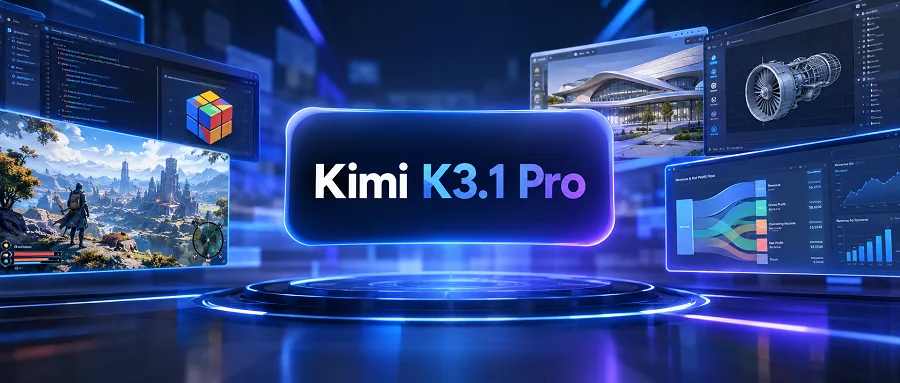
On Oct 24, 2026, Moonshot AI launched Kimi K3.1 Pro, a flagship model built by post-training Kimi K3, and said it will finish open-sourcing by Nov 4.
- Model: 3-trillion-parameter class, 1M-token context window.
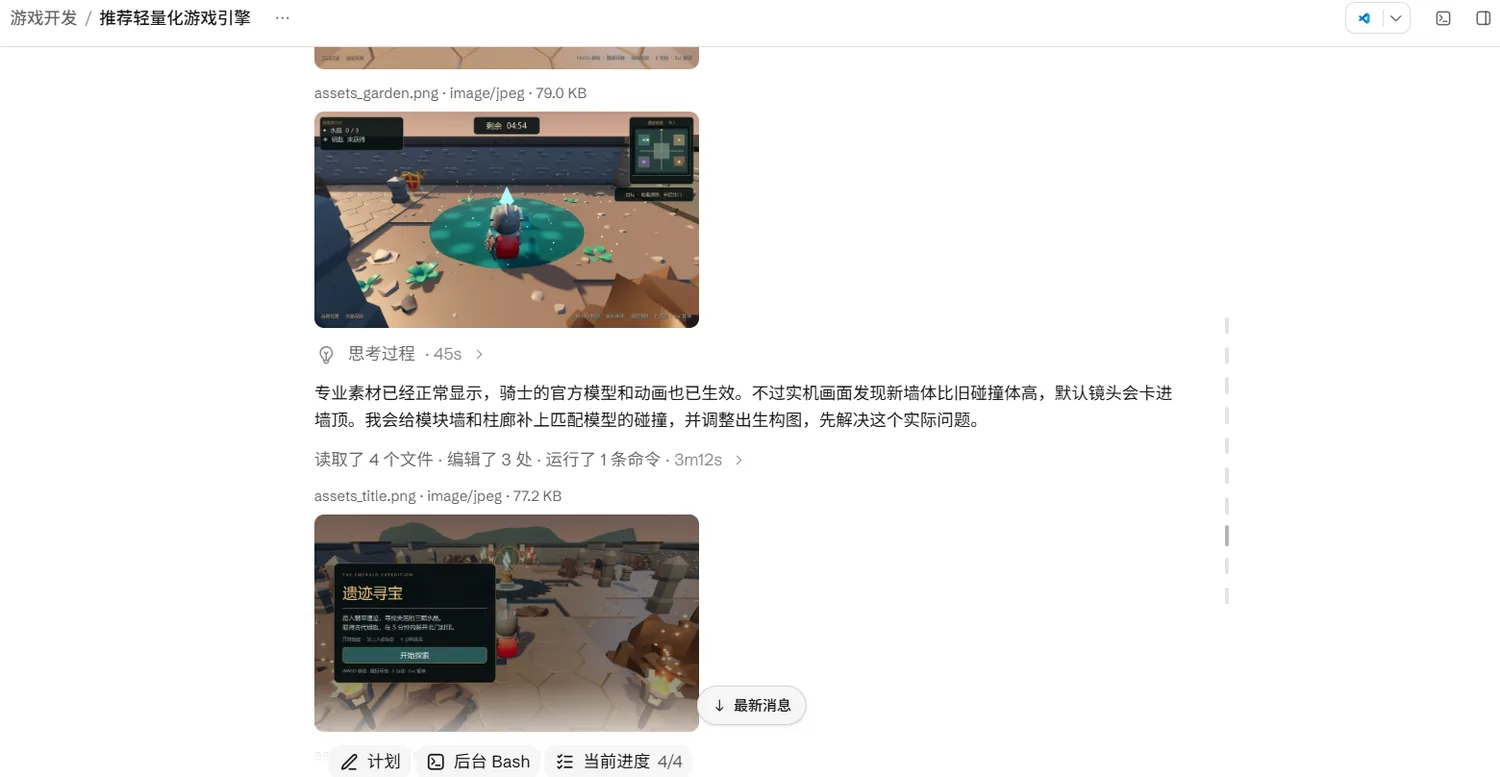
- Pricing: ¥13 per million input tokens and ¥68 per million output tokens; a high-speed variant runs 2–3x faster at 2x the price.
- Availability: Kimi website, Kimi Work, Kimi Code and API.
- Open source: the company says open-sourcing will be completed by Nov 4, but the article does not disclose weight or license details.
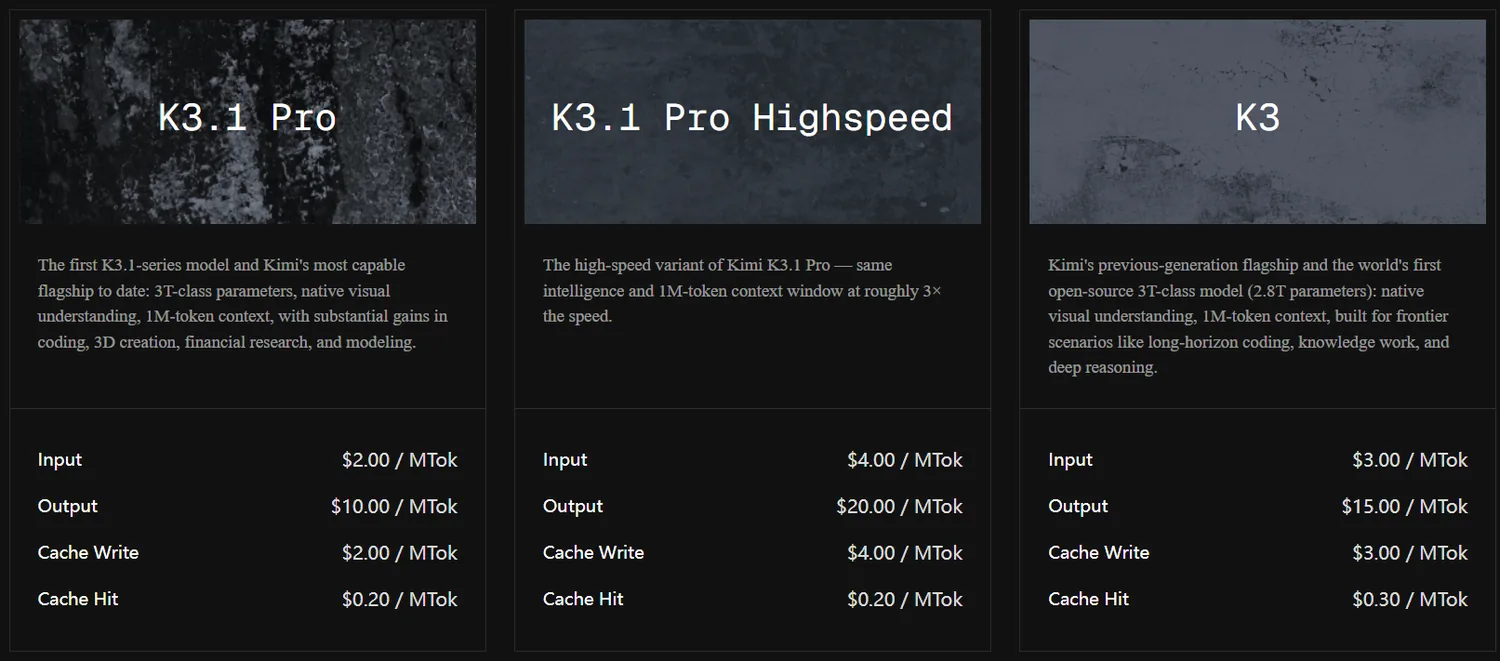
- Ranking: fourth overall and first among Chinese models on Artificial Analysis, 11 points above Kimi K3; it beats Claude Fable 5.1 and GPT-6 Astra and trails Claude Opus 5.5, Claude Sonnet 5.5 and Muse Wonder.
From web demos to CAD
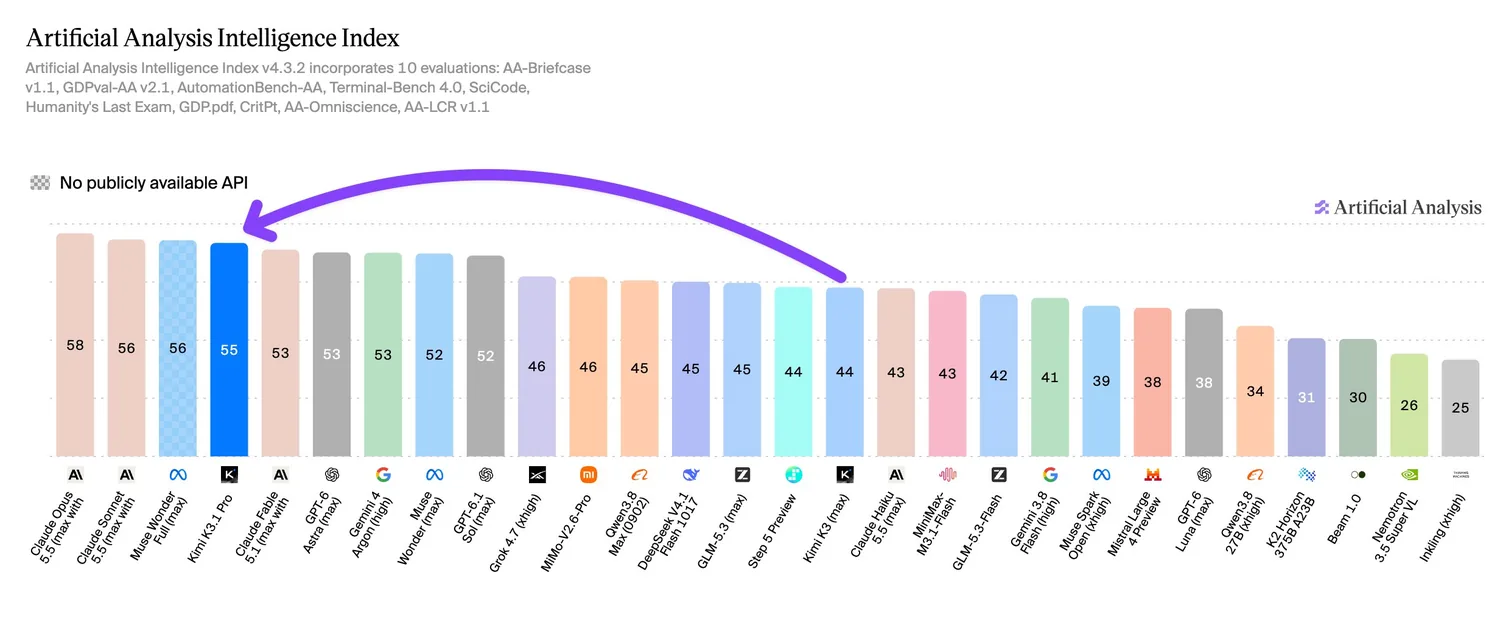
Official demos show K3.1 Pro building detailed game scenes through Unreal Engine, generating a working turbofan engine model in FreeCAD, and recreating Singapore airport’s indoor rainforest in Blender. Zhidx’s tests covered web development, game making, 3D modeling and finance. A web Rubik’s cube simulator, built with CSS 3D and rotation matrices rather than a ready-made 3D engine, took about 10 minutes and ran core cube and layer animations. A Godot game, Relic Hunt, reached a first version in about 20 minutes; the model then spent time on runtime, screenshots and interaction regression, fixed asset paths and collision issues, and passed 60 real-engine checks. The delivery included a full map, scene assets, animated characters and a live minimap.
The harder CAD test asked for a two-story exhibition hall with a curved roof. It produced an editable CAD model with 3,052 components in about 45 minutes, plus 11 pages of drawings and a bill of materials. Core checks on stairs, atrium, corridors, entrances and roof junctions passed, and tests that changed building length, width, floor height and column grid returned correct results. In finance, the model pulled key figures from SpaceX’s latest quarterly 10-Q and produced a Sankey chart in about 2 minutes; after a complaint about font size, it revised the chart, and manual checks found no data mismatches.
Price and benchmarks: a 1/5 price tag, uneven strengths
Moonshot says it increased post-training compute and ran large-scale joint reinforcement learning across hundreds of downstream domains. It also optimized its RL framework, long-context inference, training efficiency, sandbox infrastructure, deployment scheduling and a shared environment quality-check platform. On Terminal Bench 4.0, K3.1 Pro scored 65.7%, above GPT-6 Astra’s 58.2% and below Claude Opus 5.5’s 66.4%, with a clear per-task cost advantage over overseas models. On BenchCAD with tool use, it scored 92.7%, close to Claude Opus 5.5’s 96.2% and GPT-6 Astra’s 95.9%.
The contrast is notable: K3.1 Pro ranks above GPT-6 Astra overall and costs about 20% of its list price, and it leads GPT-6 Astra by 7.5 percentage points on Terminal Bench 4.0, yet it still trails GPT-6 Astra on BenchCAD. In finance, internal benchmarks show financial modeling up 7.2 points and financial research up 11.6 points, while business operations reached 4.2x Kimi K3’s score. It scored 58.6 on Frontier Finance and 64.4 on OfficeQA Pro V2, which the company calls SOTA. Kimi Work also added a 3D model generation plug-in for parametric modeling of mechanical parts, buildings and furniture.
| Model | Input price (USD/M tokens) | Output price (USD/M tokens) | Relative to Kimi K3.1 Pro |
|---|---|---|---|
| Kimi K3.1 Pro | 2 | 10 | baseline |
| GPT-6 Astra | 10 | 50 | Kimi is about 20% |
| Claude Opus 5.5 | 4 | 20 | Kimi is about 50% |
Against Kimi K3, input pricing fell 35% and output pricing fell 32%. By USD list price, Kimi K3.1 Pro is 20% of GPT-6 Astra and 50% of Claude Opus 5.5.
Who should try it, and who should wait
Teams already using Kimi for code, web or game prototypes and 3D concept work can start with K3.1 Pro: it is available now, costs less than K3, and its 1M-token context can hold long codebases and documents. For 3D and CAD, set a bounded task and accept it only after core checks pass before moving it into production. Teams that need stable SLAs, clear open-source licenses and weight details should wait until the Nov 4 open-source information lands. For precision-heavy 3D work such as BenchCAD, test Claude Opus 5.5 or GPT-6 Astra on your own tasks rather than relying on a total ranking.
Final word
Kimi K3.1 Pro puts a 3-trillion-parameter class model and a 1/5 price tag on the same table; the real question is whether post-training gains hold up in long projects. Rankings and single tests are only the entrance — cost, delivery stability and open-source details will decide whether it moves from available to routinely used.