
Core Event: Microsoft Unveils New Surface Devices and Workstations Powered by NVIDIA RTX Spark Chips

On October 7, 2026, at its Tech Week event in San Francisco, Microsoft officially launched its new Surface devices and workstations, all powered by NVIDIA RTX Spark chips, marking a major step forward in the AI PC hardware ecosystem:
- Surface Laptop Ultra: Available in a base model (starting at $2,600) and a high-performance model (starting at $3,700); the top-end configuration is $5,900 and has already sold out
- Surface RTX Spark Dev Box: A workstation model starting at $6,000, preloaded with a development toolchain
- Microsoft also confirmed that Dell announced details of its previously announced Dell XPS 16 Creator Edition PC on the same day—this third-party device, also powered by the RTX Spark chip, is priced at $3,800 and available for pre-order with October delivery.
All devices come preloaded with an updated version of Windows 11, and the “Execution Containers” feature is available to all Windows 11 users.
Hardware Configuration and On-Device AI Capabilities
The core positioning of the RTX Spark chip is to support running AI models and agents locally. Microsoft emphasizes that these devices enable offline large language model inference through a CPU-GPU collaborative architecture, unified memory design, and an enhanced cooling system.
Surface Laptop Ultra offers two configuration paths: the standard version targets mobile AI application needs, while the Pro version enhances GPU compute. Notably, the high-performance Surface Laptop Ultra starts at $3,700, lower than the Dell XPS 16 at $3,800, even though the latter is viewed by the market as a creator-focused machine—a contrast that highlights Microsoft’s aggressive strategic pricing.
Surface RTX Spark Dev Box, meanwhile, is built for developers, featuring the highest-spec cooling and expansion capabilities among Surface devices as standard, with highly customizable memory and storage options.
Windows 11 Overhaul: Execution Containers
This Windows 11 update introduces the Execution Containers feature, essentially an OS-level sandbox isolation mechanism that allows AI agents to independently run model inference, tool calls, and data storage within secure boundaries. Microsoft CEO Satya Nadella noted that this design aims to solve the industry pain point that “models alone cannot deliver production-ready results,” building a unified agent runtime environment by integrating multi-model orchestration, context management, external memory, and action-space control.
The feature will roll out to all users with the October Windows 11 update, not just Surface device owners, reflecting Microsoft’s strategic intent to deeply embed AI capabilities into the Windows platform.
Policy and Developer Incentives
For developers, Microsoft is launching a trade-in program offering up to $1,000 for a MacBook Pro, directly responding to macOS’s high developer-community share, especially in Silicon Valley. This conversion strategy of “replacing Mac with Windows,” combined with preinstalled VS Code, GitHub Copilot CLI, WSL, and PowerShell 7, forms a complete AI development toolchain.
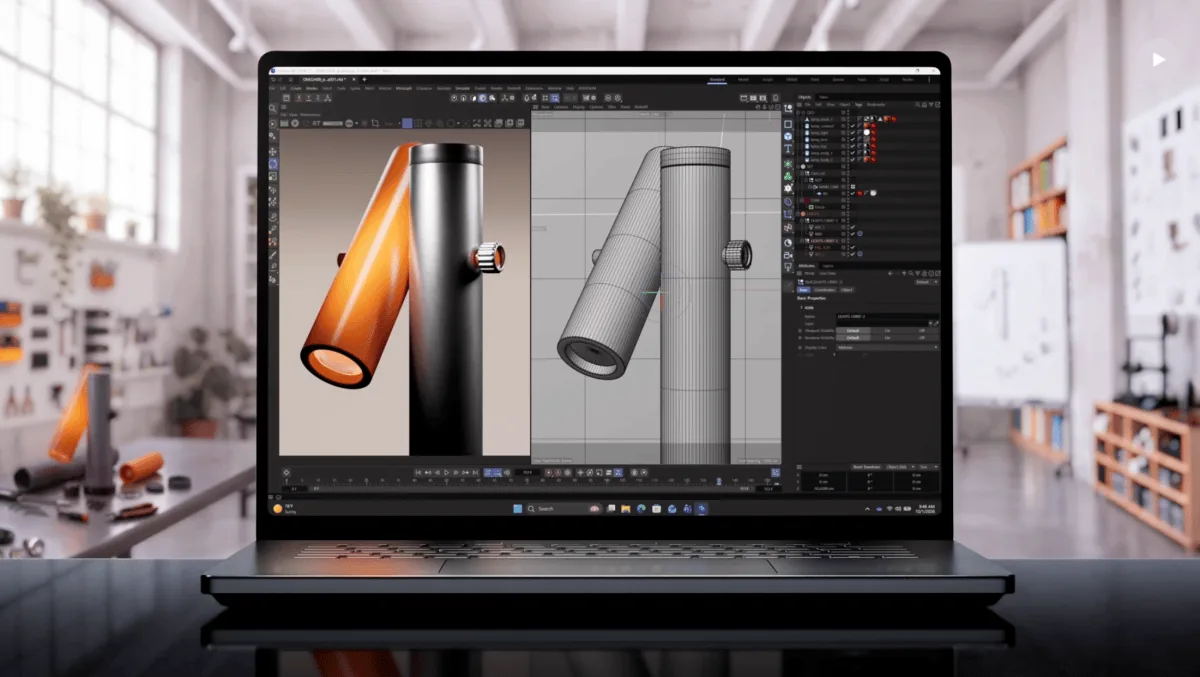
Microsoft also emphasizes the devices’ multimodal capabilities: the upgraded NVIDIA GPU also supports video editing, 3D rendering, and AAA games, meaning these machines are both productivity tools and entertainment terminals.
Practical Recommendations for Readers
- Who should buy now: Developers focused on local AI model fine-tuning/inference; finance or healthcare professionals who need to process sensitive data in offline environments
- Who should wait: Users with a limited budget (under $3,000) or those who only need basic office work/web browsing—the current AI PC premium comes mainly from the GPU and cooling system
- Mac-to-Windows switchers: For those who qualify for the trade-in offer, the $1,000 subsidy can significantly reduce the cost of switching
Final Thoughts
The launch of the RTX Spark PC series shows that the evolution from “cloud AI” to “on-device AI” has entered a phase of explosive hardware deployment. When OS-level agent management becomes a standard Windows feature, the barriers to AI application development and distribution will fall systematically—this may have a greater industry leverage effect than the performance specs of any single machine.