
Core Breakthrough: CCTV Highlights Systemic Path to Affordable AI Tokens

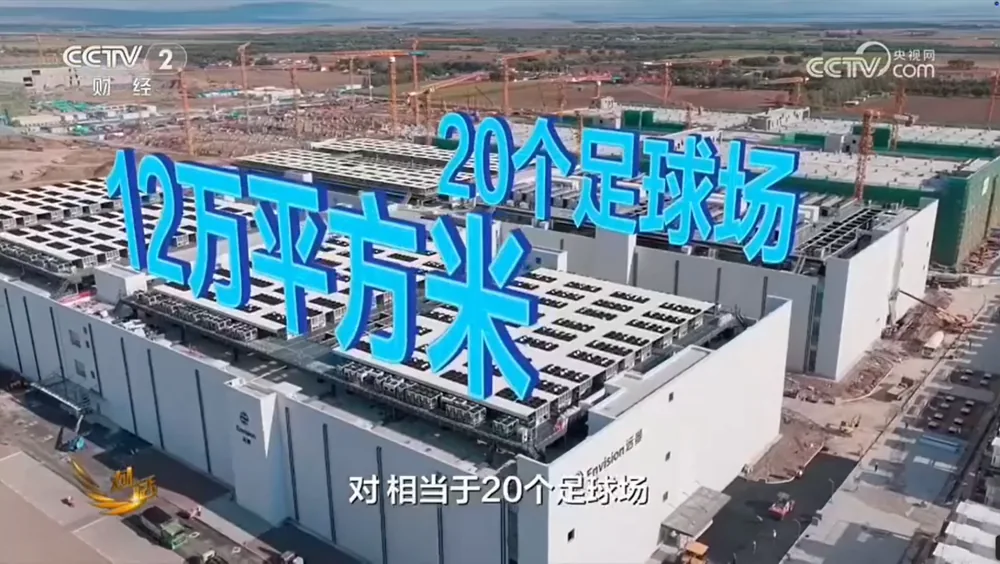
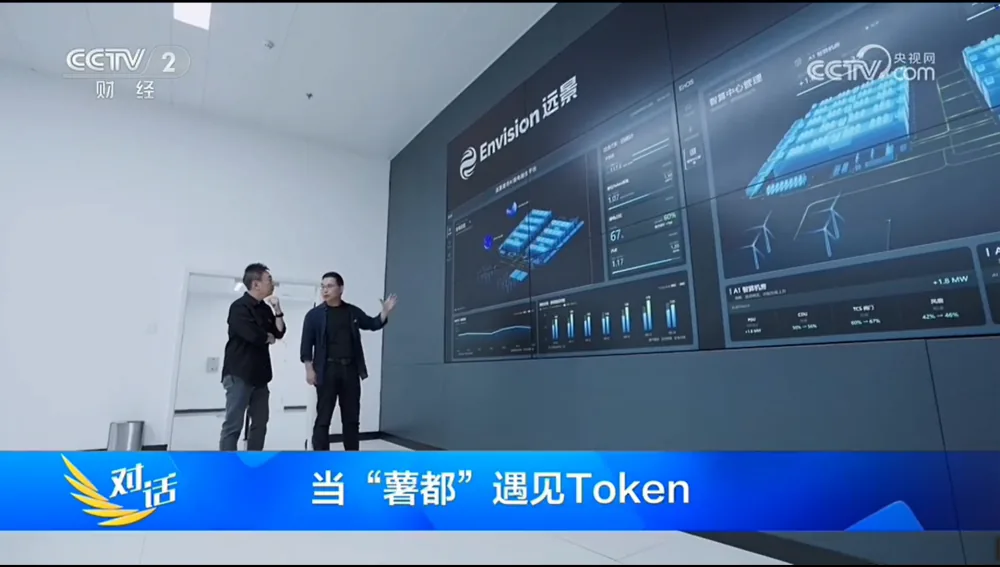
On September 19, 2026, CCTV’s “Dialogue” program visited Origin Energy’s Xinghe Base in Ulanqab, where Founder Zhang Lei proposed the “AI Potato Theory”—making tokens as accessible as potatoes for global users. This directly confronts the industry’s core anxiety: excessive AI compute costs. Three days later, Xiaomi’s MiMo-V2.6 release revealed the severity of this issue: its reinforcement learning fine-tuning phase consumed $3.47 million in under six days. The Xinghe Base, positioned as a candidate for the world’s highest-token-output data center, showcases a complete path from green power to affordable tokens. Key facts include:
- Total planned capacity exceeds 2GW, housing the world’s largest AI compute single building
- Phase-one 120,000 sqm super unit operational; full completion supports up to 1 million AI accelerator chips
- Targets 80%+ direct green power linkage, not merely solar certificates
Barrier #1: Breaking the Myth—Cheap Green Power ≠ Compute Competitiveness
Direct green power connectivity is necessary but insufficient for compute competitiveness. While Ulanqab boasts top-tier wind/solar resources and cool climate, achieving low-cost compute requires resolving supply-demand mismatch: intermittent renewable generation versus rigid deadline requirements. Over-provisioning storage backup and cooling to ensure reliability erodes the cost advantage of cheap power.
Origin’s Xinghe Base chose self-built wind farms, transmission lines, and storage systems to achieve 80%+ direct green power linkage. This vertical integration ensures low-cost green electricity transfers to end customers. Yang Kun, co-general manager of Origin’s AIDC product line, emphasized computing full-system long-term costs: the benchmark should be unit-output cost for identical models, not just electricity price per kWh.
Barrier #2: Building Predictions—From Weather Forecasts to Executable Schedules
Renewable intermittency makes deep weather-energy integration essential. Origin’s “Tianji” meteorological AI model delivers 5km resolution, minute-level global 45-day forecasts. In WeatherBench 2 evaluation, it ranks in the top tier alongside Google’s WeatherNext 2 on wind speed prediction critical for renewables.
This forecast capability powers the “Tianshu” energy orchestration platform, jointly optimizing generation, storage, grid, compute load, and cooling. The system shifts flexible tasks to high-green-power periods and reserves storage when forecasted shortages loom. The EnOS IoT operating system executes these strategies across devices.
Barrier #3: Efficiency Gains—End-to-End Power-Cooling-Compute Integration
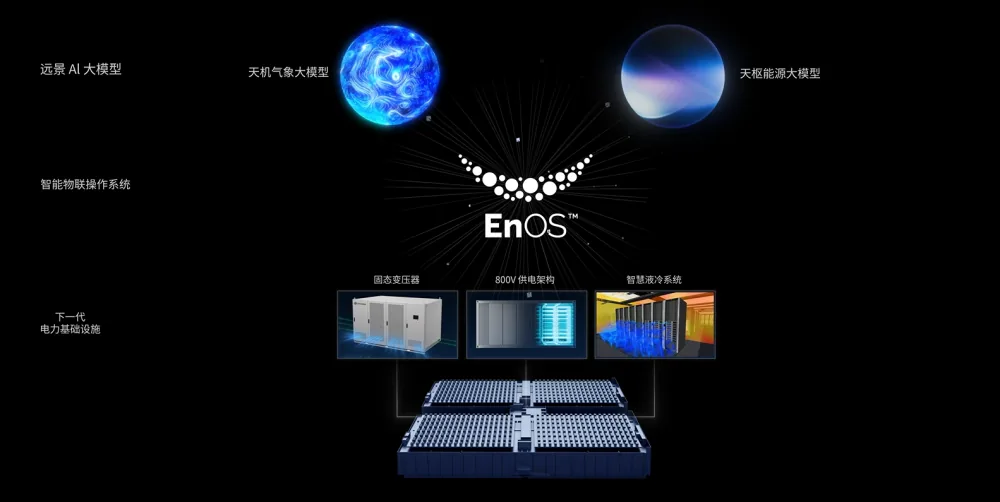
High-density GPU clusters strain power delivery and cooling. Xinghe’s 120,000 sqm super unit centralizes deployment to minimize inter-GPU communication latency. Through three optimizations, its compute density reaches 10x conventional data centers per square meter:
- Unified compute-power-cooling design
- Compact power systems using solid-state transformers (SST) and storage
- 800V DC architecture reducing conversion steps
The SST acts as an “energy router,” stepping down 10kV AC to server-grade 800V DC in one stage. Design specifies 98.5%+ efficiency, 50% smaller footprint, and up to 80% less copper usage. Storage here is more than backup—it’s a core controls element for system stability.
Barrier #4: Replicability—From Pilot to Scalable Deployment
Origin’s Chifeng off-grid green hydrogen complex validated full-chain dispatch under high-volatility renewables. Xinghe faces denser AI workloads. Origin explicitly states it replicates infrastructure delivery capability, not identical buildings. Clients bring their own GPUs, servers, and models; Origin provides land, green power, and the AI power system.
Tencent’s engineering team is testing collaboration, citing Xinghe’s capacity for large-scale clusters. Origin is evolving from hardware vendor to total solutions provider—the real value is keeping expensive chips fully utilized.
Recommendations for Practitioners
- Mid-to-large AI training teams: assess if training workloads have slack timing windows to leverage potential low-cost compute slots
- Export-focused enterprises with green power compliance needs: 80%+ direct green power meets both ESG and local regulatory requirements
- Semiconductor and OEM partners: watch SST, DC distribution, and storage coordination; may influence next-gen server power design
- Startup model teams: wait for commercial service details; current phase better for long-term cost observation than immediate deployment
Final Note
AI affordability relies on integrated systems engineering, not single technology breakthroughs. The deep synergy between energy infrastructure and compute delivery is transitioning from concept to replicable practice.