Key Event Overview
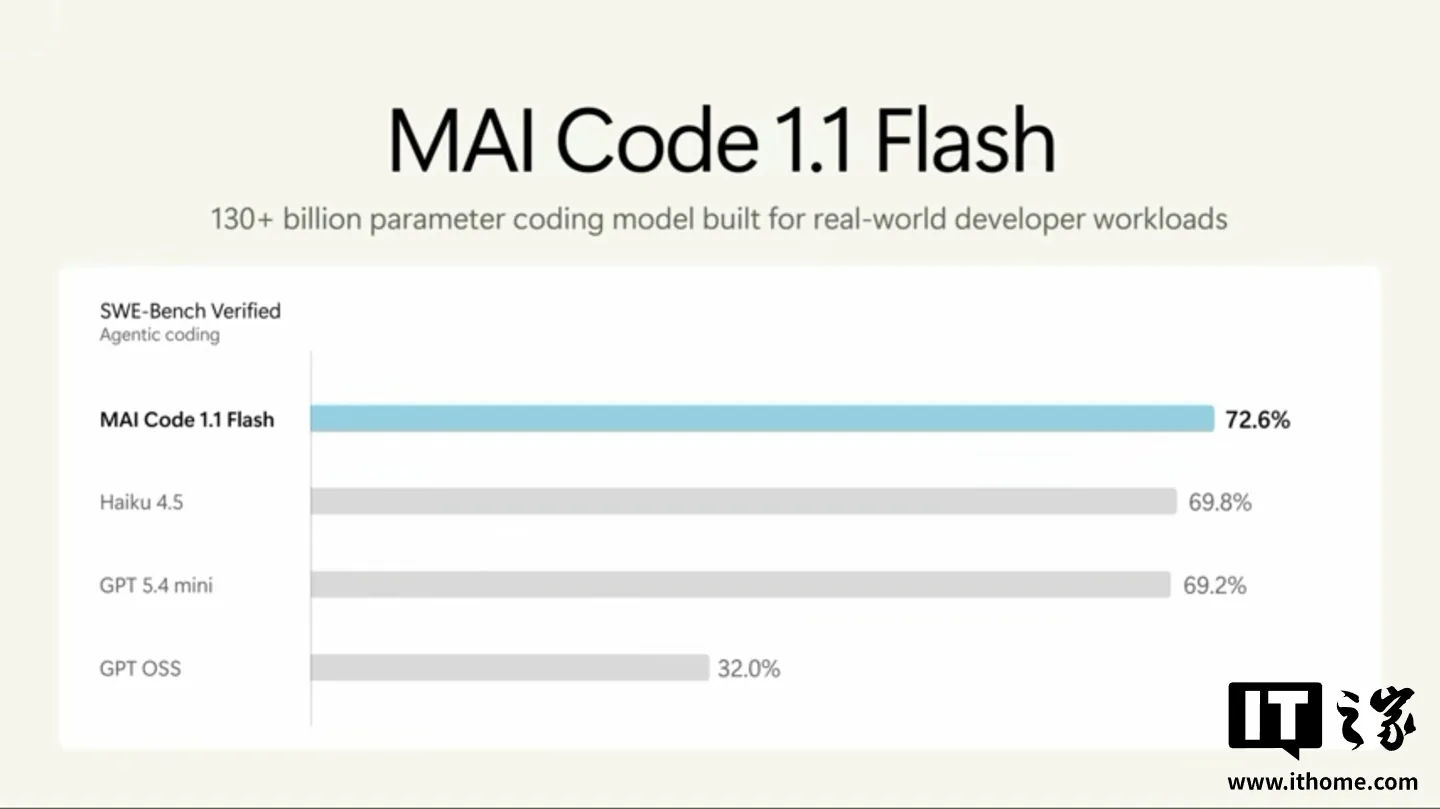
Microsoft announced in San Francisco on October 7 Pacific Time (1 a.m. Beijing Time on October 8) that the MAI Code 1.1 Flash model will be officially integrated into Windows 11. The model is an upgraded version of MAI-Code-1-Flash, released in June. The key facts are as follows:
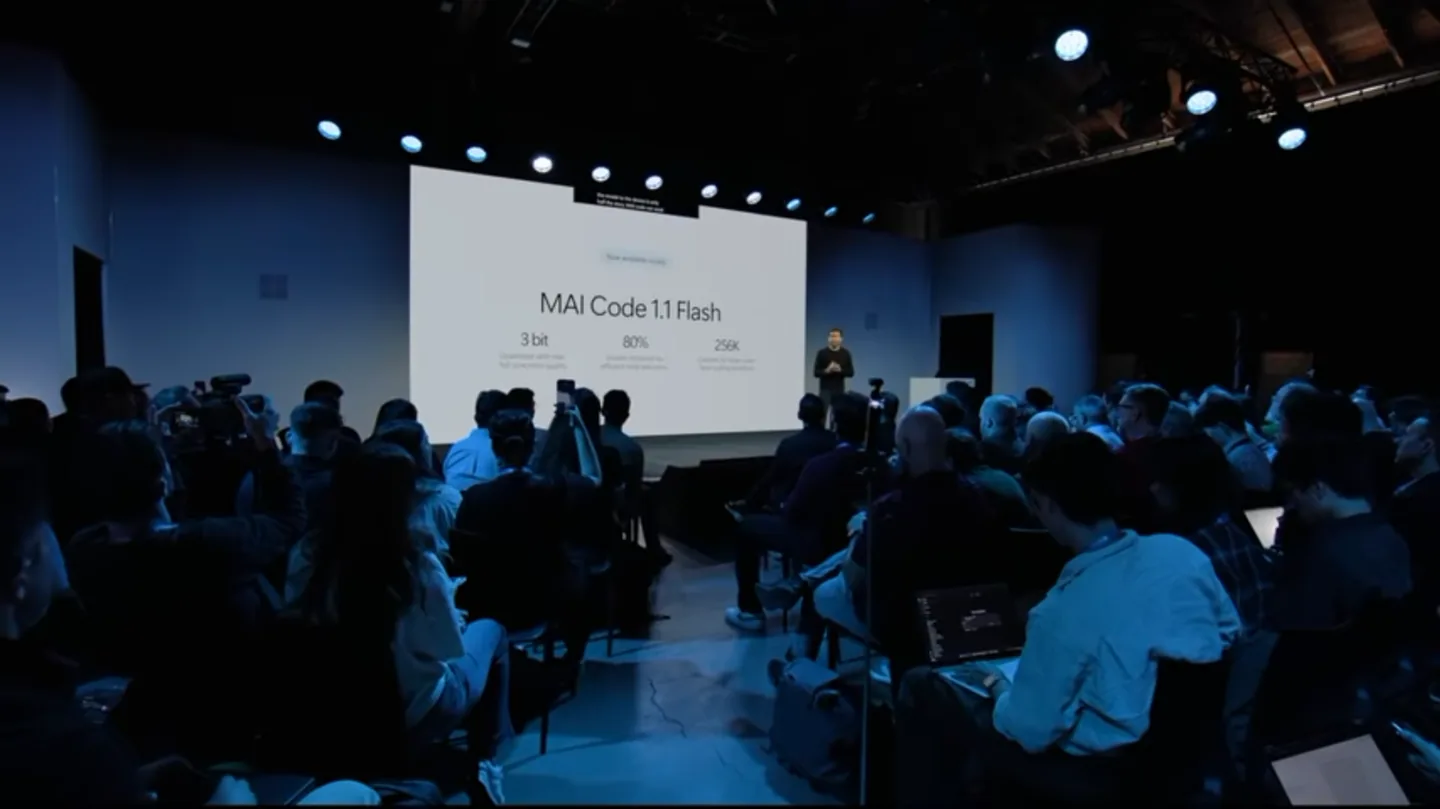
- Parameter count: 130 billion (130B)
- Context window: 256K tokens
- Quantization scheme: 3-bit quantization, reducing size by 80%
- Current status: Already integrated into GitHub Copilot and VS Code; Win11 integration is in the planned stage
- Multimodal capabilities: Newly added image input support (screenshots/architecture diagrams/UI sketches)
Model Capability Upgrade Details
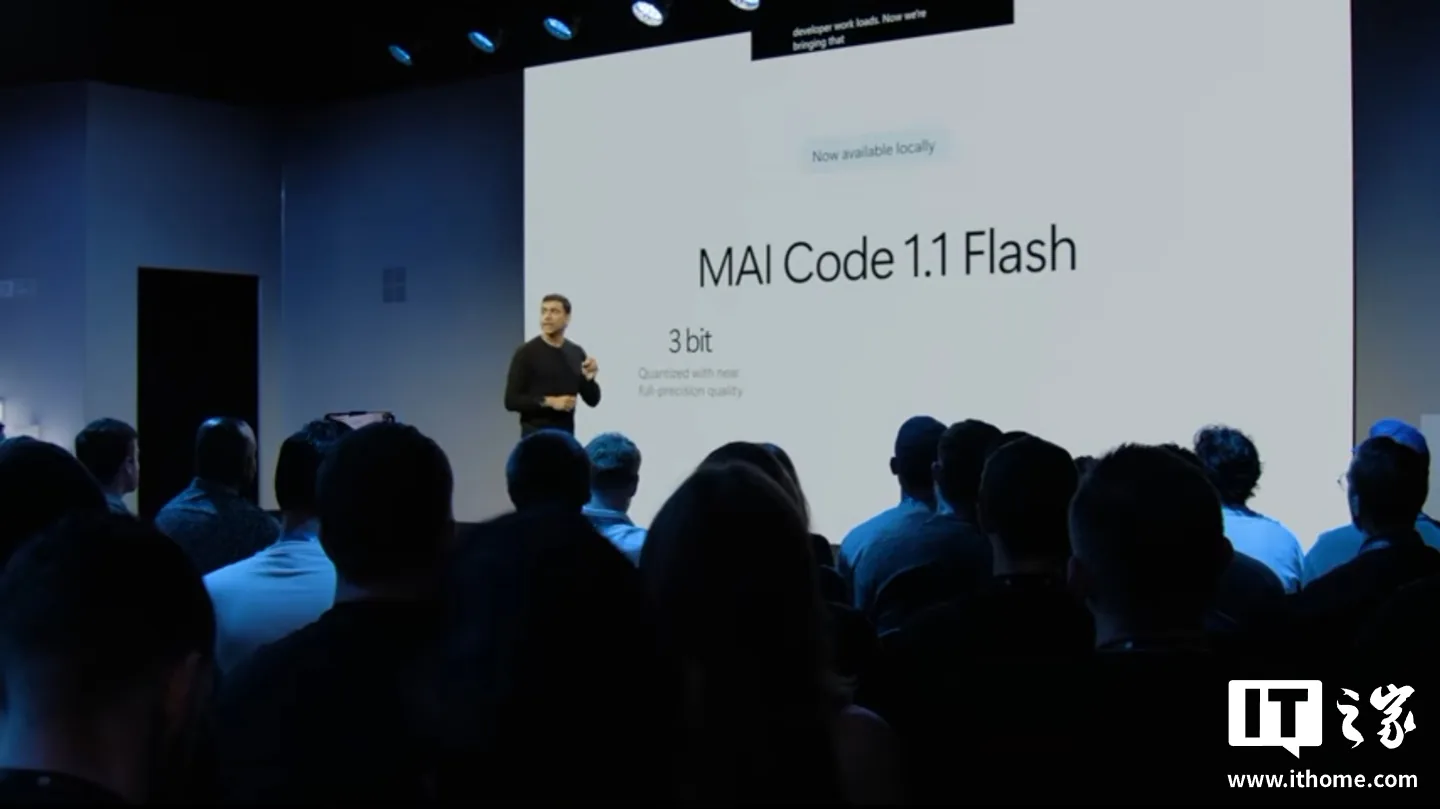
MAI Code 1.1 Flash is positioned as Copilot’s high-frequency, low-cost, low-latency execution layer, focusing on planning, reasoning, and task execution in real-world development workflows. Compared with the June version, its performance improvements are mainly reflected in three areas:
- Terminal-Bench 2.1 test: About 22% performance improvement in the GitHub Copilot CLI environment;
- .NET task adaptation: About 15% improvement for Microsoft ecosystem tasks;
- Output efficiency: Token streaming speed improved by about 25%, and the number of tokens required to complete a task decreased by about 25%—this means lower compute overhead and faster response times.
One notable data contrast is that although the model has as many as 130 billion parameters, 3-bit quantization compresses its size by 80%. This design strategy effectively alleviates the tension between large-scale parameters and endpoint device deployment, making localized operation possible.
The 256K context window is a leading level among current mainstream models and can support complex coding scenarios such as long documents and multi-file correlation analysis. Combined with the newly added multimodal capabilities, developers can directly upload screenshots or architecture diagrams, and the system will automatically generate the corresponding code implementation, significantly shortening the cycle from design to implementation.
Efficiency and Positioning Comparison
| Metric | MAI-Code-1-Flash (June version) | MAI Code 1.1 Flash | Improvement |
|---|---|---|---|
| Parameter count | Not disclosed | 130 billion | - |
| Context window | Not disclosed | 256K | - |
| Terminal-Bench 2.1 | Baseline | +22% | +22% |
| .NET task performance | Baseline | +15% | +15% |
| Output token streaming speed | Baseline | +25% | +25% |
| Tokens required to complete tasks | Baseline | -25% | -25% |
| Multimodal support | None | Image input support | New |
Practical Usage Recommendations
- Good to try immediately: Developers who use Copilot or VS Code daily for high-frequency coding can look forward to faster responses and lower resource usage from the Win11 integrated version.
- Better to wait: If you depend on language ecosystems outside the .NET or CLI toolchain (such as deep framework integrations for Python/Go), wait and see subsequent version iterations; enterprise deployments need to wait for Microsoft to confirm system compatibility and privacy policy details.
Final Thoughts
The lightweighting of a 130-billion-parameter model (80% size reduction) validates the practical path for deploying large models—using advanced quantization techniques to rebalance scale and efficiency. When context windows break through the million-token level and response frame rates improve in tandem, the maturity of localized AI coding assistants has reached the threshold of deliverability.