
Core Event and Key Timeline
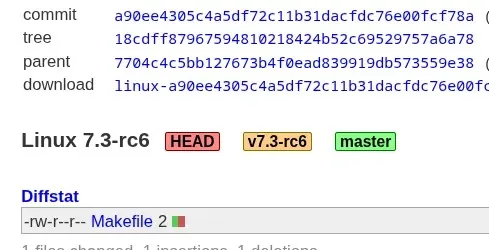
Linux 7.3-rc6, the sixth release candidate of the upcoming Linux 7.3 kernel, was officially released by Linus Torvalds on October 4. The stable version is expected around mid-October. Canonical has already updated Ubuntu 26.10 to target Linux 7.3 as its default kernel, tying the distribution’s release timeline directly to the kernel’s delivery schedule.
- Current version: Linux 7.3-rc6
- Release date: October 4, 2024 (October 5 Beijing time)
- Stable release预期: Mid-October 2024
- AI involvement: Multiple recent release candidates show patches discovered or generated by AI/LLM tools
- Licensing: Open source and free, no proprietary or paid components involved
Drive Fixes Dominate, AI Normalization Takes Hold
The code changes in rc6 have reverted to conventional proportions—approximately half consist of driver-layer fixes covering GPU, networking, USB, TTY, IIO, and audio subsystems. Notably, earlier rc3 through rc5 releases saw an unusually high volume of small error-path patches, largely identified or assisted by AI tools. The apparent “return to normal” in rc6 actually confirms that AI-powered development has become institutionalized.
Torvalds coined the term “AI normal” to describe this new paradigm: AI tools significantly increase the density of code reviews and defect detection, resulting in more frequent but fine-grained patches entering the mainline. This does not indicate instability but rather highlights how automation has been systematically integrated into kernel maintenance workflows.
Additional updates in rc6 include core architecture changes (primarily KVM-related), networking subsystem fixes, SMB client enhancements, and new kernel selftest cases.
Hardware Support Additions and Removals
Linux 7.3 rc6 reflects a balanced approach to hardware compatibility, with既有 additions and reversals based on real-world feedback:
| Device / Feature | Status | Notes |
|---|---|---|
| Turtle Beach VelocityOne Race wheel & pedals | Newly supported | Added via hid-universal-pidff driver with device ID for full PID force feedback |
| Logitech Bolt receiver HID++ | Removed | Withdrawn due to excessive user-reported issues |
| Intel THC driver | Patched | Buffer overflow vulnerability addressed |
The Turtle Beach VelocityOne Race, priced at $649–700 (approximately RMB 4,355–4,697), targets simulator racing enthusiasts. Prior to this update, it only offered basic HID input functioning on Linux; full force feedback support is now enabled.
User Recommendations
- Ready to test now: Developers, early adopters, and racing sim gamers who need VelocityOne Race force feedback or wish to experiment with AI-assisted kernel workflows.
- Better to wait: Production system administrators and desktop users—opt for the stable release expected mid-October after rc7, as release candidates may still harbor rare edge-case issues.
Final Thought
As LLMs become embedded in kernel development, Linux is transitioning from human-expertise-driven to human-AI-collaborative processes. This shift preserves stability goals while demanding higher organizational capacity from maintainers handling frequent, micro-sized patches—a sign of maturing open-source development infrastructure.