
Key Facts at a Glance
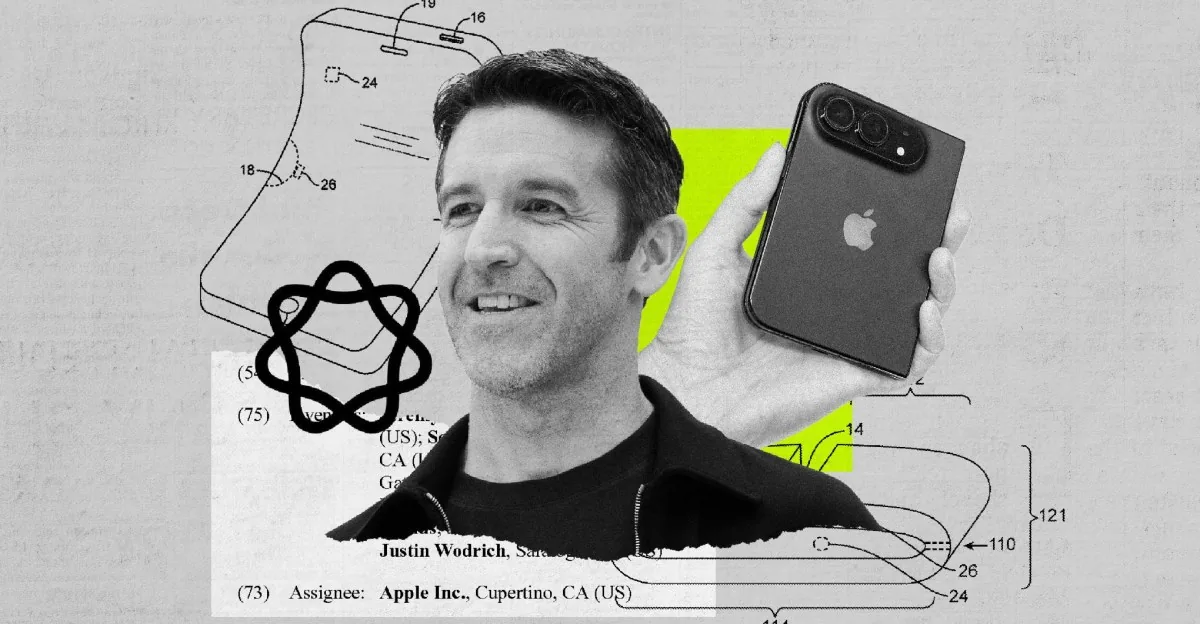
- Announcement Date: Early this month (less than two weeks after Ternus assumed CEO role)
- New Product: iPhone Duo — Apple’s first foldable smartphone
- Leadership Milestone: John Ternus’ first major product launch as CEO, succeeding Tim Cook
- Organizational Context: Follows a year-long wholesale leadership shuffle across Apple executive ranks
- AI Narrative Window: Apple Intelligence launched at WWDC in 2024; this marks the first time CEO personally frames AI strategy during a product showcase
Narrative Continuity and Leadership Contrast
Ternus’ debut event served as a deliberate “transition statement.” Though he stepped onto the stage as CEO, the execution closely mirrored past Tim Cook-era events—complete with callback to Steve Jobs’ iconic ‘There’s one more thing…’ and conceptual echoes of the original ‘digital hub’ framing.
The substantive difference lies in leadership style. While Cook favored consensus-driven, communal decision-making (tending to ask rather than assert), Ternus exhibits greater personal opinion-leadership: he is prone to make definitive calls and articulate clear positions, even when internal disagreement exists. This manifested visibly when he opened the keynote with an explicit AI viewpoint—a rare departure from Apple’s previously fragmented, technical explanations of Apple Intelligence.
A surprising contrast: Apple Intelligence, launched in 2024, has now been in play for about two years, yet Ternus is the first CEO to position AI as the central narrative arc of a product launch. The ‘intelligent personal hub’ was frontloaded over unreleased hardware like Vision Pro, signaling a strategic elevation of AI storytelling over hardware novelty.
iPhone Duo and the AI Integration Framework
Official technical specifications remain sparse, but three strategic imperatives are evident:
- iPhone Duo fulfills Apple’s last-gap in physical product form factor (foldable)
- Its positioning is explicitly linked to the AI narrative, not incremental screen or chip upgrades
- AI is framed as a cross-cutting layer, not a standalone feature, embedded within iOS workflows
Compared to competitors, no concrete metrics (fold longevity, unfolded dimensions, processing chip) were released. Only one contrast point is confirmable: while Meta launched Muse with 8GB of cloud RAM/storage this same week, Apple maintains a device-side AI architecture still constrained by on-device compute limits.
Who Should Act, and Who Should Wait
EARLY ADOPTERS (ready now):
- Existing Apple ecosystem owners (Mac + iPhone + iPad) prioritizing seamless sync across devices
- Developers leveraging Apple Intelligence’s current API surface (e.g., Swift-driven in-app writing aids)
WAIT-AND-SEE (consider deferring):
- Users prioritizing raw on-device AI performance (real-time speech-to-text, large-language processing); expect next-generation devices or Android rivals to lead
- Skeptics of the ‘intelligent personal hub’ concept; no latency benchmarks, data latency metrics, or actual daily-use workflow demos were shared
In Closing
Ternus’ debut reveals Apple’s succession playbook: wrap AI-era ambition in familiar hardware ceremony. The iPhone Duo functions as a strategic placeholder—proving Apple can chase foldables without compromising its narrative thesis. The real proof of AI-centric direction will emerge not at launch, but in future revenue reports and Vision Pro’s software adoption curve.