
Core Event Timeline
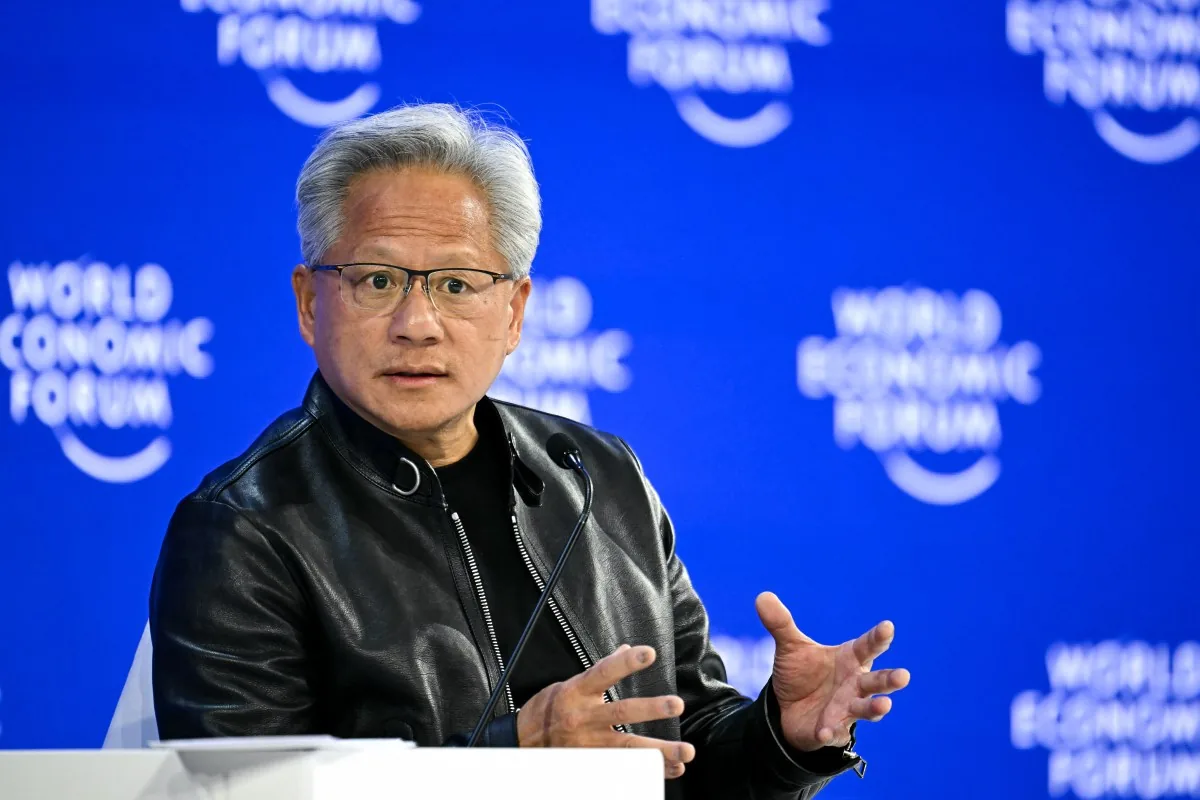
On September 14, 2026, NVIDIA CEO Jensen Huang responded live to a call from U.S. President Donald Trump at the All-In Summit in Los Angeles. Three key facts define this moment:
- Huang publicly rejected Dario Amodei’s (Anthropic CEO) call to “slow the pace at which we improve the capabilities of AI”
- He aligned with Trump’s stance: opposing any举措 that impedes AI industry growth
- The conversation was broadcast to the live audience via speakerphone, making it a policy-declaration fixture
The exchange, occurring mid-speech, saw Huang decline to silence the call or move offstage. President Trump quipped: “The great thing about life is Jensen can develop the most complex computer chip in the world … but he can’t figure out how to put you on speaker.” Huang’s team had staged extra microphones to ensure audience audibility—a technical detail he modulation ignored.
The Policy Divergence in Real-Time
Trump directly challenged critics of rapid AI advancement: “They’re just playing right in the hands of a lot of people that don’t want to see it happen… It could be political people. It could also be China. And we’re not going to let that happen. It’s a hoax.”
He linked opposition to data center construction—a sentiment he framed as part of an “international psyop” designed to stifle U.S. growth. Huang’s reply was unequivocal: “You’re right. We’re not going to let that happen, sir.” The crowd applause confirmed alignment.
Crucially, the public’s real concern appears simpler than elite narratives suggest. Gallup polling cited in the text shows 70% of Americans oppose new data centers in their communities; over 50% cite environmental resource impacts, while about 20% worry about cost-of-living pressures and quality-of-life effects. Yet Trump’s political framing—and even some industry alignment with slowdown calls—diverts attention from these local-material concerns.
Huang and the All-In hosts (VCs Chamath Palihapitiya, Jason Calacanis, and White House advisers David Friedberg and David Sacks) had been debating Amodei’s proposal when Trump’s call interrupted. The CEO conference narrative pivoted from technical cautiousness to geopolitical urgency—Huang modeling direct executive responsiveness.
Data Snapshot and Contradictions
| Stance on AI Pace | Core Position | Representative Figures |
|---|---|---|
| Support slower development | “Slow the pace at which we improve the capabilities of AI” | Dario Amodei (Anthropic CEO), Elon Musk (SpaceX CEO), Sam Altman (OpenAI CEO) |
| Oppose slowdown, push continued advancement | “We’re not going to let that happen” | Jensen Huang (NVIDIA CEO), Donald Trump (President), Garry Tan (Y Combinator CEO) |
This reveals a sharp divergence: amid elite tech leadership, clear proponents of untrammeled AI advancement remain rare. Amodei’s caution found public backing from Musk and Altman, while Huang’s rebuke marks one of the highest-profile rejections of the slowdown hypothesis at the C-suite level.
The market mismatch suggests a deeper fissure: the industry’s confidence in compute-driven progress stands in tension with both grassroots resistance (70% NE opposition) and, paradoxically, the scale of current enthusiasm. When political rhetoric invokes foreign adversaries while local surveys emphasize resource impacts, the policy conversation loses precision.
Who Should Act—and Who Should Wait
For infrastructure buyers, Huang’s stance signals stability: power users of AI hardware should prioritize deployment planning, as federal policy will not impose a brake on AI industry expansion.
- Proceed as scheduled: enterprise GPU cluster deployments expectation inertially for 2027
- Continue permitting workflows: developers can maintain timelines absent local ordinance overhauls
- Shorten procurement windows: AI startups should factor in sustained GPU availability
Yet exercise additional patience if you fall under:
- Local projects facing community objections (especially in ecologically sensitive jurisdictions)
- Lower-compute workloads where energy sustainability matters more than latency
- Regulatory compliance teams monitoring state- and municipal-level policy emerging post-summit
Final Thought
The live Trump-Huang call, while staged as political theater, crystallizes where AI’s real battle lines now form: not between acceleration and caution, but between centralized technical optimism and localized environmental realism.
Industry momentum will increasingly bend on energy availability—not political rhetoric—deciding whether rapid AI advancement sustains its current trajectory into the next presidential term.