
Delivery day, without the stock to match
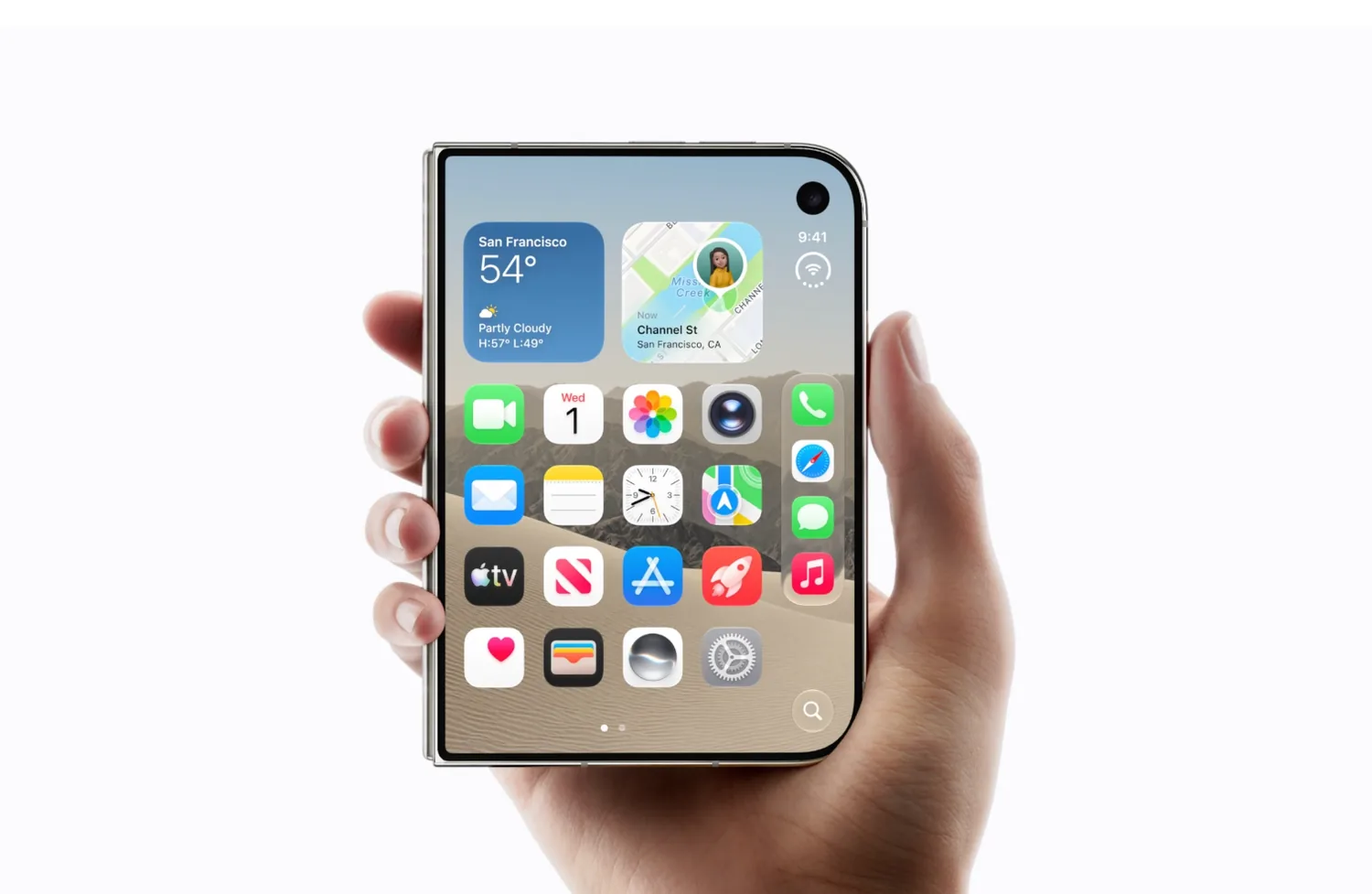
On October 23, 2026, Apple’s first foldable phone, the iPhone Duo, entered retail delivery. The first wave of pre-order customers began receiving units, and Apple Stores worldwide opened their doors to launch-day buyers. The bigger story was supply.
- Timing: delivery on Oct 23; pre-orders opened Oct 16
- Inventory: stores carry a small amount of walk-in stock, which Apple warns “may sell out quickly”
- The wait: new orders on Apple’s site now show delivery around Jan 25, 2027
- Also announced: Kimi K3.1 Pro is live in the Kimi app, Kimi Work, Kimi Code and the API, with full weights due by Nov 4; Seedance 2.5 4K is invite-only for 20 film studios and directors worldwide
Apple has said pre-order demand was “exceptionally strong” and that it is working to ship as fast as possible. For ordinary buyers, though, ordering on launch day can still mean waiting months.
How wide is the gap

Some configurations already slipped during the pre-order window, and estimated delivery dates have moved further out since. Apple has not disclosed how many units it built, so the only public signal of the shortfall is that January 2027 date.
The manufacturing bottleneck is well understood in the industry: hinges, flexible cover glass and reliability testing all stretch the ramp-up curve, which explains why stores only hold “a small amount” of stock.
The longer roadmap comes from Bloomberg’s Mark Gurman. On the Power On podcast he said a third-generation iPhone Duo, expected in 2028, will grow the inner display from the current 7.6 inches to “just over 8 inches” — roughly a 0.5-inch gain, following the gradual Pro-series approach rather than jumping to 8.5 or 9 inches. A telephoto lens is “on Apple’s list,” he said, with the obstacle being physics rather than cost: a folding body has no room for the lens depth it requires. Apple is also testing under-outer-display Face ID for the iPhone Duo 2 and exploring an Action Button.
Accessories are already adapting. Retro game emulator Delta shipped version 2.0 with custom virtual controller skins for the iPhone Duo; its Nintendo DS layout spans the hinge in book mode, using the top half as the game screen and the bottom as the touch layer.
Three launches in one day

Moonshot released Kimi K3.1 Pro, the first model in the K3.1 family, alongside a faster K3.1 Pro Highspeed variant. It is Kimi’s most capable model at 3 trillion parameters and supports up to a 1M-token context — roughly a million characters of material in one pass. The Highspeed version keeps the same capabilities while raising output speed about 2-3x. The focus areas are coding, long-horizon agents, 3D creation and financial research: the model infers an object’s shape and spatial relationships from text, sketches or reference images, then writes scripts for Blender, CAD and similar tools to generate a 3D model. A 3D Make feature in the web and app clients lets users preview, edit and download results for 3D printing.
Moonshot’s published Terminal-Bench 4.0 comparison (a benchmark for agents completing tasks in terminal environments):
| Model | Terminal-Bench 4.0 |
|---|---|
| Claude Opus 5.5 | 66.4% |
| Kimi K3.1 Pro | 65.7% |
| GPT-6 Astra | 58.2% |
ByteDance’s Volcano Engine released Seedance 2.5 4K, the strongest model in that generation, trained specifically to sharpen facial expression, subtle motion and image detail. Paired with 10-bit color depth (10 bits per channel, for smoother gradations) it targets big-screen quality. A Draft mode lets users validate storyboards at 480p first, then render the final cut in 4K.
Google unveiled Agent Compute Engine (ACE), which gives each AI agent its own micro-VM to run code, drive a browser and call external tools in isolation. When an agent is waiting on inference or human confirmation, the environment can be paused to free resources and resumed quickly. Google says a test involving 200,000 agents hit under 500 milliseconds of pause-and-resume latency on its open-source runtime. ACE already supports some internal Gemini work, with a developer preview planned in the coming months.
The counterintuitive number: a short-drama app outlasts Douyin
Hongguo Duanju, ByteDance’s short-drama app, added anti-binge features: a rest reminder after long viewing sessions and a sleep reminder for late-night viewers, delivered as a video from a familiar drama character telling users to put the phone down. A user-configurable time-management setting is coming.
The numbers behind it are the interesting part. Third-party data for August 2026 puts ByteDance apps at 41.8% of total time among the top 50 apps in China by monthly usage, with Hongguo Duanju at about 125 minutes per day and Douyin at roughly 112-120 minutes. The China Netcasting Services Association counted 239,000 short dramas released in Q2 2026, of which 153,000 — 64% — were AI-generated. An app built around endless scrolling now ships its own brake pedal.
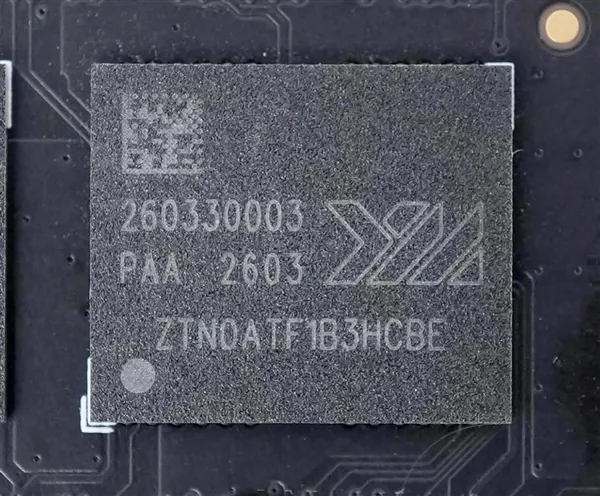
Other items from the same day: Microsoft is quietly testing an AI memory tool codenamed Project Pantheon, appearing as “Context Vault,” which stores only content users choose to save rather than recording the screen; Yangtze Memory is reportedly developing 9600MT/s LPDDR5X for mass production at its Wuhan Fab 3, after running second-generation 16Gb LPDDR5 at 7500MT/s and about 5,000 wafers per month at Fab 2; Huawei’s global procurement chief Peng Bo left the company after 9,952 days; and DeepSeek has reportedly hired CITIC Securities as an IPO adviser, with a listing possible in early 2027.
Two practical notes. If you want an iPhone Duo but don’t need launch-day bragging rights, waiting for the ramp is the better trade — ordering now mostly buys you several months of waiting. If you genuinely need a foldable for dual-screen work, handle the hinge and split-screen behavior in a store first. On the model side, teams doing coding, long-document work or 3D drafts can start with the API now; casual users may want to wait for the Nov 4 weight release and community fine-tunes. Seedance 2.5 4K remains closed to all but 20 invited studios.
Final word
The clearest signal of the day is that supply is still scarce: foldable capacity, 4K video model quotas and agent compute are all in a “small batch, invite-only, wait your turn” phase.
Apple’s delivery dates and Moonshot’s weight release are the same story — demand has outrun delivery.
For ordinary users, this is still a window where buying means waiting and using means applying.