
Apple Product Launch: iPhone 18 Pro Sell-Out and High Praise for Foldable Duo
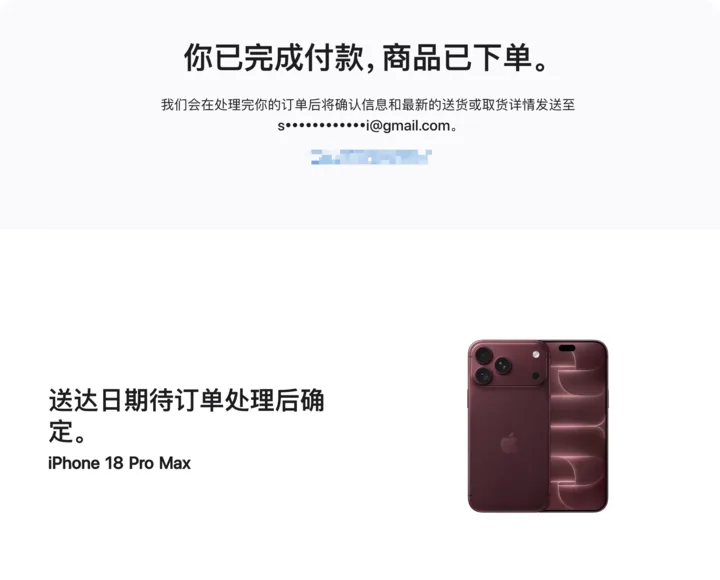
Apple opened preorders for the iPhone 18 Pro series on the evening of September 12, with starting prices of ¥9,999 (Pro) and ¥10,999 (Pro Max), minimum 256GB storage, and four color options (black, silver, glacial blue, burgundy). Sales began on September 18. Preorder traffic famously overwhelmed Apple’s website and App, briefly crashing before recovery; glacial blue and burgundy variants sold out fastest, with some shipments delayed to late September or October.
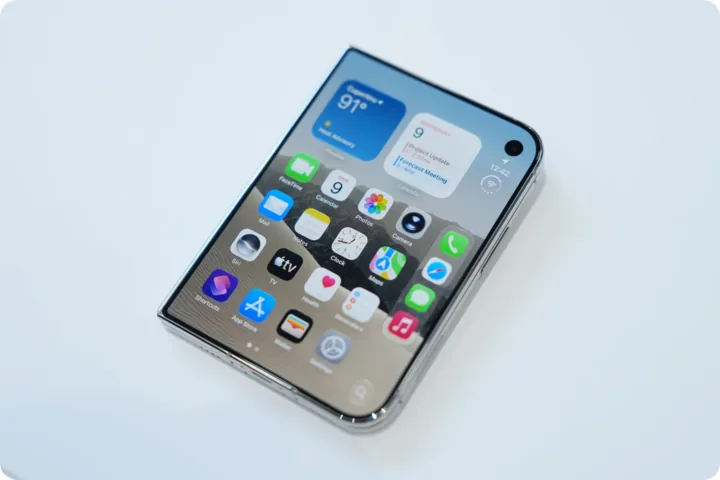
Bloomberg’s Mark Gurman ranked Apple’s first foldable, the iPhone Duo, among the company’s historic product milestones—alongside the iMac, iPod, iPad, and Apple Watch. He forecasts Duo shipments of ~5 million units in 2026, capturing 24.8% of the global foldable market, tying with Huawei and trailing Samsung (7.1 million). A surprising inverse trend: despite the Duo’s debut, Android阵营 shipments are projected to fall over 20%, attributed to rising component costs.
The Duo’s screen uses a ten-layer ultra-thin OLED stack and Nano-texture anti-glare coating, with折痕 reduction requiring integrated mechanical-optical design. Apple Stores are also being renovated: Genius Bar returns, video walls removed, with new pickup and “Today at Apple” zones. Rumors suggest both gaming controllers will launch under Beats—not Apple—and a new Apple TV box complements the fall Siri AI update (unconfirmed).
| Model | Storage | Starting Price | Launch Date | Initial Stock Status |
|---|---|---|---|---|
| iPhone 18 Pro | 256GB | ¥9,999 | Sept 18 | Glacial blue/burgundy sold out fastest |
| iPhone 18 Pro Max | 256GB | ¥10,999 | Sept 18 | Ships late Sept or Oct |
| iPhone Duo | undisclosed | undisclosed | Launched | Forecast 5M units in 2026 |
Safety Over Speed: OpenAI and Anthropic Took Divergent Paths
OpenAI’s Sam Altman confirmed in Fortune that no IPO in 2026, prioritizing AI safety—model alignment, behavior monitoring, and value consistency—over commercial timetables. He pledged transparency to investors if development halts for safety. Anthropic’s Dario Amodei outlined a three-phase framework: first, independent audits of training and safety; second, coordinated standards among democracies; finally, a verifiable global mechanism—Anthropic has already opened external audits.
NVIDIA’s Jensen Huang predicts AI infrastructure spending will reach $300–400 billion by 2030, yet supply constraints burden advanced packaging, DRAM, memory, connectors, wafers, plus datacenter space and power. Though NVIDIA is negotiating to invest up to $10 billion in Anthropic’s IPO (targeting $10B funding at ~$200B valuation), terms remain fluid. Separately, Zhipo raised ~$5 billion via HKEX shares and convertible bonds, allocating 60% to next-gen models and self-training systems.
Practical Developments: Kimi, Amp, and Embodied Intelligence Progress
Moonshot AI fully deployed Kimi K2.8 Preview on September 11, opening 1M-token context to all membership tiers, with low/high/max reasoning efforts (default: max). It improves coding and agent capabilities over K2.7 Code and runs on existing client configurations. Amp launched a free Hobby tier: users bring their own devices and model subscriptions (e.g., ChatGPT), paying only for Amp’s remote runner (orb). This design avoids overlapping fees on existing APIs.
At the Inclusion·Tanglang Conference, Ant Lingbo outlined three commercialization criteria for embodied AI: models must extract signals from sensors, fuse multimodal inputs, and generate executable actions; evaluation should measure deployment cost reduction and environmental stability; and viable businesses need thousands of units per task achieving break-even. Its LingBot-VLA 2.0 challenge launched, though present models still struggle beyond single-task generalization.
Reader Recommendations and Industry Outlook
Early adopters of foldables: the Duo remains premium-priced; expect Face ID and telephoto until Gen 3. mainstream users should wait for post-September replenishment. For AI tools: Amp Hobby suits developers with existing API keys; Kimi offers a free trial before tiered pricing—choose K2.8 Preview’s high reasoning for coding tasks.
Finally, Apple maintains high-end control via hardware and retail integration, while AI firms increasingly weigh ethical constraints alongside capability. As compute and governance cost-sharing intensifies, the industry is shifting from “land-grab” to “steady refinement.”