
A fake T-shirt photo spread from a blue-check account across the internet
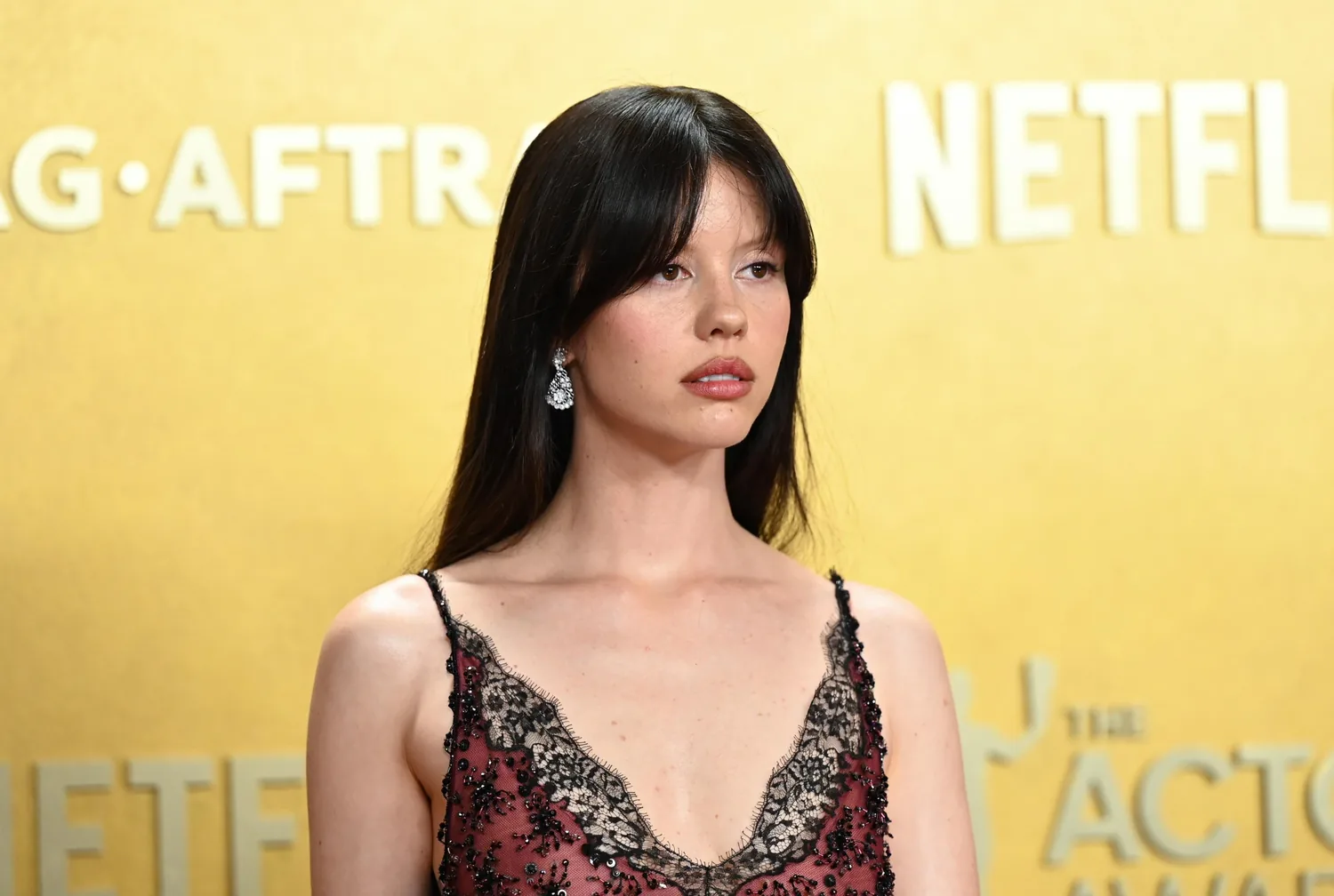
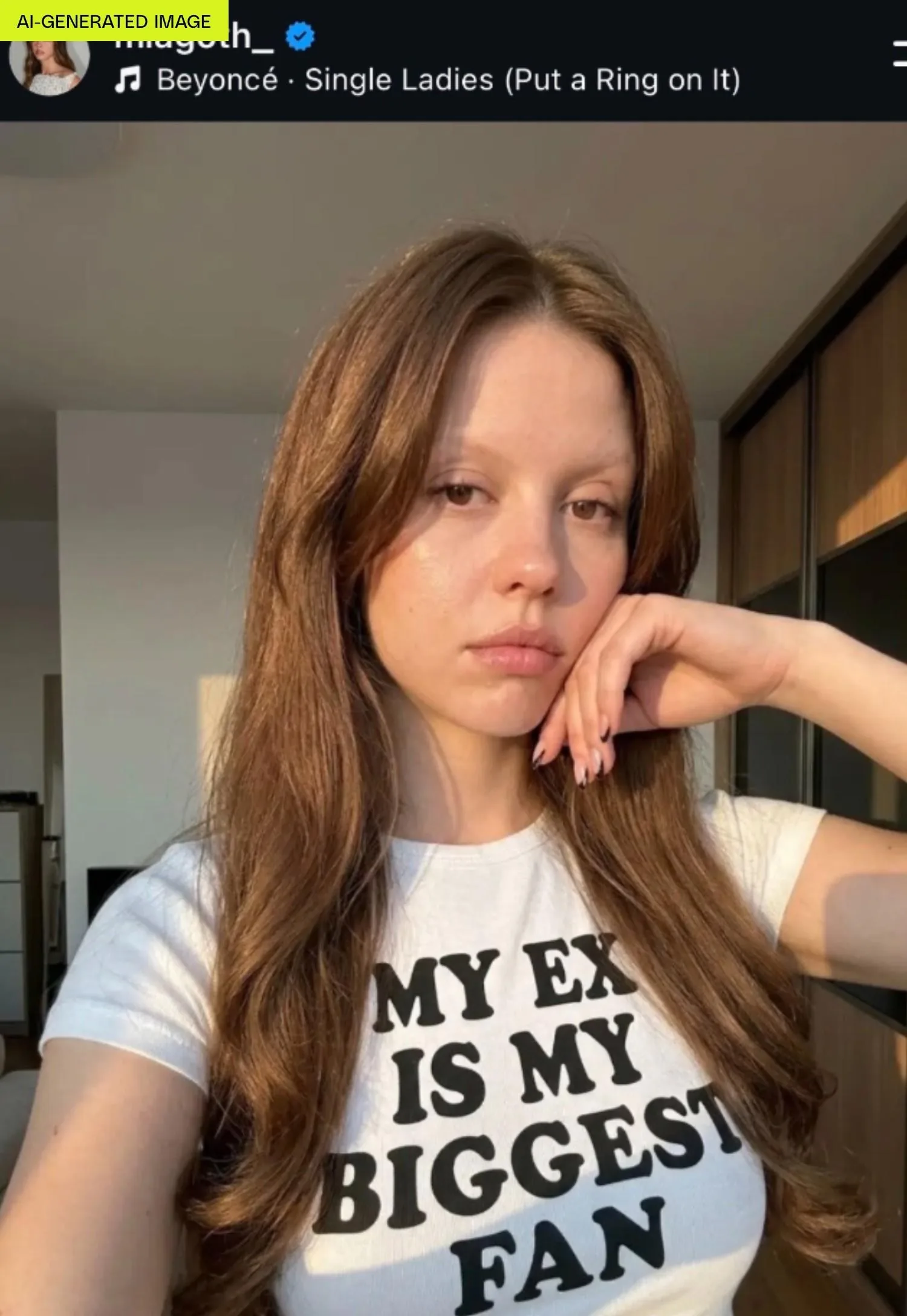
This month, a photo of Mia Goth wearing a “MY EX IS MY BIGGEST FAN” T-shirt spread from Instagram across the internet. Goth’s representative later confirmed that it was an AI-generated image.
- Where it was posted: the Instagram account miagoth_, with a blue verified badge, more than 1 million followers
- What the image shows: Goth wearing a T-shirt with “MY EX IS MY BIGGEST FAN” in bold black letters, set to Beyoncé’s “Single Ladies (Put a Ring on It)”
- Background: Earlier this month, media reported that Goth had filed for divorce from actor-director Shia LaBeouf
- Reach: Hundreds of thousands of likes, including from some entertainment industry insiders; outlets such as OK! and People reported it as fact, and screenshots were then widely shared on other social platforms
- Platform action: Meta spokesperson Alex Dziedzan said the account was removed for “impersonating a public figure”; his response was added to the story on October 13
There’s no product news here—no price, new version, or open weights. The hard facts are the account, its verification status, and the platform’s action.
The rep: This is “incomprehensible”
Goth’s representative Christine Tripicchio laid out three points in an email to The Verge: Goth herself does not own or operate a social account on any platform; they have complained multiple times asking Instagram to remove the verified fan account that keeps posting fabricated AI images; and the fact that a fan account can qualify for a blue check is “fundamentally disturbing.”
Her wording was sharp: even more “incomprehensible” is that Instagram apparently places the spread of fabricated, manipulated images above protecting the likeness and integrity of public figures.
This involves a term: deepfake, meaning images, videos, or audio of people synthesized with generative AI that are realistic enough to be mistaken for real. What spread this time was a still image, which happens to fall into the loosest category of platform rules.
The contrast: who the blue check was sold to, and what the rules exempt
For years, the blue check was seen as a signal of “official” and “real.” But Meta began selling blue checks years ago, and fan pages could also get “verified”—the account in question was labeled “fan-run,” yet the blue check alone was still enough to mislead people inside and outside the industry.
Even more telling is Meta’s approach to AI content: it chooses to label some generative AI content rather than ban AI content depicting real people. According to the source material, realistic AI videos of people may require labels, but the rules include an exemption—still images are not required to be labeled.
| Content type | Could be required to carry an AI label |
|---|---|
| Realistic AI video of people | May be required |
| AI-generated still image | Rules include an exemption; not required |
Meanwhile, AI-generated content featuring real people often gets millions of views on Instagram, and Meta executives have said that AI-generated content will be a key part of how users interact on the company’s platforms in the future.
This is not an isolated incident. In 2024, Scarlett Johansson said OpenAI used a similar voice in ChatGPT after she declined to collaborate; that same year, when Taylor Swift announced her support for Kamala Harris’s presidential campaign, she noted that AI fake images posted by Trump made her realize she had to fight misinformation about who she would vote for.
Who should take note, and who should wait
- General users: A blue check is no longer evidence that “content is real.” When you