
Background and Industry Pain Points
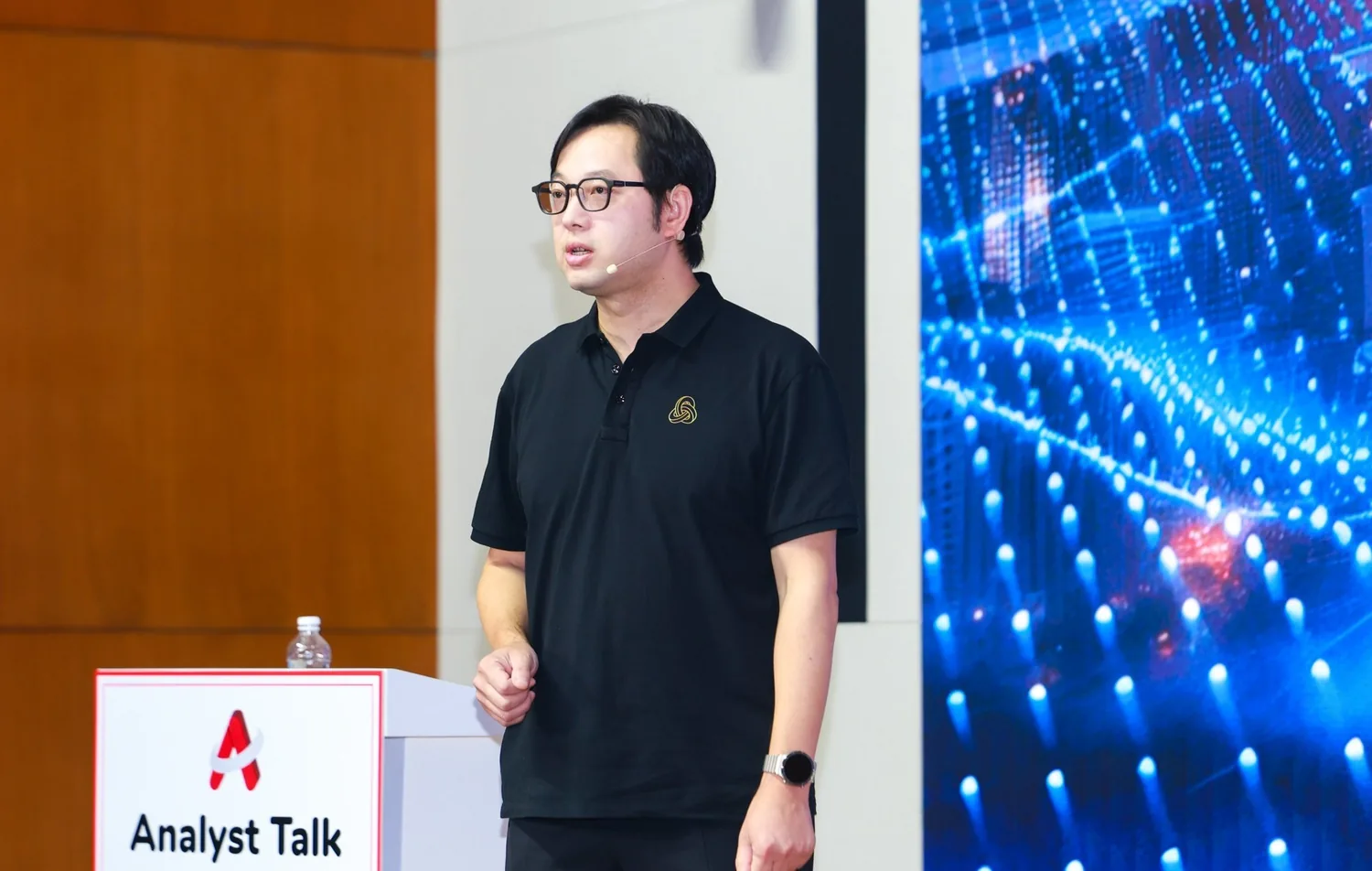
With smart terminals and smart services flourishing, the mobile communications industry is seeing three major shifts: new terminals, new traffic and new applications. Connectivity is expanding from person-to-person to the coexistence of people, things and intelligence, bringing all-scenario terminals and a hundredfold growth in connection scale. Device-cloud collaboration for intelligent services has become a long-term trend, making uplink capacity key to high-quality training and inference, so demand is moving from downlink-dominant to equally uplink and downlink. New interaction modes are raising the bar for network experience, requiring ubiquitous stable latency and high reliability to guarantee high-quality intelligent services.
Three Directions and Main Products
Huawei is advancing underlying technology innovation around three directions — ubiquitous experience, simplified green and extreme spectral efficiency — and launched products including the world’s first U6GHz commercial device VitaAAU, the GigaGreen Plus series and the UBBPi series.
RetinaMIMO
To address the difficulty of achieving both ultra-wide bandwidth and ubiquitous coverage, Huawei introduced RetinaMIMO, which uses the industry’s first Retina scanning system to reconfigure the RF link topology and solve the collapse of three-dimensional coverage, and re-architects the antenna array to address diminishing marginal gains as arrays grow.
EP Power Amplifier Architecture and Multimode Dielectric Filter
Facing the energy challenges of higher and more numerous frequency bands, Huawei pioneered an EP power amplifier architecture that uses new materials and processes to counter efficiency loss at higher frequencies and maximize energy conversion efficiency. It also introduced a multimode dielectric filter to address the larger antenna footprint and higher energy consumption caused by high bands and multiple channels.
Coverage Capability and Deployment Progress
Based on RetinaMIMO, the VitaAAU delivers about 30% more coverage than the industry’s 1024-element solution, aligning U6GHz coverage horizontally and vertically with C-Band. VitaAAU has started commercial deployment in markets including the UAE and supports peak downlink experience above 10 Gbps.
GigaGreen Plus and UBBPi
Applying these innovations to VitaAAU enables a 1.5-meter simplified antenna face and “0 Bit 0 Watt 0 Loss” energy saving. Huawei has extended the innovations to the full GigaGreen Plus lineup, significantly reducing volume, weight and energy consumption.
To tackle capacity limits from multi-band, multi-cell and multi-user interference, Huawei introduced the time-shrinking concept of the tau (τ) law into base station design; its OSCAR solution enables optimal dynamic scheduling of resources across the domain, while homegrown low-latency buses and high-speed connectors form a high-speed interconnect architecture. Based on this hardware-software co-innovation, the new UBBPi series delivers a 1.3x average experience improvement and about 40% energy savings.
Open Source and Network Autonomy
Huawei introduced RANSpirit, which uses telecom large models and digital twin technology to achieve single-domain autonomy; it has been deployed in more than 25 large-scale networks worldwide, covering over 1.2 million cells and assisting more than 2,000 engineers. Together with industry partners, Huawei is building the ecosystem along three lines — standards, community and alliance: embracing the TMF standards and the A2A-T framework for a cross-agent foundation, contributing agent open-source components to the Linux Foundation, and using the GSMA platform to accelerate commercialization.
Key Specifications
| Specification | Description |
|---|---|
| VitaAAU | World’s first U6GHz commercial device; about 30% more coverage than the industry’s 1024-element solution; peak downlink above 10 Gbps |
| GigaGreen Plus | Significantly lower volume, weight and energy consumption |
| UBBPi | 1.3x average experience improvement and about 40% energy savings |
| RANSpirit | Deployed in more than 25 large-scale networks, covering over 1.2 million cells |
Conclusion
Huawei is advancing underlying technology innovation around ubiquitous experience, simplified green and extreme spectral efficiency to provide a foundation for next-generation communication networks, while working with industry partners on an open ecosystem.
References
Huawei Unveils a Series of Innovative Solutions for Next-Generation Communication Networks