
Attention administrators: Nextcloud’s built-in Collabora CODE Server app (richdocumentscode) has a command execution vulnerability that has already been exploited in the wild, and attackers are using it to backdoor servers. The vulnerability has now been assigned CVE-2026-110447.
Key points:
- Affected versions: richdocumentscode versions before 26.4.303
- Fixed version: 26.4.303, released on September 11
- Disclosure date: the security advisory and CVE were published on October 14, 33 days after the patch was released
- Authentication required: No, and no user interaction is required
- Exploitation precondition: the built-in CODE Server is in a stopped state (after a reboot, upgrade, or crash)
- Does it affect other deployments?: No; standalone Collabora Online servers, Docker and RPM/DEB installations, and Nextcloud All-in-One are not affected
richdocumentscode is an optional app that bundles the Collabora online office suite into Nextcloud, letting users edit documents directly in the browser; if it isn’t installed, this attack surface doesn’t exist.
How the attack works: proxy.php and unauthenticated command injection
The vulnerability lies in the mechanism the app uses to start its bundled Collabora server. The attack involves sending malicious requests to the app’s proxy.php endpoint to trigger OS command injection—put simply, attackers smuggle system commands into application parameters and have the server execute them on their behalf.
One key precondition: the built-in CODE Server must already be stopped. After a server reboot, app upgrade, or process crash, the service is briefly in a stopped state, and that is the attack window. No authentication is required at any point, and users do not need to click anything.
Reports from multiple administrators suggest attacks date back as early as September 10, roughly a month before the official security advisory, GitHub advisory, and CVE were published. Attackers planted PHP webshells—scripts left on the server that can execute commands remotely—and then used them to search for password databases, leftover password-manager files, and cryptocurrency wallets. Some users claim ransomware gangs are also exploiting the flaw; BleepingComputer has not independently verified that.
The scope of impact is also worth noting: Collabora says the vulnerability only affects this optional built-in app; standalone Collabora Online deployments, Docker and RPM/DEB installations, and Nextcloud All-in-One are all unaffected.
The mismatch: patch first, CVE a month behind
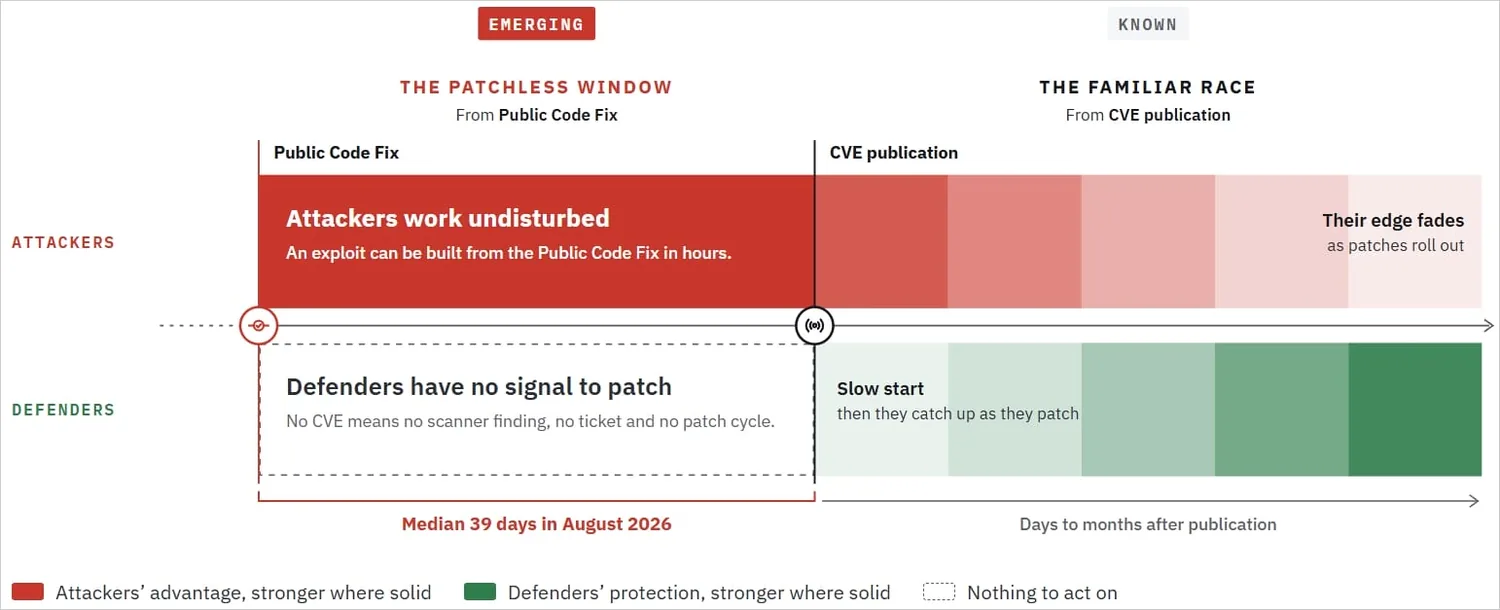
The most striking part of this isn’t the vulnerability itself, but the timing.
- The fix was committed on September 9, and version 26.4.303 was released on September 11
- Community warnings appeared on October 3, urging administrators to upgrade immediately
- The official advisory and CVE were not published until October 14
In other words, for the four weeks before the official identifier appeared, even administrators who saw the community warnings lacked a single CVE number to pinpoint the issue accurately and deploy defenses.
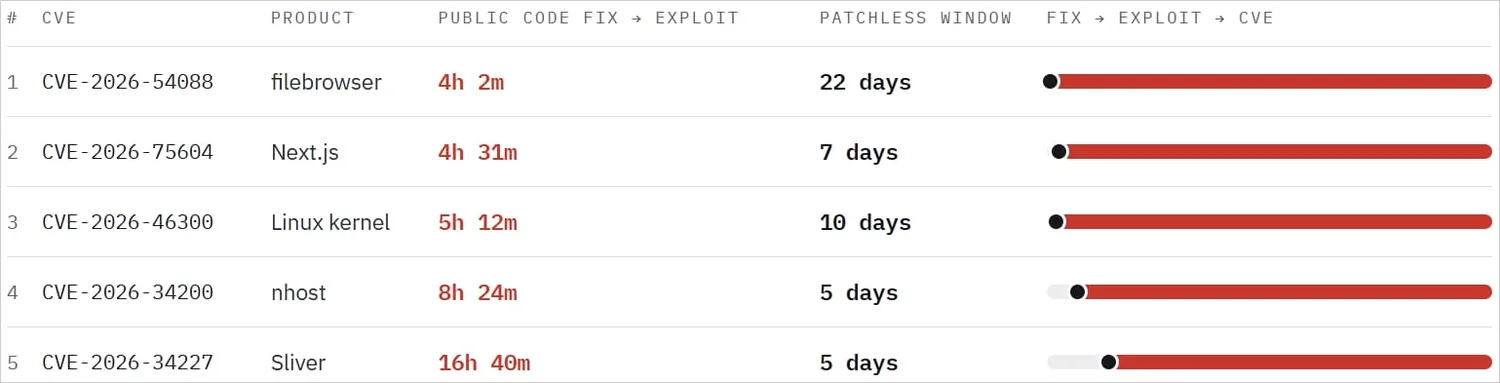
This is not an isolated case. After analyzing real-world open-source vulnerabilities, security firm Second Security found that the median gap between a public fix and CVE publication was 39 days in August, compared with just 5.1 days in January. Researchers believe the surge in AI-assisted vulnerability discovery is slowing down the CVE process. In many cases, public exploit code appeared online within hours of a fix’s release, days before the corresponding CVE; Second Security notes that AI tools make it easy for attackers to generate working exploit code for publicly disclosed fixes.
Collabora mainly attributed the advisory delay to GitHub’s CVE processing backlog, saying it is under growing pressure from an increasing number of AI-generated security reports. Nextcloud, meanwhile, told BleepingComputer that Collabora reported the vulnerability in mid-September and an update was made available in the app store shortly afterward; the company said the delayed disclosure was intended to give users time to update and that it had not observed widespread exploitation at the time.
Key timeline
| Event | Date |
|---|---|
| Fix committed | September 9 |
| 26.4.303 released | September 11 |
| Earliest administrator report of attack | September 10 |
| Community warning | October 3 |
| Security advisory and CVE published | October 14 |
Upgrade now or wait?

- Who should upgrade immediately: Nextcloud administrators who have richdocumentscode (the built-in CODE Server) enabled. Upgrade to 26.4.303 or later; if you don’t need in-browser editing, uninstalling the app is also an option. The vendor explicitly warns that disabling the app alone is not enough to eliminate the risk. After upgrading, it’s advisable to treat it as a compromise incident and check for webshells, unusual processes, and access to credential files.
- Who can wait: Users of standalone Collabora Online servers, Docker or RPM/DEB installations, and Nextcloud All-in-One. The vendor says these deployments are unaffected; environments that don’t have this optional app installed are likewise outside the scope of impact.
Final thoughts
Those 33 days between fix and disclosure essentially shifted the defensive burden onto administrators who had no CVE number to look up. When AI accelerates both vulnerability discovery and exploit writing at the same time, the numbering process stuck in the middle becomes a new risk window. For administrators, a version number update in the app store is now no less important than a CVE number.